After the heat and noise of Marrakech, Essaouira feels like a deep breath of sea air. The white and blue town on the Atlantic coast is compact, relaxed and easy to explore on foot, which makes it one of the most rewarding day trips in Morocco. This itinerary shows how to spend one day in Essaouira well: what to see, in what order, where to eat and how to make the most of the road from Marrakech.
In short: Essaouira is about 190 km from Marrakech, roughly three hours by road. With one day, start at the fishing port in the late morning, walk the Skala de la Ville ramparts, explore the UNESCO-listed medina and its woodcarving workshops, eat grilled fish by the harbour, then spend the afternoon on the beach before heading back. Bring a light jacket: the Atlantic wind is cool even in summer.
Why Essaouira is worth a day
Essaouira is a working fishing town, an arts and music centre and a favourite escape for Moroccans and visitors alike. Its walled medina, with straight streets, white houses with blue shutters and sea-facing bastions, was listed by UNESCO in 2001.
What makes it special for a day trip is the contrast. In a few hours you go from the red city and the plains to a breezy harbour full of blue boats and seagulls, where life moves to the rhythm of the tides and the fish auction rather than the souks. The medina is small enough to explore without a map and far calmer than Marrakech.
A short history of Mogador
The bay of Essaouira has been a harbour since antiquity, and for centuries Europeans knew it as Mogador. The town you see today was largely laid out in the second half of the 18th century, when the Moroccan sultan decided to build a fortified royal port on the Atlantic. Its regular street plan and sea bastions, unusual in a Moroccan medina, reflect that planned origin and the European engineers involved in its design.
Essaouira quickly became one of Morocco's busiest ports, trading with Europe and with the caravans that came up from the Sahara. Muslim, Jewish and European merchants lived side by side, and the old Jewish quarter, the Mellah, still recalls this mixed heritage. In the 20th century, the town's light, wind and calm drew painters, musicians and film-makers, and that creative spirit lives on in its galleries and music festivals.
The road from Marrakech
The drive is about 190 km and takes around three hours, crossing the plains west of Marrakech and then the argan country in the hills behind the coast. Most day trips leave Marrakech at about 8 am to reach Essaouira in the late morning.
Along the way you will see argan trees, which grow only in this region of south-western Morocco. Women's cooperatives on the road crack the nuts by hand and press them into argan oil for cooking and cosmetics; a short stop is a good chance to see how it is made and to buy directly from the producers.
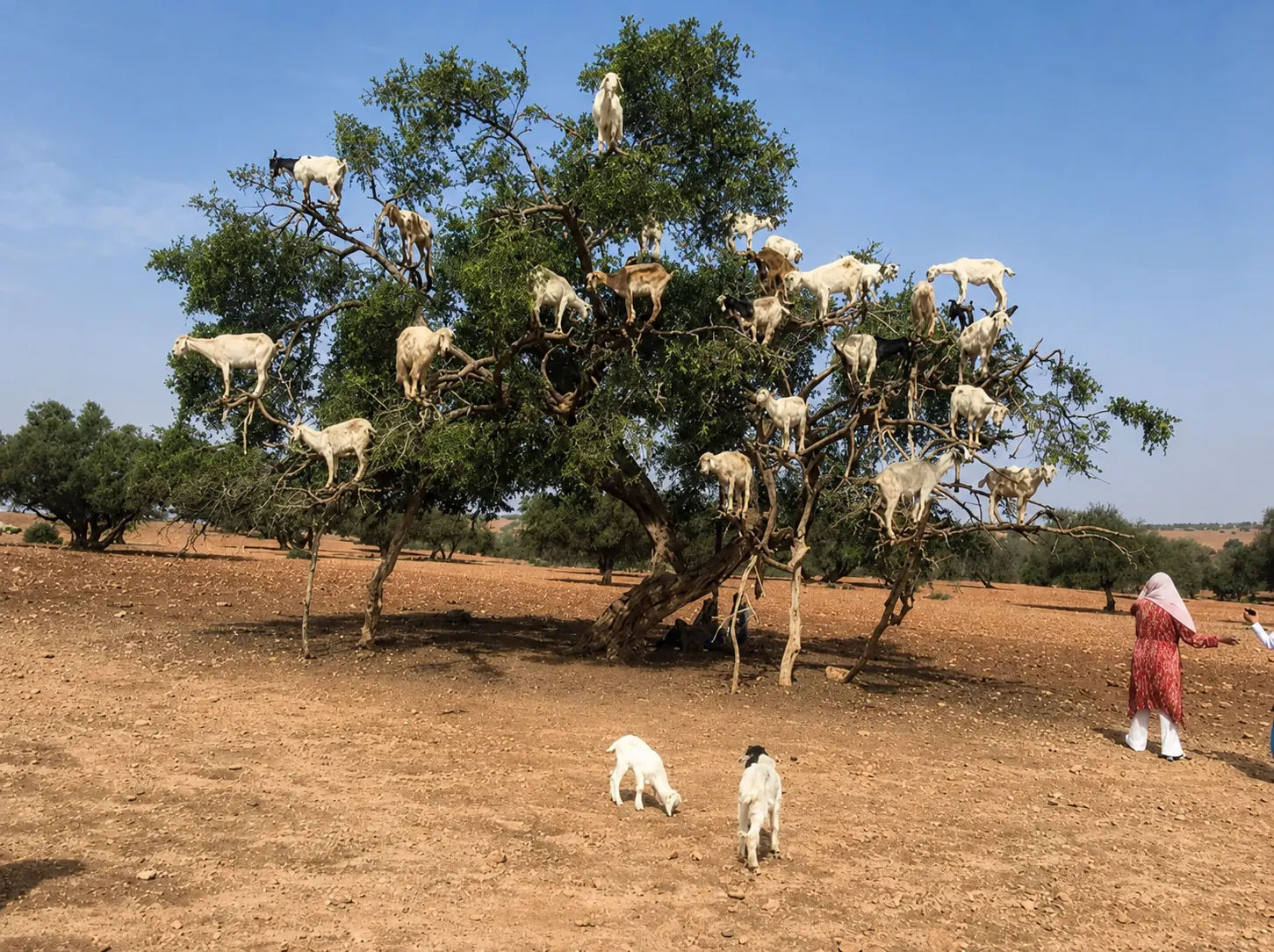
You will also see goats standing in argan trees. Goats do climb argan trees naturally to eat the fruit, but on the main road some herders place them in the branches for photos and ask for payment. If a scene looks staged, it probably is; we prefer to stop where the animals are not kept in the trees for visitors.
Prefer not to drive? Long-distance buses link the two cities in around three hours or a little more, arriving near Bab Marrakech. Our private Essaouira day trip from Marrakech takes care of the road and lets you stop where you like.
One day in Essaouira, hour by hour
This plan assumes you arrive around 11 am and leave around 5 pm, the usual rhythm of a day trip from Marrakech. Adjust it to your own pace: Essaouira is a place to wander, not to rush.
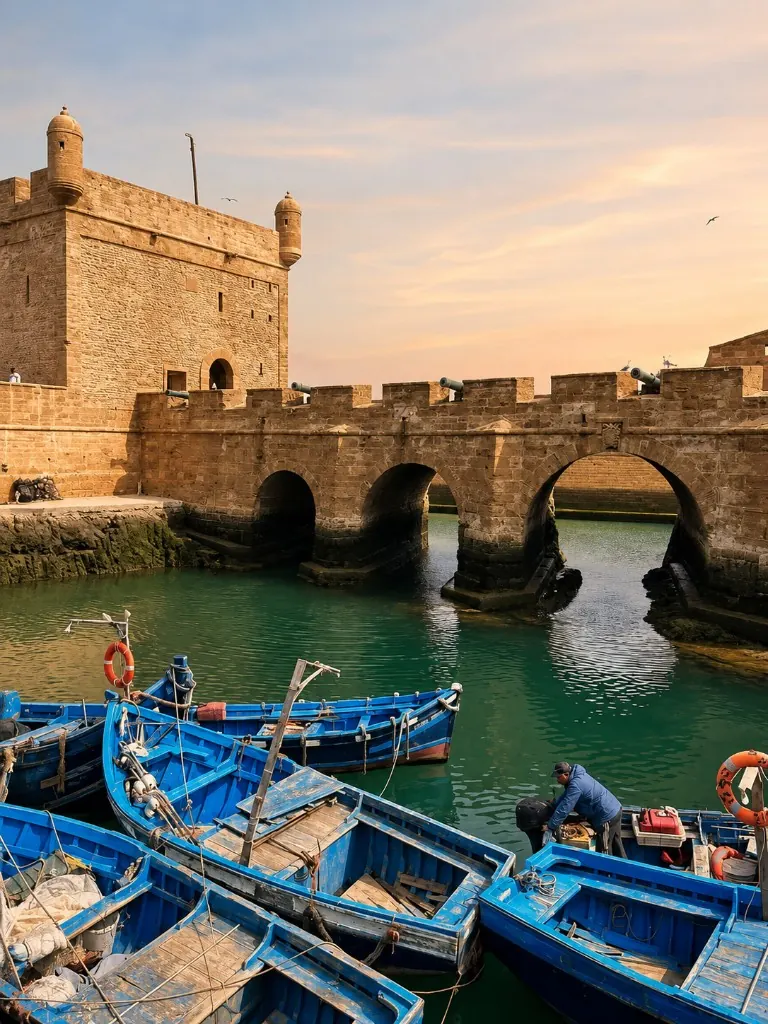
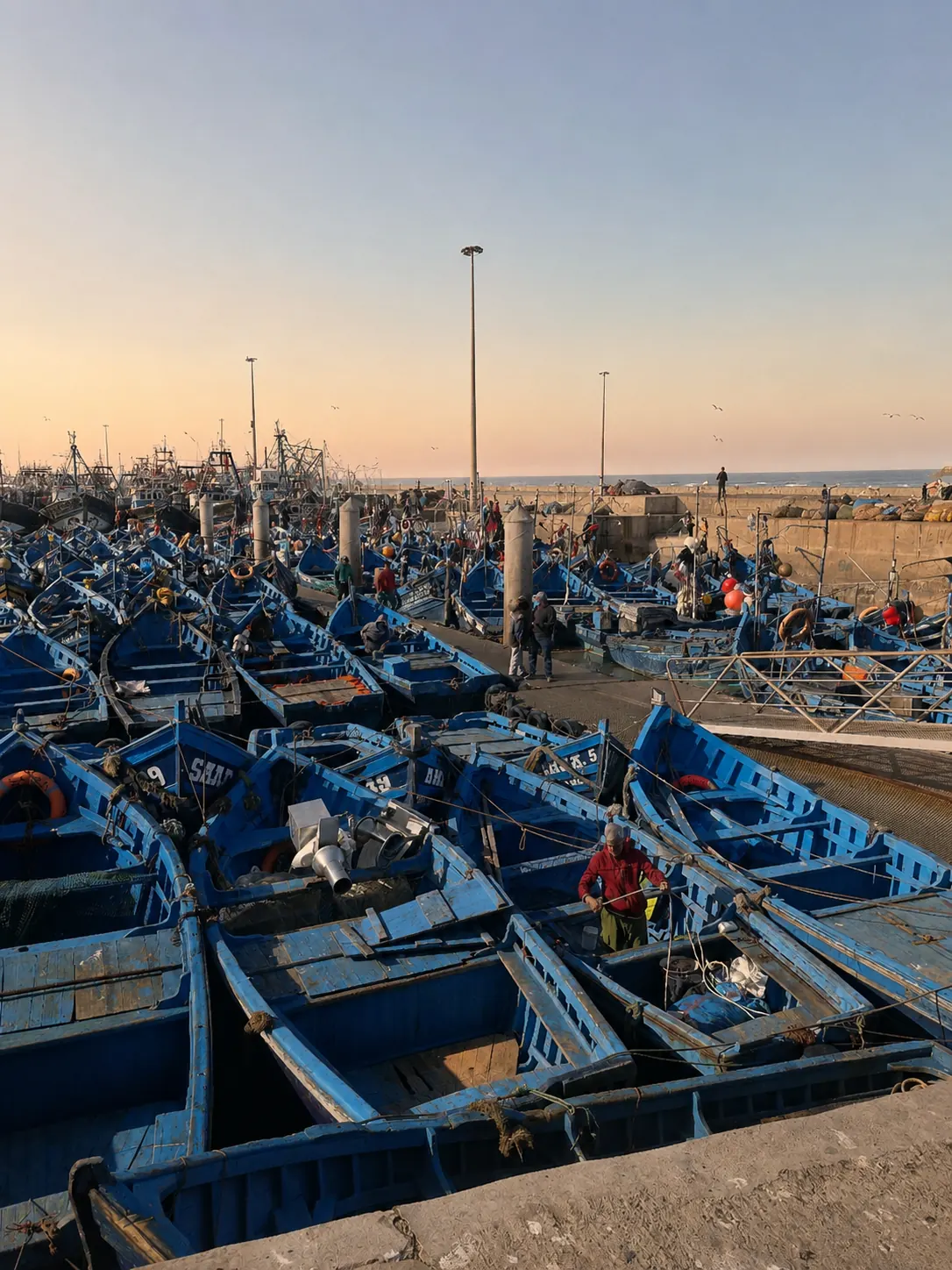
11:00 – The fishing portBlue boats, fishermen and the Skala du PortStart where the town began. Fishermen mend nets beside rows of blue wooden boats, gulls wheel overhead and the catch is sold on the quay. Climb the Skala du Port, the sea tower at the harbour entrance, for the classic view back over the ramparts and the medina.
12:00 – Moulay Hassan square and the rampartsSea views and old cannonsWalk through the gate onto the open square between the port and the medina, then follow the Skala de la Ville, the long sea bastion lined with old bronze cannons, where waves break against the rocks below.
13:00 – Lunch by the harbourGrilled fish, as fresh as it getsChoose your fish and seafood at the grill stalls near the port and have it cooked in front of you, or sit down in a medina restaurant. See the tips below on agreeing the price.
14:30 – The medina and the woodcarversThuya wood, galleries and the old MellahWander the main street and the lanes off it. Under the ramparts, workshops carve and inlay thuya, a fragrant local wood. Look into the art galleries, the spice and jewellery souks, and the old Jewish quarter, the Mellah.
16:00 – The beachA long, windy baySouth of the medina, a wide sandy beach curves around the bay. Walk along the shore, watch the kitesurfers and windsurfers, or have a mint tea at a beach café before the drive back. Camel and horse rides are offered on the sand; agree the price and duration first.
17:00 – Back to MarrakechHome for dinnerLeaving around five brings you back to Marrakech in the evening, in time for dinner. In summer, when days are long, you can stay a little later for the light over the harbour.
Where and what to eat in Essaouira
Fish is the reason to have lunch in Essaouira. The grill stalls near the port let you choose sardines, sea bream, prawns or calamari from the display and have them grilled with bread, salad and a little cumin and lemon. It is simple, fresh and memorable.
- Agree the price before cooking. Prices are by weight; ask for the total for your choice, including bread and salad, before the fish goes on the grill.
- Try the sardines. The local catch is excellent, and it is usually the best value on the menu.
- For a sit-down lunch, the medina has restaurants serving fish tagine and seafood pastilla, with terraces looking over the rooftops.
- Finish with something sweet from a pastry shop, and a mint tea.
Beyond the medina
If you have a little more time, the coast around Essaouira is worth exploring. South of the town, the beach continues for kilometres towards the village of Diabat, with its dunes and the ruins of an old fort half buried in the sand. Further south, the small village of Sidi Kaouki has a wide, wild beach popular with surfers and walkers, and a quiet atmosphere far from the medina crowds.
Inland, the argan forest and the hills behind the coast are good for walking, and some cooperatives welcome visitors to see the whole process of argan oil production, from the fruit to the press. These detours work best with an overnight stay or with your own driver.
One day or one night in Essaouira?
A day trip is enough to see the port, the ramparts, the medina and the beach. But Essaouira has a slower side that only appears after the day visitors leave: quiet lanes in the evening, sunset over the sea wall, dinner in a riad and an early-morning walk to the port as the boats return. If you have time, one night makes the visit far more relaxing and halves the driving on a single day.
Essaouira also fits naturally into a longer route: as a coastal stop between Marrakech and Agadir, or as the last, restful days of a trip that started in the desert. Our 10 day Morocco itinerary shows how to add it, and our best day trips from Marrakech compares it with the other options.
Best time to visit Essaouira
Essaouira is pleasant all year. Its climate is mild, rarely very hot or very cold, because of the Atlantic and the trade winds. That wind, strongest in spring and summer, is what makes the town a centre for kitesurfing and windsurfing, and also why it feels much cooler than Marrakech in July and August. In summer, it is the perfect escape from the inland heat; in winter, it is cooler and quieter, with occasional rain. The town also hosts music festivals during the year, which bring crowds and a festive atmosphere; check dates before you travel. For the whole year, see the best time to visit Morocco.
Practical tips for a day in Essaouira
- Bring a jacket or a windproof layer, even on sunny days. The wind off the sea is cool.
- Wear comfortable shoes for the ramparts and the cobbled medina.
- Protect your food from the gulls at the port; they are bold.
- Carry small change for the Skala du Port entrance, tips and cafés.
- Respect the fishermen. Ask before photographing people at work.
- Swim carefully. The Atlantic is cool and the wind can be strong; swim only where others do and follow local advice.
“Essaouira is where Marrakech travellers come to slow down. Give it an afternoon on the ramparts with the wind in your face, and you will understand why so many artists stayed.”
Want to see Essaouira without the stress of the road? Book our private Essaouira day trip from Marrakech, browse our day trips from Marrakech, or send us your dates and message us on WhatsApp.