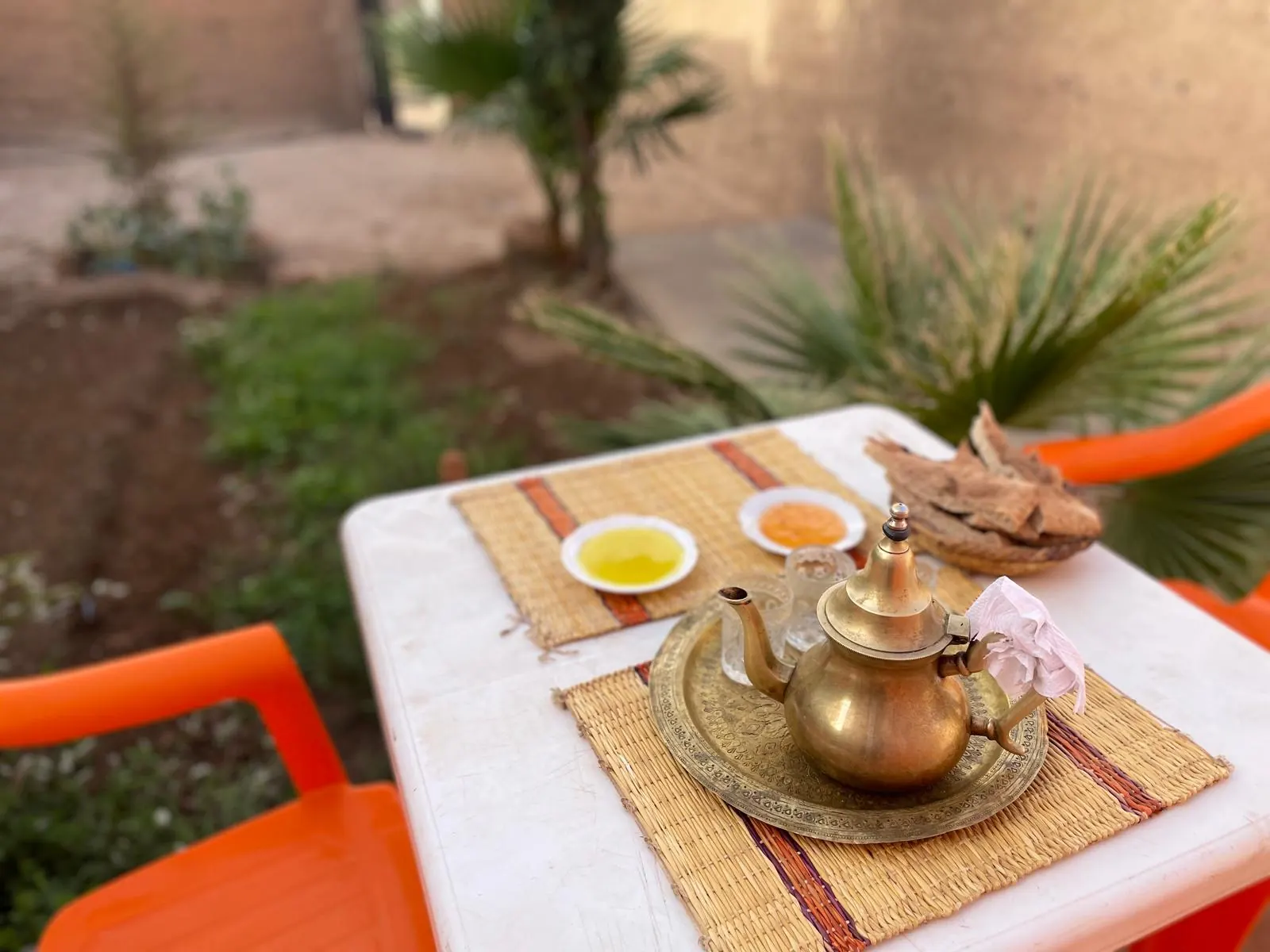
In Morocco, tea is never just tea. It is the beginning of a conversation, the pause between journeys, and the signal that you are welcome.
Moroccan mint tea — atay bi naana — is served everywhere. In riads, in desert camps, in mountain homes, in carpet shops, in the back of a Land Cruiser parked at a roadside viewpoint. Refusing it outright is possible, but unusual. Accepting it is an act of trust.
The ritual of three pours
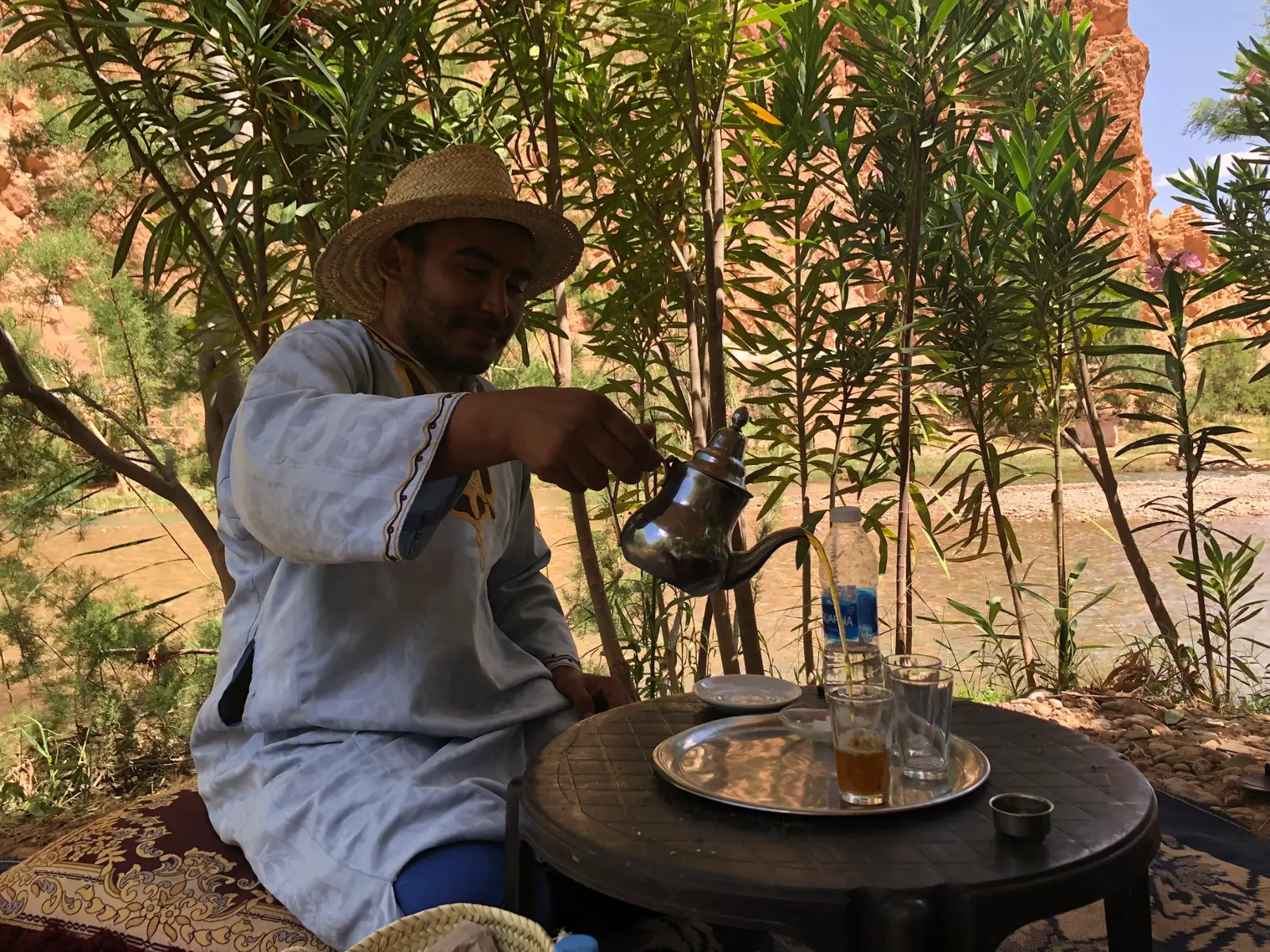
Proper Moroccan tea is poured from height — sometimes dramatically so — to create a foam on the surface and aerate the flavour. The first pour is strong and bitter. It is returned to the pot. The second pour balances. The third is sweet, light, and perfect.
“The first glass is like life — bitter. The second is like love — sweet but complicated. The third is like death — gentle, accepting, complete.”
Gunpowder green tea from China, fresh spearmint, and an extraordinary amount of sugar — that is the recipe. Every family adjusts the ratios. Every region has its preference. In the south, tea tends sweeter. In the mountains, stronger.
- Hold the glass by the rim — the tea is served hot.
- If the tea is too sweet, say so politely. Your host will adjust.
- Never rush a tea ceremony. The conversation matters as much as the drink.
- Learn to pour if invited — it is a genuine honour.
On our journeys, tea marks transitions. Leaving Marrakech. Arriving at a kasbah. Reaching the dunes. Sitting down after a long walk. Each cup is a small reset — a moment to breathe, to look around, to remember where you are.
That is the art of Moroccan mint tea. Not the recipe. The pause.
You will be offered mint tea everywhere — in a Berber family home in the Atlas, in the desert camp at Merzouga and in every shop in the souk. To learn the ritual first-hand, join our Moroccan cooking class in Marrakech, and read our Morocco travel tips for the other small customs worth knowing.