“Should we avoid Morocco during Ramadan?” It is one of the questions I am asked most often, and my answer is almost always no. Ramadan changes the rhythm of the country, not its welcome. Days are quieter, evenings are joyful, and you see a side of Moroccan life that visitors in other months never experience. You simply need to know what to expect and plan a few things differently.
The short answer: Ramadan 2027 is expected to begin around 8 February 2027 and end in early March, with Eid al-Fitr expected on 9 or 10 March 2027. Visitors are not expected to fast. Hotels, riads, tourist restaurants and sites stay open, though hours can be shorter. Be discreet when eating or drinking in public during the day, expect quieter afternoons and lively evenings, and allow for busy roads around Eid.
Ramadan dates in Morocco: 2027 and 2028
Ramadan is the ninth month of the Islamic lunar calendar. Because the lunar year is shorter than the solar year, Ramadan moves about eleven days earlier every year. In Morocco, the start and end of the month are confirmed by the official sighting of the new moon, announced by the Ministry of Habous and Islamic Affairs, usually the evening before. The dates below are expected dates and may move by a day.
| Year | Expected start | Expected end | Eid al-Fitr (expected) |
|---|---|---|---|
| 2027 | Around 8 February | Early March | 9 or 10 March 2027 |
| 2028 | Around 28 January | Late February | Around 27 February 2028 |
If your trip falls close to these dates, we confirm the exact days with you as soon as they are officially announced.
What Ramadan is
During Ramadan, Muslims fast from dawn to sunset: no food, no drink, not even water, and no smoking. It is a month of prayer, reflection, family and generosity. Fasting is not expected of children, the elderly, the sick, pregnant women or travellers, and it is certainly not expected of visitors. For most Moroccans, Ramadan is a happy time, and the evenings in particular feel like a celebration.
What a day during Ramadan looks like
- Before dawn: families eat suhoor, a light meal before the fast begins. In some medinas, a drummer still walks the streets to wake people.
- Morning: life starts later than usual. Shops and offices often open later.
- Afternoon: the quietest part of the day. People are tired, traffic slows down and some small shops close for a few hours.
- Late afternoon: the busiest moment, as everyone buys bread, dates and sweets before the fast ends. Roads can be hectic just before sunset.
- Sunset: the call to prayer marks iftar, the breaking of the fast. The streets empty almost instantly while families eat together: dates, milk, the soup called harira, eggs, honeyed chebakia pastries and more.
- Evening and night: the towns come alive. Cafés fill up, families walk in the squares and many people stay out late.
What changes for travellers during Ramadan
Eating and drinking
Visitors can eat and drink normally. Hotels, riads and restaurants used to foreign guests serve breakfast and lunch as usual, although some smaller local restaurants close during the day and reopen at sunset. Out of respect, avoid eating, drinking or smoking openly in the street during the day: carry a bottle of water in your bag, drink discreetly and have lunch indoors. You will never be asked to fast.
Alcohol
Alcohol, which is already limited in Morocco, is harder to find during Ramadan. Many shops stop selling it for the month, and some restaurants do not serve it. Licensed hotels generally continue to serve their non-Muslim guests, but check with your accommodation if this matters to you.
Opening hours
Major monuments, museums and gardens usually stay open, sometimes with shorter hours, often closing earlier in the afternoon. Souks are open but quieter in the afternoon and busier in the evening. Banks and offices work shorter days. Plan your visits for the morning and early afternoon.
Atmosphere
Daytime is calmer, and you may find the medinas less hectic than usual. The real magic is after sunset, when Jemaa el-Fna in Marrakech or the squares of Fes fill with families, music and food. Many guests tell me these evenings are among their best memories of Morocco.
Tours, the desert and long drives during Ramadan
Private tours, desert trips and treks run as normal during Ramadan. Many drivers and guides fast, and they are used to it, but a few practical choices make the days more comfortable for everyone:
- Start long drives early, such as Marrakech to the Sahara, and arrive before late afternoon.
- Avoid being on the road at sunset, when traffic is at its most hurried.
- Plan lunch stops at restaurants that serve travellers; your guide will know where.
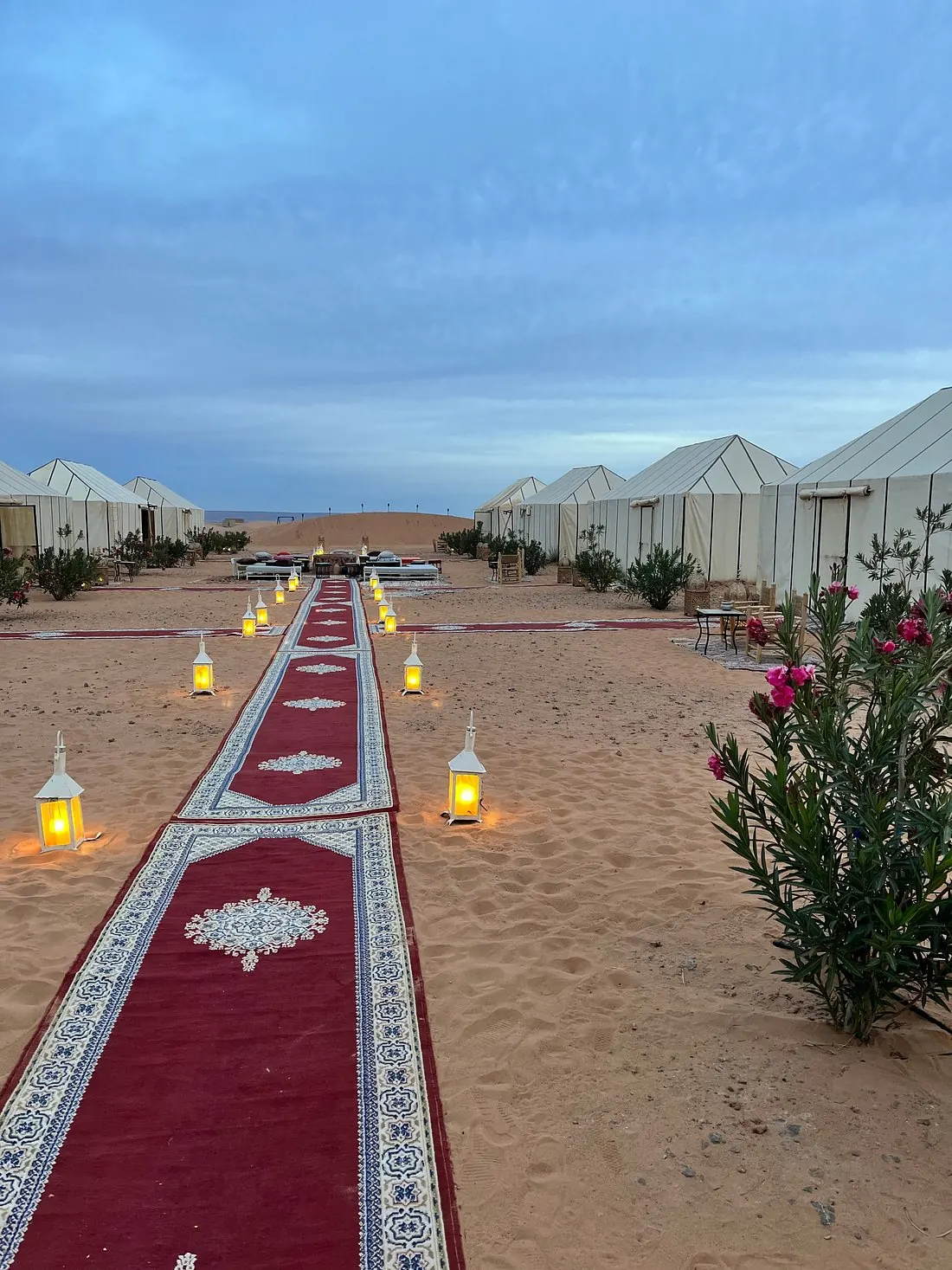
- In the desert, life in the camps continues much as usual. Breaking the fast in the dunes, if your crew invites you to share a date and a glass of tea, is an unforgettable moment.
Our Sahara desert tours and private tours are adapted to the rhythm of Ramadan when your dates fall during the month.
Ramadan etiquette: what to do and what to avoid
| Do | Avoid |
|---|---|
| Greet people with “Ramadan Mubarak” or “Ramadan Karim” | Eating, drinking or smoking openly in the street during the day |
| Dress modestly, especially near mosques | Loud music or public displays of affection |
| Accept an invitation to iftar if one is offered | Asking people why they fast or whether they are hungry |
| Be patient: people are tired in the afternoon | Planning a long drive that ends at sunset |
| Try harira, dates and chebakia after sunset | Expecting every small restaurant to be open at lunch |
Our Morocco travel tips and guide to what to wear in Morocco cover the rest.
Eid al-Fitr: the end of Ramadan
Ramadan ends with Eid al-Fitr, one of the most important holidays of the year. Families gather in their best clothes, visit relatives and share sweets and tea. For visitors, a few things to know:
- Eid is a public holiday, usually lasting one to two days. Many shops, restaurants and souks close, especially on the first day.
- In the days before and after Eid, roads, trains and buses are very busy as people travel to their home towns.
- Hotels and riads remain open, and tourist sites often reopen quickly.
If your trip includes Eid, it is a good day for a calm drive through the countryside or a quiet day at your riad rather than shopping in the souks.
Is Ramadan a good time to visit Morocco?
| Good for | Less good for |
|---|---|
| Seeing a deeper side of Moroccan life | Travellers who want long, busy afternoons in the souks |
| Lively, festive evenings | Nightlife involving alcohol |
| Calmer medinas during the day | Travelling on Eid itself |
| The desert and the mountains, which change little | Very tight schedules with no flexibility |
In 2027, Ramadan falls in February and early March, a pleasant season with mild days and cool nights. See our guides to Morocco in March and the best time to visit Morocco.
“During Ramadan, the whole country waits for the same moment. When the call to prayer comes at sunset and everyone sits down to eat together, you understand Morocco a little better.”
Travelling during Ramadan? Tell us your dates and we will plan the days around its rhythm. Send your dates or write to us on WhatsApp.