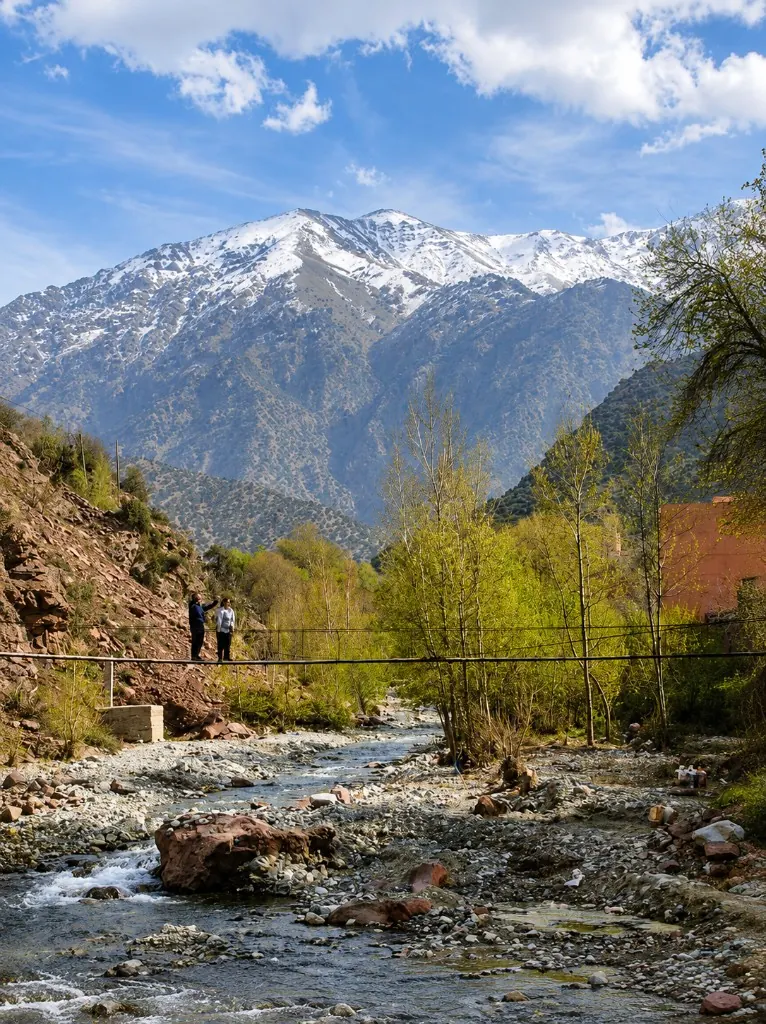

Jbel Toubkal is the highest mountain in North Africa, at 4,167 metres. It rises barely 70 kilometres from Marrakech, and it does not require technical climbing in summer. That combination makes it one of the most rewarding summits a reasonably fit walker can reach anywhere in the world.
Where Toubkal is
Toubkal stands at the heart of the High Atlas, inside Toubkal National Park, one of the oldest national parks in Morocco. Almost every ascent starts in the village of Imlil, at about 1,740 metres, around an hour and a half by road from Marrakech. Imlil is a small Berber village of walnut trees, terraced fields and mule tracks — and, for many trekkers, their first real encounter with mountain life in Morocco. If you are curious about that world, read our piece on living with Berber families in the Atlas.
The classic route
The standard route climbs from Imlil through the village of Aroumd and the Mizane valley, past the small shrine of Sidi Chamharouch, to the Toubkal refuges at about 3,200 metres. Most trekkers sleep at a refuge and leave before dawn for the summit, which takes three to four hours up a long slope of scree and rock through the South Cirque. On a clear morning the view from the top reaches across the Atlas toward the Sahara.
Our 3 day Toubkal trek uses a slightly longer approach via Azib Tamsoult, which is quieter and gives your body an extra day to adapt to the altitude before the summit.
2 days or 3 days?
A two-day ascent is possible — Imlil to the refuge on day one, summit and descent on day two — but it is physically demanding: the summit day involves around 1,000 metres of ascent followed by more than 2,400 metres of descent. A three-day trek is more comfortable, safer for acclimatisation and far more enjoyable. If you have extra time, a longer circuit through the surrounding valleys and passes is even better.
How hard is it?
Toubkal is a strenuous trek, not a climb, from late spring to autumn. You need good general fitness and to be comfortable walking six to eight hours a day on steep, rocky paths. The main challenge is altitude: above 3,000 metres many people feel headaches, breathlessness or poor sleep. Walk slowly, drink plenty of water and tell your guide if you feel unwell — descending is the cure for altitude sickness.
In winter (roughly December to March) the mountain is covered in snow and ice. The ascent then becomes a mountaineering route requiring crampons, an ice axe and experience — or an experienced guide with the right equipment.
Do you need a guide?
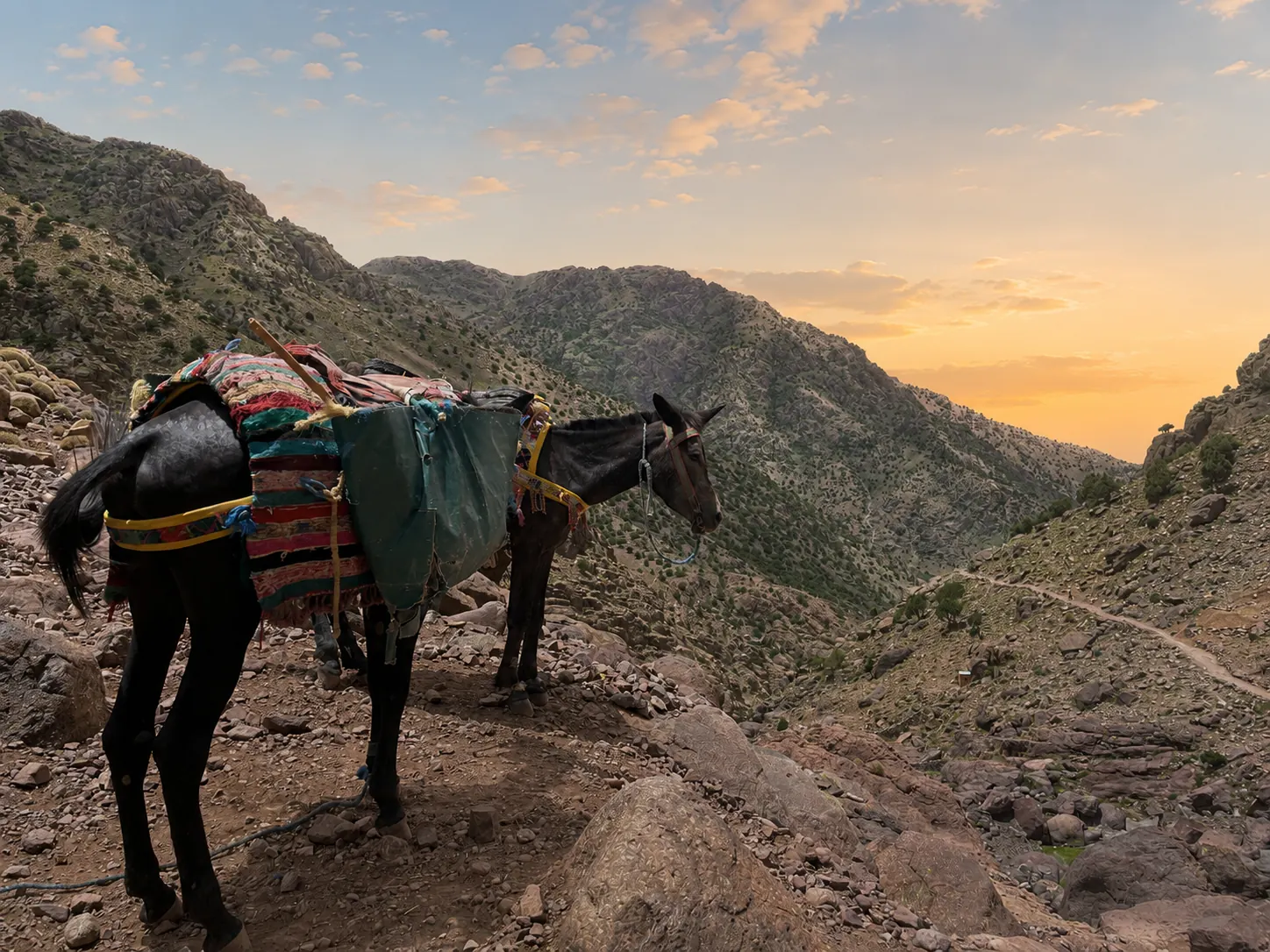
Yes. Moroccan authorities require foreign trekkers on Toubkal to be accompanied by a certified mountain guide, and checks are made on the trail. Beyond the rules, a local guide knows the weather, the safest paths and the refuges — and usually brings a cook and a muleteer, which makes the whole experience far more comfortable. The UK government's Morocco travel advice also recommends hiring a professional guide for hiking in the Atlas.
Best time to climb Toubkal
- April to June: long days, wildflowers in the valleys, sometimes late snow near the summit early in the season.
- September and October: stable weather, clear views and pleasant temperatures. Our favourite season.
- July and August: very hot in Marrakech, but comfortable in the mountains. Busy on the trail.
- December to March: winter ascent only, with mountaineering equipment.
What to pack
- Broken-in hiking boots with good grip.
- Warm layers and a windproof, waterproof jacket — it can be below freezing on the summit before sunrise, even in summer.
- Hat, gloves, sunglasses and high-factor sunscreen.
- A head torch for the pre-dawn start.
- Walking poles for the long descent.
- A daypack with water, snacks and personal medicine. Your main bag travels by mule.
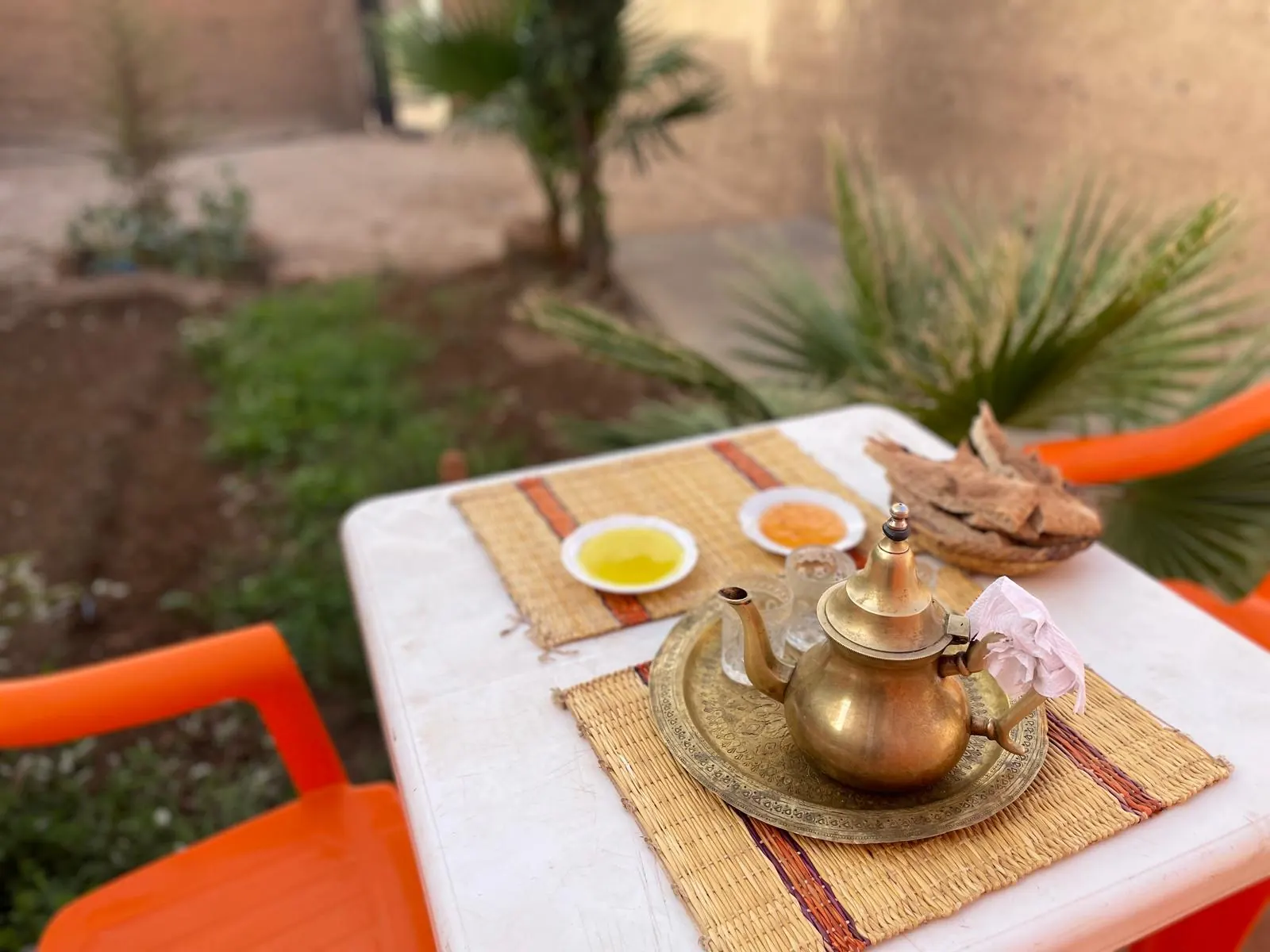
“The summit is not the moment people remember most. It is the light on the ridges as you climb in the dark — and the tea waiting at the refuge when you come back down.”
Not ready for the summit? Our Atlas Mountains day trip from Marrakech gives you the valleys, villages and mountain views without the altitude. And if you want a longer, wilder adventure, the 7 day Jbel Saghro trek crosses a volcanic massif few travellers ever see.
Frequently asked questions
How long does it take to climb Toubkal?
Most trekkers take 2 or 3 days from Imlil. Three days is recommended for better acclimatisation and a more comfortable summit day.
Is climbing Toubkal difficult?
It is a demanding trek rather than a technical climb outside winter. Good fitness is needed, and altitude above 3,000 m is the main challenge.
Do you need a guide to climb Toubkal?
Yes, foreign trekkers must be accompanied by a certified mountain guide, and it is strongly recommended for safety in any case.
When is the best time to climb Toubkal?
April to June and September to October offer the best conditions. From December to March the summit requires winter mountaineering equipment.