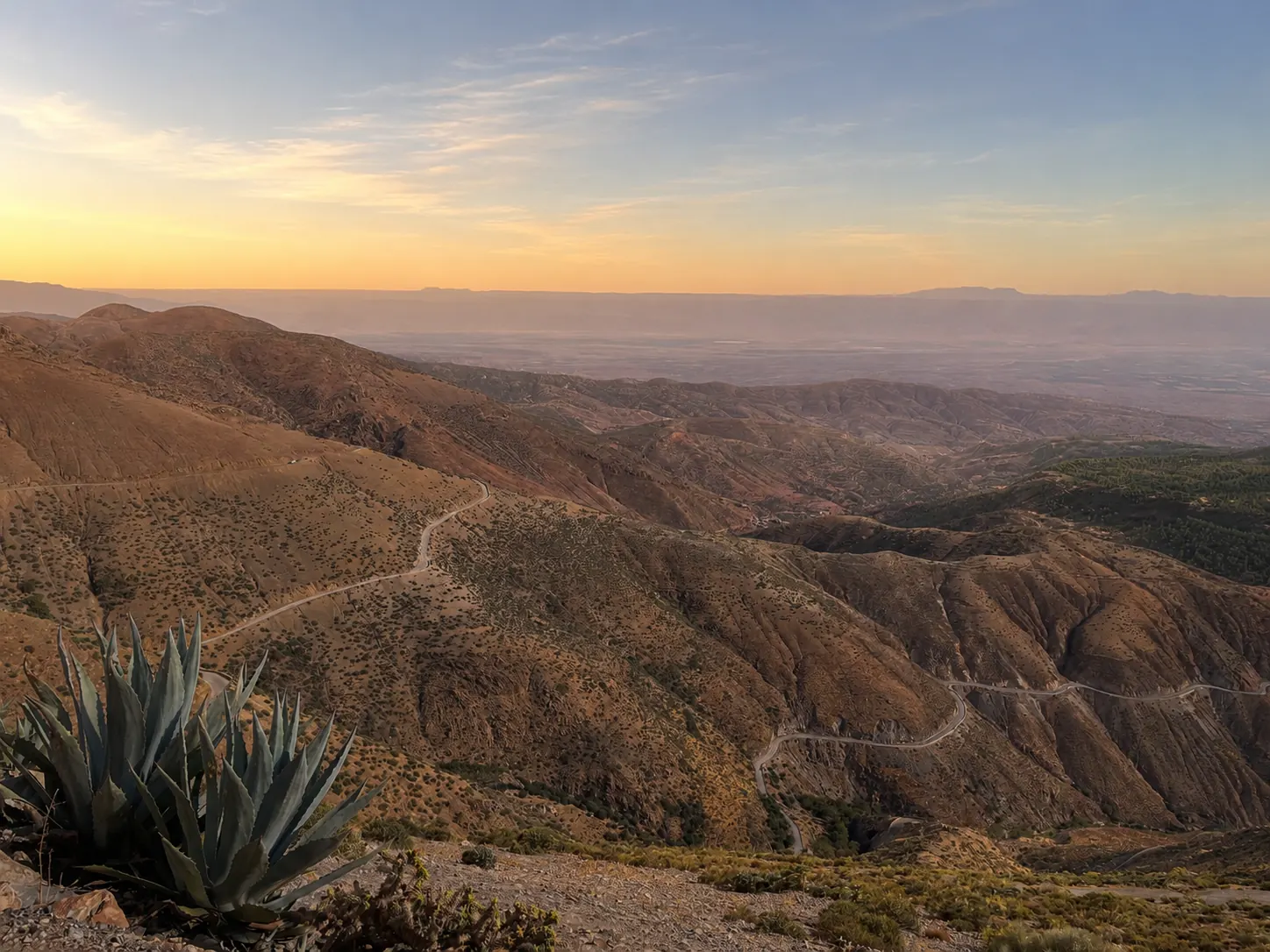
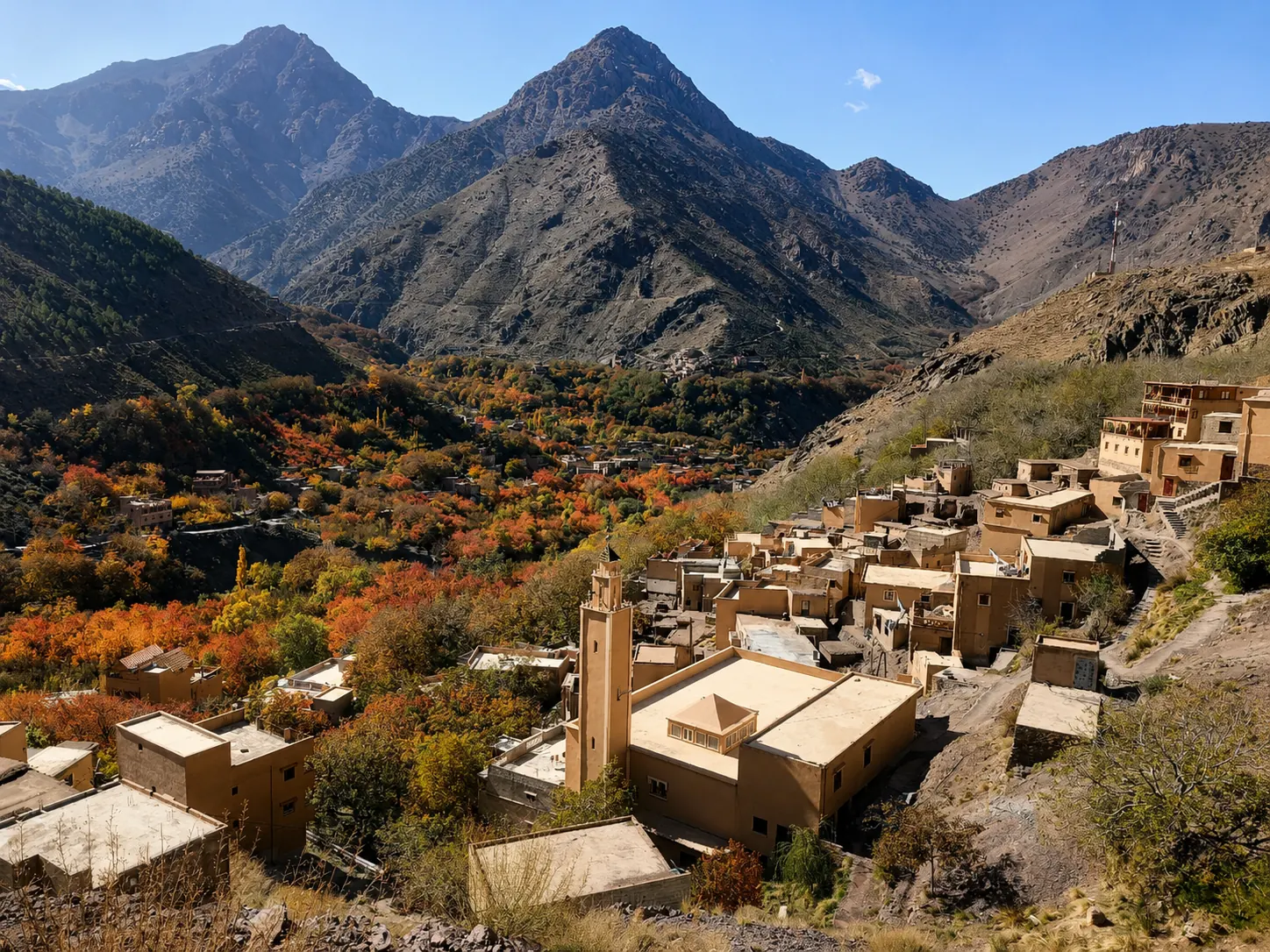
The Atlas Mountains are the backbone of Morocco: a chain of ranges that runs for hundreds of kilometres between the Atlantic and Algeria, separating the cities of the north from the Sahara. For walkers, they offer something rare: real mountain landscapes, with peaks above 4,000 metres, only an hour or two from Marrakech, and a living Berber culture in every valley you cross.
Atlas Mountains trekking can mean very different things, from a gentle half-day walk between villages to a week-long crossing of a volcanic massif. This guide helps you choose the right trek for your level, your season and the time you have.
The short answer: for a first trek, choose two or three days of village walking in the High Atlas around Imlil, or the classic Toubkal ascent if you are fit and want a summit. From late autumn to early spring, the warmer, lower Jbel Saghro massif is the better choice. Spring and autumn are the best seasons for the High Atlas, and a local mountain guide is strongly recommended everywhere, and required on Toubkal.
The Atlas ranges at a glance
When travellers say "the Atlas", they usually mean the High Atlas south of Marrakech, but there are several distinct mountain areas, each with its own character.
| Area | Character | Best for | Best season |
|---|---|---|---|
| High Atlas (Toubkal, Imlil) | Highest peaks, deep valleys, walnut trees and terraced villages | First treks, summits, village stays | April–June, September–October |
| M'Goun massif (central High Atlas) | Remote valleys, river gorges, very few visitors | Experienced walkers with a week | Late spring to early autumn |
| Jbel Saghro (eastern Anti-Atlas) | Volcanic rock towers, nomad camps, desert light | Winter and spring trekking, photographers | October–April |
| Middle Atlas | Cedar forests, lakes, gentle hills | Easy walks on the way to Fes | Spring to autumn |
The best Atlas Mountains treks
1. Village walks around Imlil and the Ait Mizane valley
The easiest introduction to the mountains. From Imlil, about an hour and a half from Marrakech, mule tracks link villages of earth and stone houses, walnut groves and irrigated terraces. You can walk two to five hours a day, eat lunch with a local family and sleep in a village guesthouse. No previous trekking experience is needed, only reasonable fitness and good shoes.
Our 3 day Atlas Mountains village trek from Marrakech follows this kind of route. If you only have one day, the Atlas Mountains and Berber village day trip gives you the landscapes and a family lunch without an overnight stay.

2. The Toubkal ascent
Jbel Toubkal, at 4,167 metres, is the highest mountain in North Africa. From Imlil, the classic route climbs through the village of Aroumd and the Mizane valley to the refuges at around 3,200 metres, then to the summit before dawn on the next day. Outside winter it is a demanding walk rather than a technical climb, but the altitude and the long descent make it a real challenge.
We recommend three days rather than two, for better acclimatisation and a more enjoyable summit day: see our 3 day Toubkal trek and our full guide to climbing Toubkal.
3. Jbel Saghro: the winter trek
Between the High Atlas and the Sahara, Jbel Saghro is a massif of dark volcanic rock, sculpted into towers and canyons, crossed by the seasonal routes of the Ait Atta nomads. It is lower and drier than the High Atlas, which makes it the best Moroccan trekking area from late autumn to spring, when the high peaks are under snow. Nights are cold, days are bright and you may walk for hours without meeting another group.
See our 7 day Jbel Saghro trek from Ouarzazate or the 6 day small group Jbel Saghro trek and village stay.
4. Yoga and slow trekking
For travellers who prefer a gentle rhythm, walking can be combined with yoga sessions, long breaks and nights in mountain guesthouses. Our yoga and sustainable trekking journey is built around this slower approach.
5. Longer crossings
With a week or more, the M'Goun massif and the valleys of the central High Atlas, including the Ait Bouguemez valley, offer multi-day crossings far from the main trails. These routes need careful planning, mule support and a guide who knows the area, so they are best organised as a tailor-made trek.
How hard is trekking in the Atlas?
| Trek | Walking per day | Max. altitude | Level |
|---|---|---|---|
| Village walks around Imlil | 2–5 hours | Around 2,000–2,500 m | Easy to moderate |
| Toubkal (3 days) | 5–8 hours | 4,167 m | Demanding |
| Jbel Saghro (6–7 days) | 4–7 hours | Around 2,500 m | Moderate |
The paths are mostly old mule tracks: rocky, sometimes steep, but rarely exposed. The main difficulties are the length of the days, the descent on loose stones and, above 3,000 metres, the altitude. Walk slowly, drink plenty of water and tell your guide if you feel headaches or nausea; going down is the best remedy for altitude sickness.
When to go trekking in the Atlas Mountains
- Spring (April to June): green valleys, wildflowers and long days in the High Atlas. Early in the season, snow can remain above 3,000 metres.
- Summer (July and August): very hot in Marrakech but pleasant in the high valleys; Toubkal is busy. Jbel Saghro is too hot.
- Autumn (September to November): stable weather, clear views and harvest time in the villages. Our favourite season for the High Atlas.
- Winter (December to March): snow on the high peaks; Toubkal becomes a winter mountaineering route requiring crampons and an ice axe. This is the best time for Jbel Saghro.
For the rest of your trip, see our month-by-month guide to the best time to visit Morocco.
What a trekking day looks like
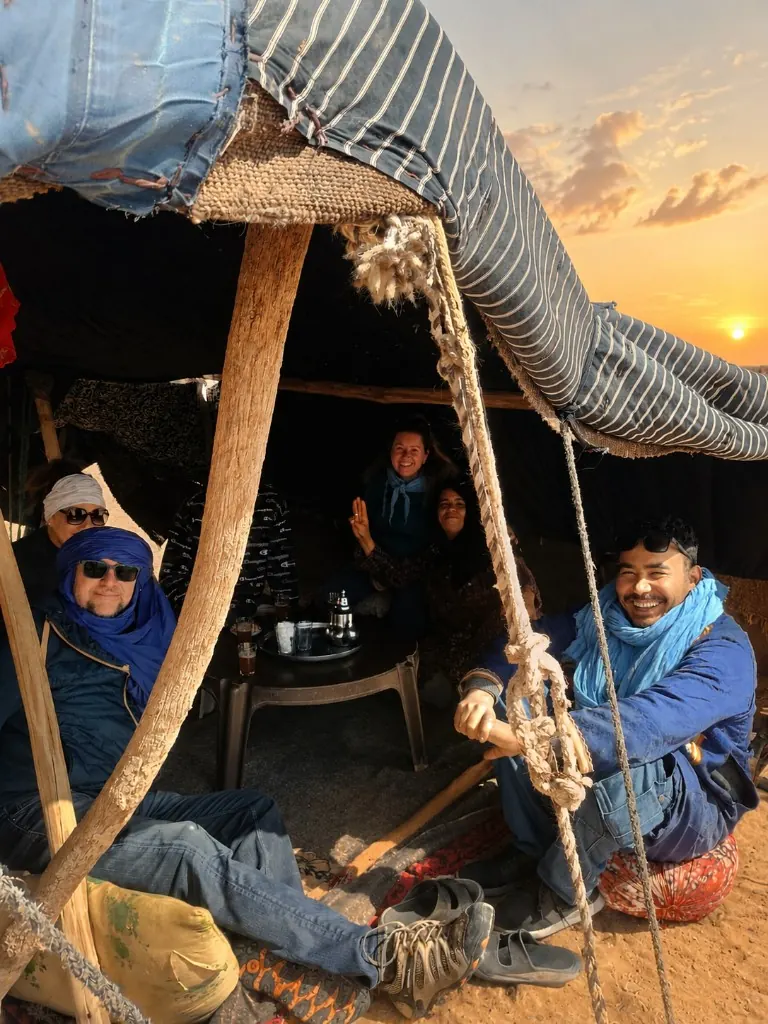
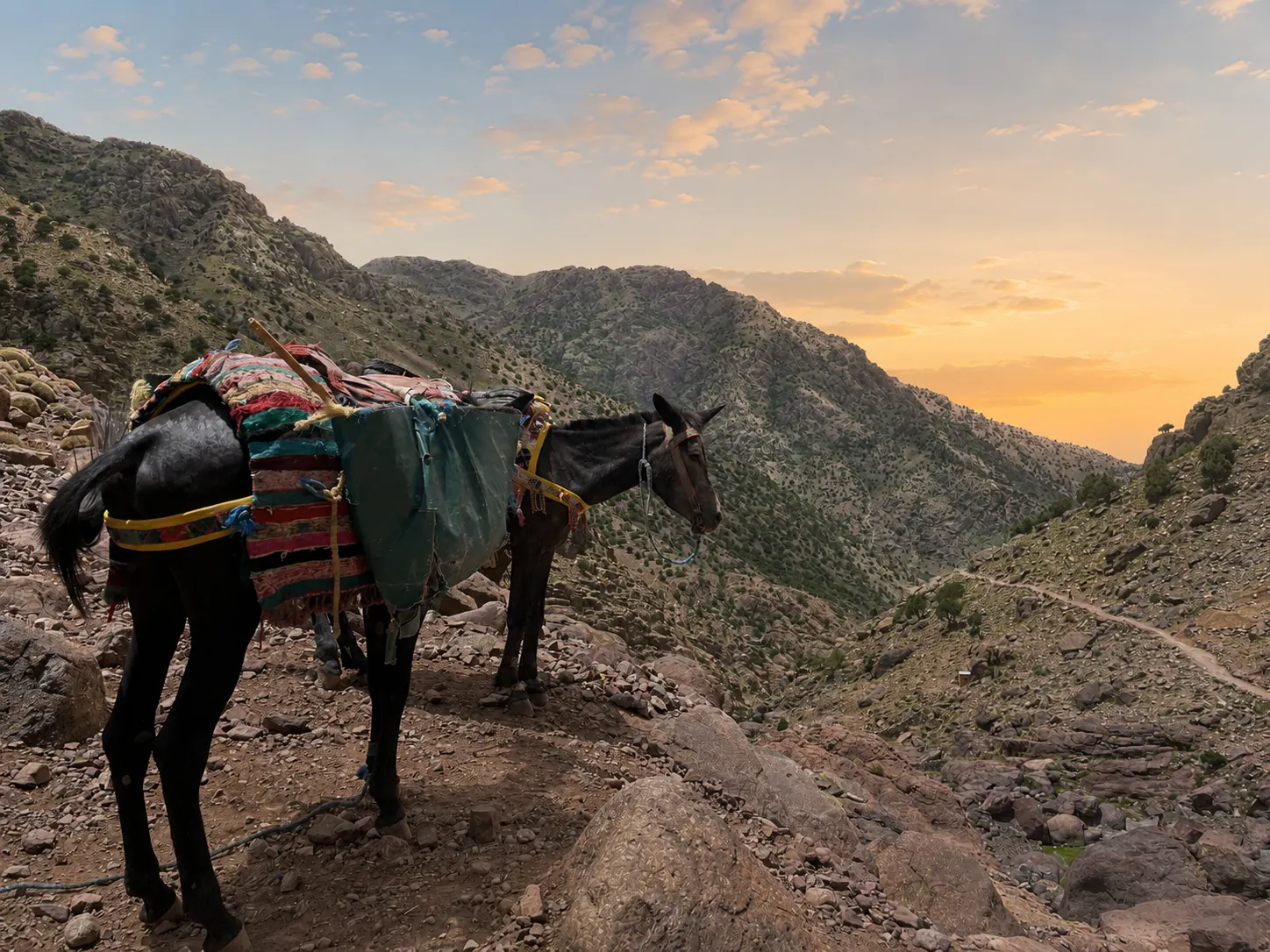
Days start early, after a breakfast of bread, olive oil, honey and mint tea. You walk with a daypack while mules carry the luggage, food and cooking equipment. Around midday, the team prepares lunch in the shade of walnut trees or near a spring: salads, bread, sardines or a tagine. The afternoon walk is usually shorter, and you reach the guesthouse, gite or camp in time to rest, wash and drink tea before dinner.
Nights are spent in village guesthouses (gites), mountain refuges on Toubkal or camps in Jbel Saghro. Rooms are simple and clean, often with shared bathrooms, and blankets are provided. To understand village life, read our story about living with Berber families in the Atlas.
Guides, mules and safety
A local mountain guide is strongly recommended on every Atlas trek, and foreign trekkers on Toubkal must be accompanied by a certified guide. A guide knows the paths, the weather and the families in the villages, and turns a walk into a cultural experience. On multi-day treks, a muleteer and often a cook travel with the group.
Before you go, read your government's travel advice, for example the UK Foreign Office advice for Morocco, and check that your travel insurance covers hiking at the altitude you plan to reach.
What to pack for an Atlas trek
- Broken-in walking boots with good grip, plus light shoes for the evening.
- Layers: a breathable T-shirt, a fleece, a warm jacket and a waterproof shell. Mountain nights are cold even in summer.
- Sun hat, sunglasses, sunscreen and lip balm.
- A 20–30 litre daypack and a water bottle.
- A head torch for early starts and village nights.
- Walking poles for the descents.
- Modest clothing for the villages; see what to wear in Morocco.
- Some cash in small notes for drinks and village shops.
How to combine a trek with the rest of Morocco
Treks in the High Atlas fit easily before or after a few days in Marrakech; read our things to do in Marrakech. Jbel Saghro combines naturally with the desert: after the trek, continue to the dunes of Merzouga on one of our Sahara desert tours.
“In the Atlas, the summit is never the whole story. It is the tea in a village house, the children walking to school and the mule bells in the morning that people remember.”
Ready to walk? Browse all our treks in Morocco, start with the 3 day Atlas village trek or aim for the summit on the Toubkal trek. Tell us your dates and level, or write to us on WhatsApp, and we will suggest the right route.