"What should I wear?" is one of the questions I am asked most often before a trip, especially by women travelling for the first time. The honest answer is simpler than many guides make it sound: Morocco is a relaxed, welcoming country, and you do not need a special wardrobe. A few choices will simply make you more comfortable, more at ease in the medinas and better prepared for the very different climates you will cross in a single journey.
The short answer
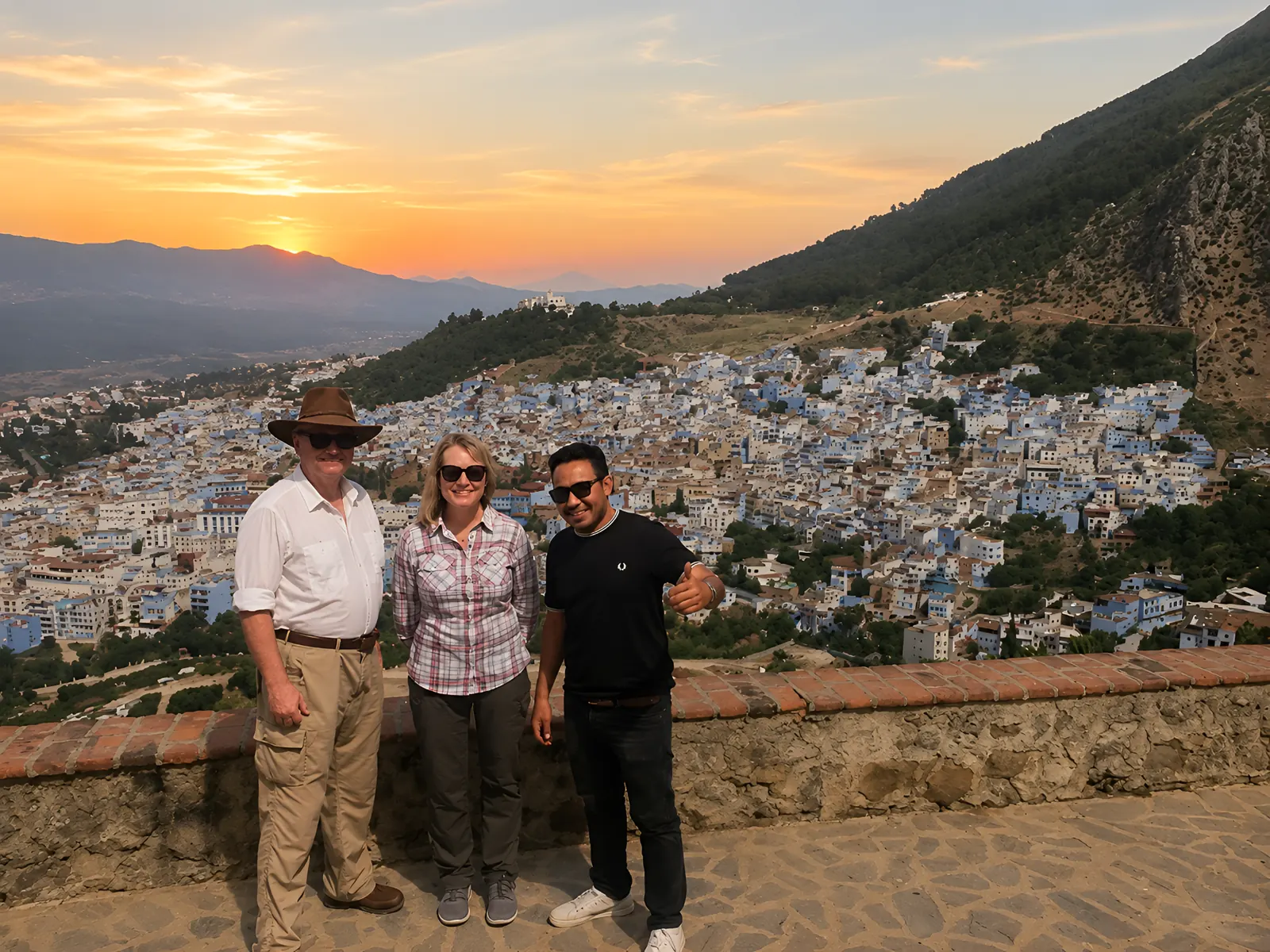
- Cover your shoulders and knees in towns, villages and religious sites. Loose trousers, midi or maxi skirts and T-shirts with sleeves are perfect.
- Choose light, breathable fabrics such as cotton and linen for the day.
- Always pack layers. Mountain passes and desert nights are much colder than Marrakech.
- Bring comfortable, closed shoes for the uneven lanes of the medinas.
- Carry a light scarf. It protects you from the sun and the sand, and covers your shoulders when needed.
Why modest clothing helps
Morocco is a Muslim country, and most Moroccans dress modestly, particularly outside the big cities. There is no legal dress code for visitors, and in modern parts of Marrakech or Casablanca you will see every style. But covering shoulders and knees shows respect, attracts less attention in busy souks and makes interactions with local people, especially in rural areas, more natural.
It is also practical: loose, covering clothes keep you cooler under the strong sun than shorts and vests.
What to wear in Morocco as a woman
Women travelling with us often worry about this point, so here is what works well. Wide-leg trousers or long skirts, tops that cover the shoulders, and a long cardigan or light shirt to throw on are the basics. Tight or see-through clothing and very short shorts or skirts will draw looks in the medinas and villages, even if nobody will say anything.
You do not need to cover your hair. When visiting a mosque open to non-Muslims, such as the Hassan II Mosque in Casablanca, modest clothing is required, and many women like to bring a scarf. For more on travelling confidently, read our honest answer to Is Morocco safe to visit?
What to wear in Morocco as a man
Men have it easier, but the same principles apply. Long trousers or knee-length shorts are fine in the cities; long trousers are better in villages and religious sites. Avoid going shirtless anywhere other than the beach or a pool. A shirt with a collar is a nice touch for a dinner in a fine riad or restaurant.
What to wear, place by place
In the medinas of Marrakech and Fes
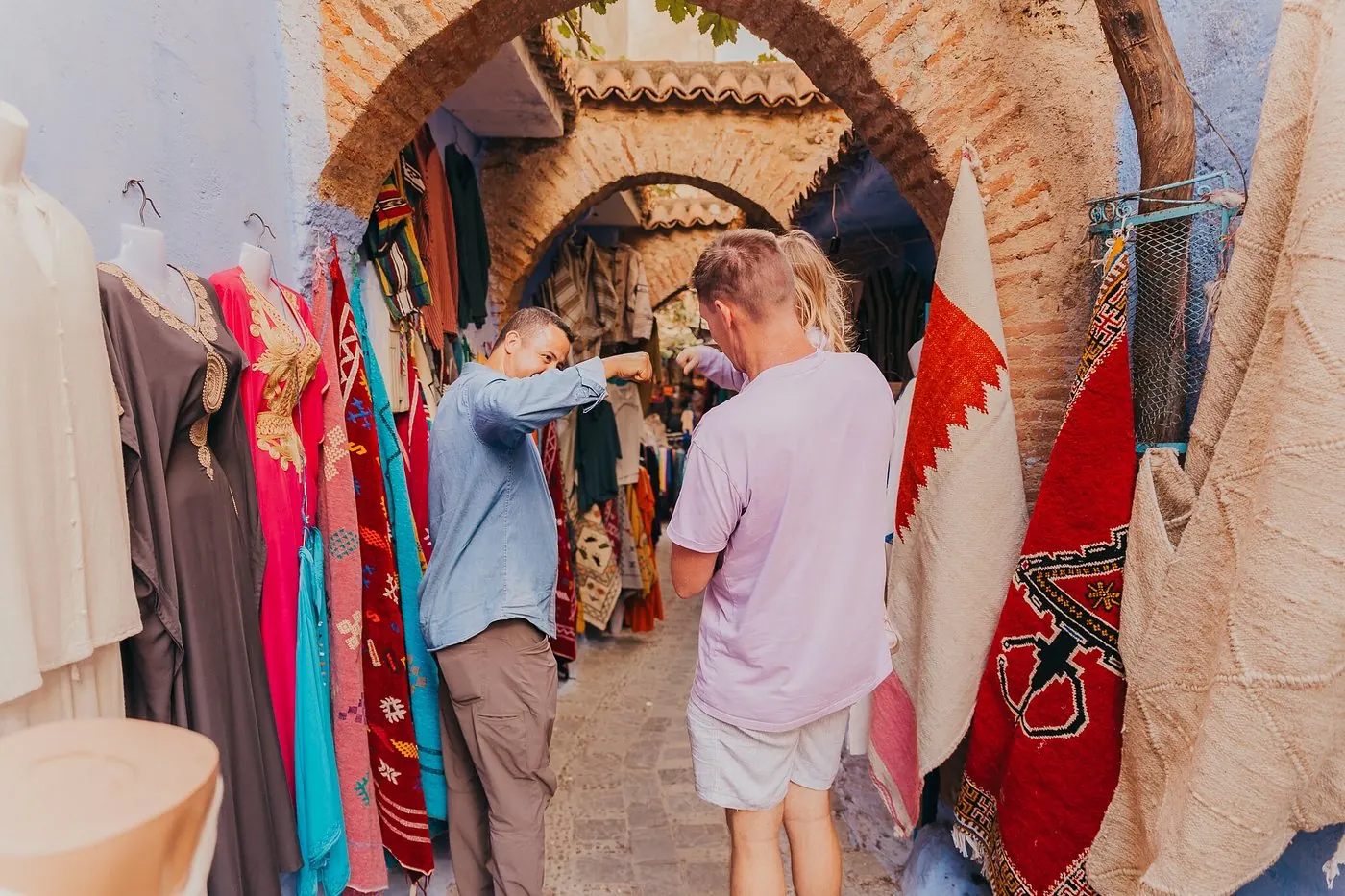
Expect narrow lanes, uneven paving, steps, the occasional donkey and plenty of walking. Comfortable trainers or sturdy sandals with a back strap are essential. A cross-body bag is easier to manage in the crowds. Read our guide to the Fes medina to know what to expect.
In the Atlas Mountains
The High Atlas is cooler than the plains all year round, and much colder in winter. Bring a warm fleece or down jacket, a waterproof layer and good walking shoes, even for a day trip. On a trek such as the Toubkal trek, proper hiking boots and thermal layers are a must; our guide to climbing Toubkal has a full list.
In the Sahara desert
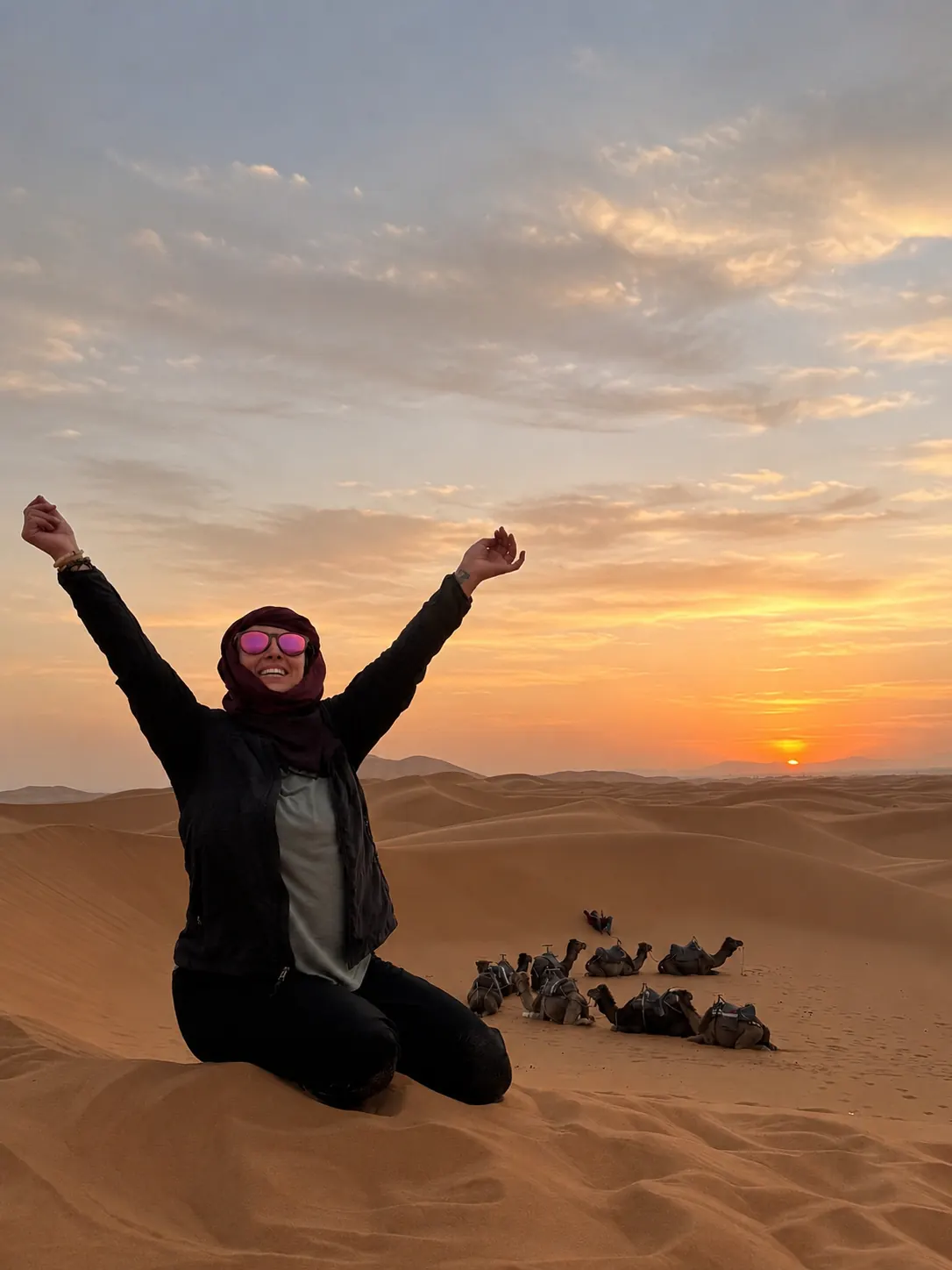
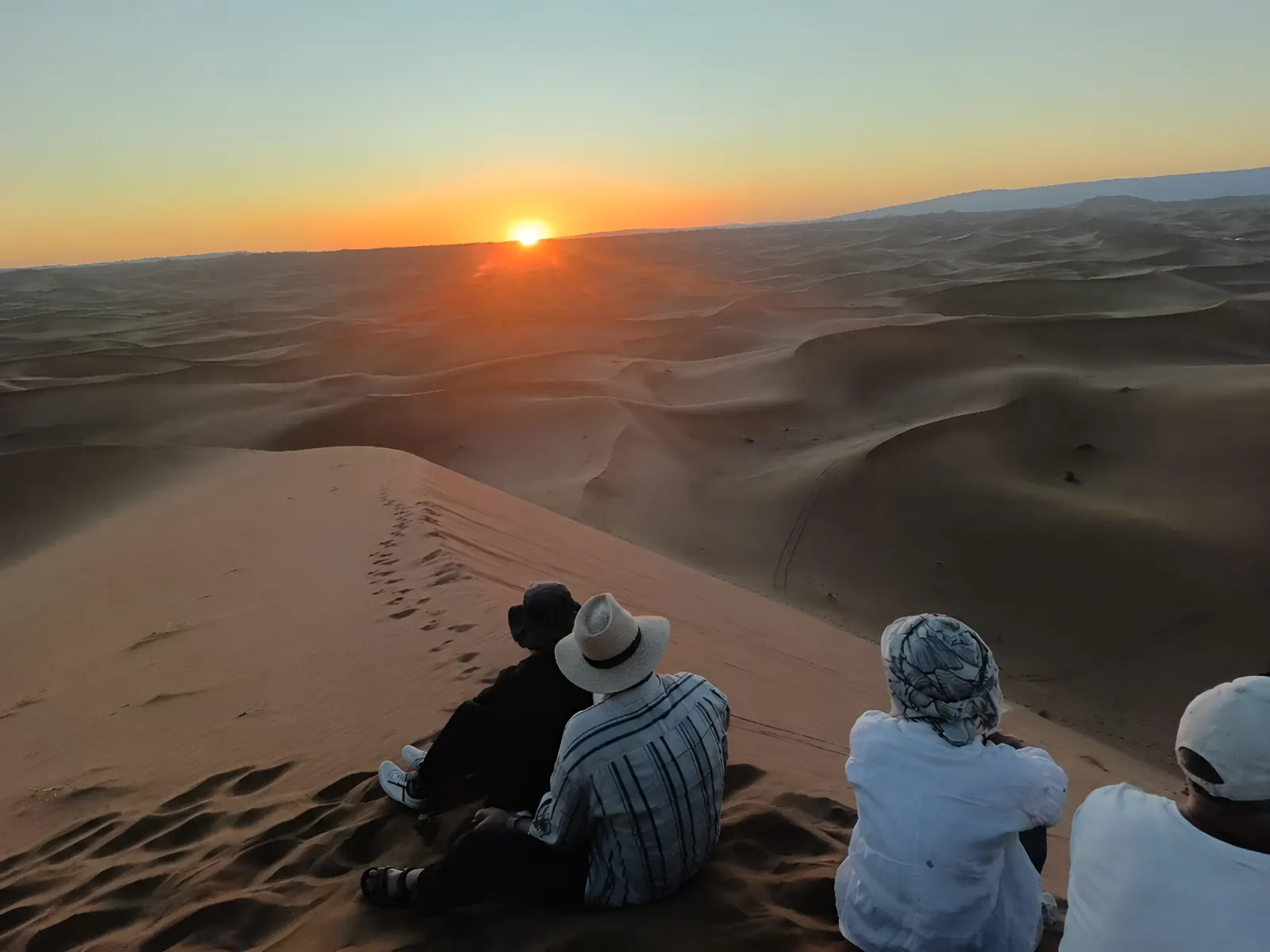
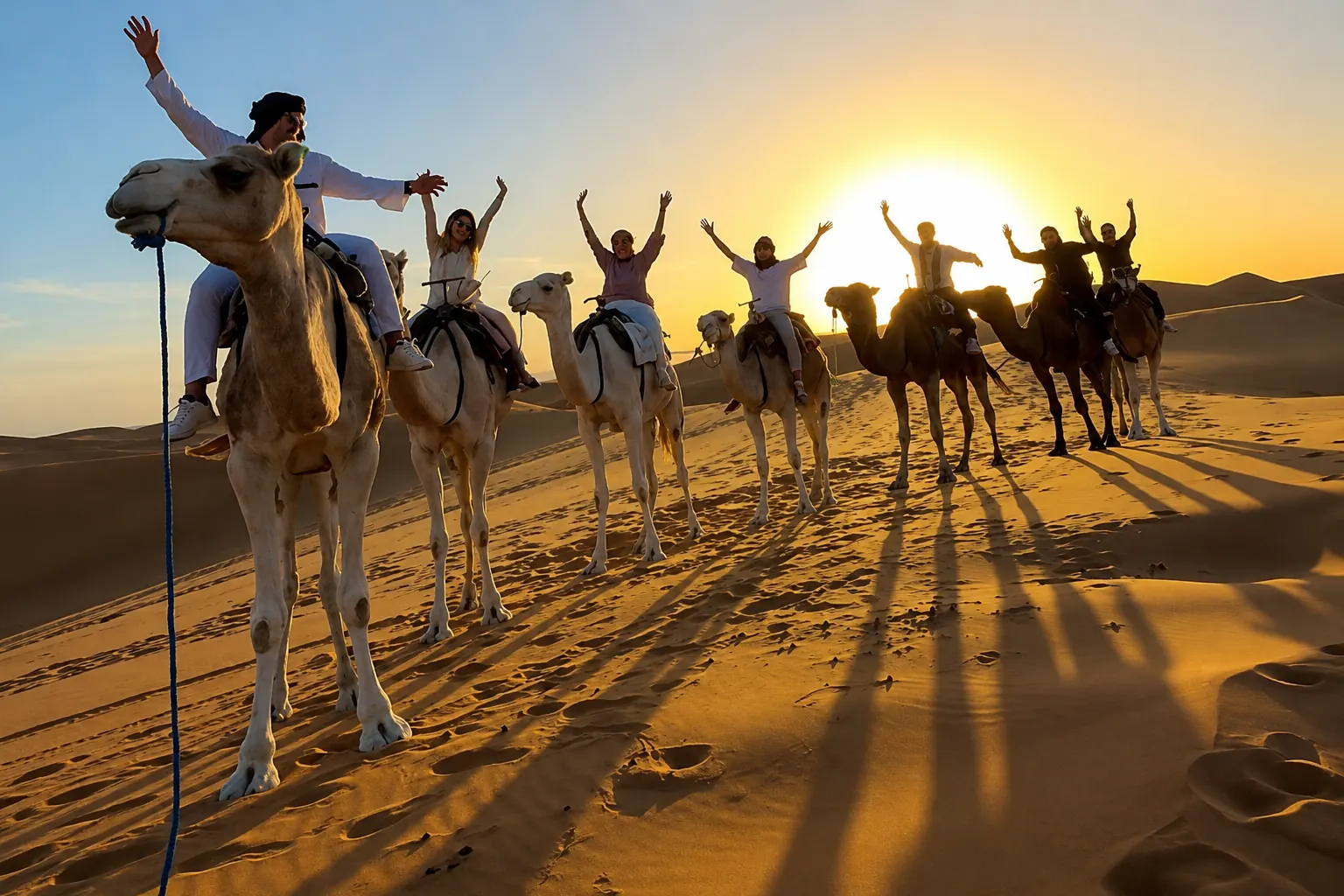
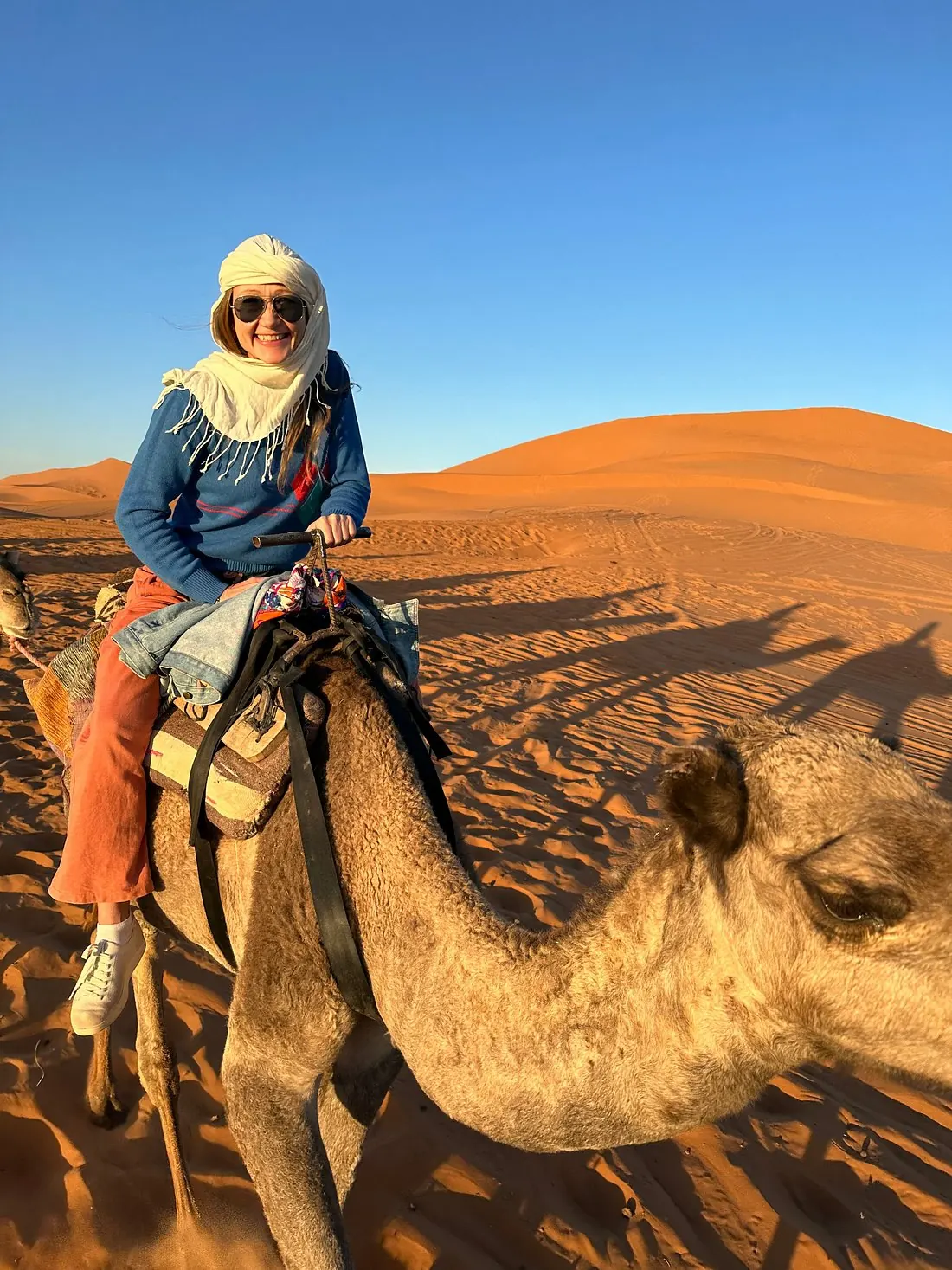
The desert is a place of extremes: hot sun at midday, cold nights, and fine sand that gets everywhere. Loose long sleeves and trousers protect you from the sun better than shorts. A scarf or a traditional cheche, which our team will gladly show you how to tie, protects your face from the sand. For the evening, pack a warm jumper and a jacket, especially from November to March, when nights can approach freezing.
Leave white and delicate fabrics at home, and bring closed shoes or sandals you do not mind filling with sand. Our Morocco desert packing list covers everything else.
On the Atlantic coast
Essaouira and the coast are breezy and cooler than inland, even in summer. A windbreaker is useful. Swimwear is perfectly normal on the beach and at hotel pools, but cover up when you walk back into town.
What to wear in Morocco, season by season
Spring (March to May)
Warm days and cool evenings. Light layers, a jacket for the mountains and the desert nights, and a sun hat. Our month-by-month guide explains the weather in each region.
Summer (June to August)
Very hot inland, often above 40°C in Marrakech and the south. Loose linen and cotton, a wide-brimmed hat, sunglasses and high-factor sunscreen. Even in summer, bring one warm layer for the mountains.
Autumn (September to November)
Pleasant and stable, much like spring. Light clothing for the day, a jumper for the evening, and a warmer jacket from November for the desert.
Winter (December to February)
Sunny but cool days in the cities, cold nights everywhere, and snow on the High Atlas. Bring a proper warm coat, a hat and gloves for the desert and the mountains; riads are not always well heated.
A simple packing list
- 2 or 3 pairs of loose trousers or long skirts
- 4 or 5 tops with sleeves, in breathable fabrics
- A light long-sleeved shirt or cardigan
- A warm fleece or jumper, and a jacket
- A large scarf
- Comfortable walking shoes, plus sandals
- A sun hat, sunglasses and sunscreen
- Swimwear for the riad pool, the hammam or the coast
“Dress for comfort and respect, pack one layer more than you think you need, and you will be ready for every Morocco in one trip: the souks, the mountains and the Sahara.”
Planning your trip? Read our 15 Morocco travel tips for first-time visitors, then browse our Sahara desert tours or our private Morocco tours. We are happy to answer any question about what to pack when you plan your journey with us.