It is one of the first questions travellers from the US, the UK and Canada ask us. The honest answer is: Morocco can be very affordable, and it can also be surprisingly expensive. The difference is rarely the country itself. It is how, when and where you travel.
In short: for visitors from North America and Britain, everyday costs in Morocco, such as local food, trains and monument tickets, are low. A palace in Marrakech costs about 70 dirhams to enter, and a second-class train across the country costs a few hundred. What makes a trip expensive is accommodation in boutique riads, private transport, last-minute bookings and peak dates. Your budget depends far more on those choices than on daily spending.
The dirham and the exchange rate
Morocco's currency is the dirham (MAD). It is a closed currency, so you get it once you arrive, from ATMs or exchange offices. In late 2026, one US dollar was worth roughly 9 to 10 dirhams, but the rate moves, so check it before you travel. Cash matters: many monuments, taxis and small shops only take dirhams, and small notes make everything easier. See our Morocco travel tips for more on money.
What things cost: real examples
These are public prices for foreign visitors, as published in late 2026. Prices change, so always confirm with the official source before you go.
| Item | Indicative price | Good to know |
|---|---|---|
| Bahia Palace, Marrakech | About 70 MAD per adult | Paid in cash at the gate |
| Jardin Majorelle, Marrakech (garden only) | Roughly 150 to 170 MAD per adult | Tickets are sold online; buy on the official website |
| Train Marrakech – Casablanca, second class | From about 50 MAD | Fares rise closer to departure |
| Train Marrakech – Fes, second class | Roughly 180 to 310 MAD | First class costs a little more; check ONCF |
| Tips | Small amounts in dirhams | See our tipping guide for indicative amounts |
The pattern is clear: monuments and public transport are inexpensive by US or UK standards. Where prices climb is in services built for visitors.
Where the money really goes
Accommodation
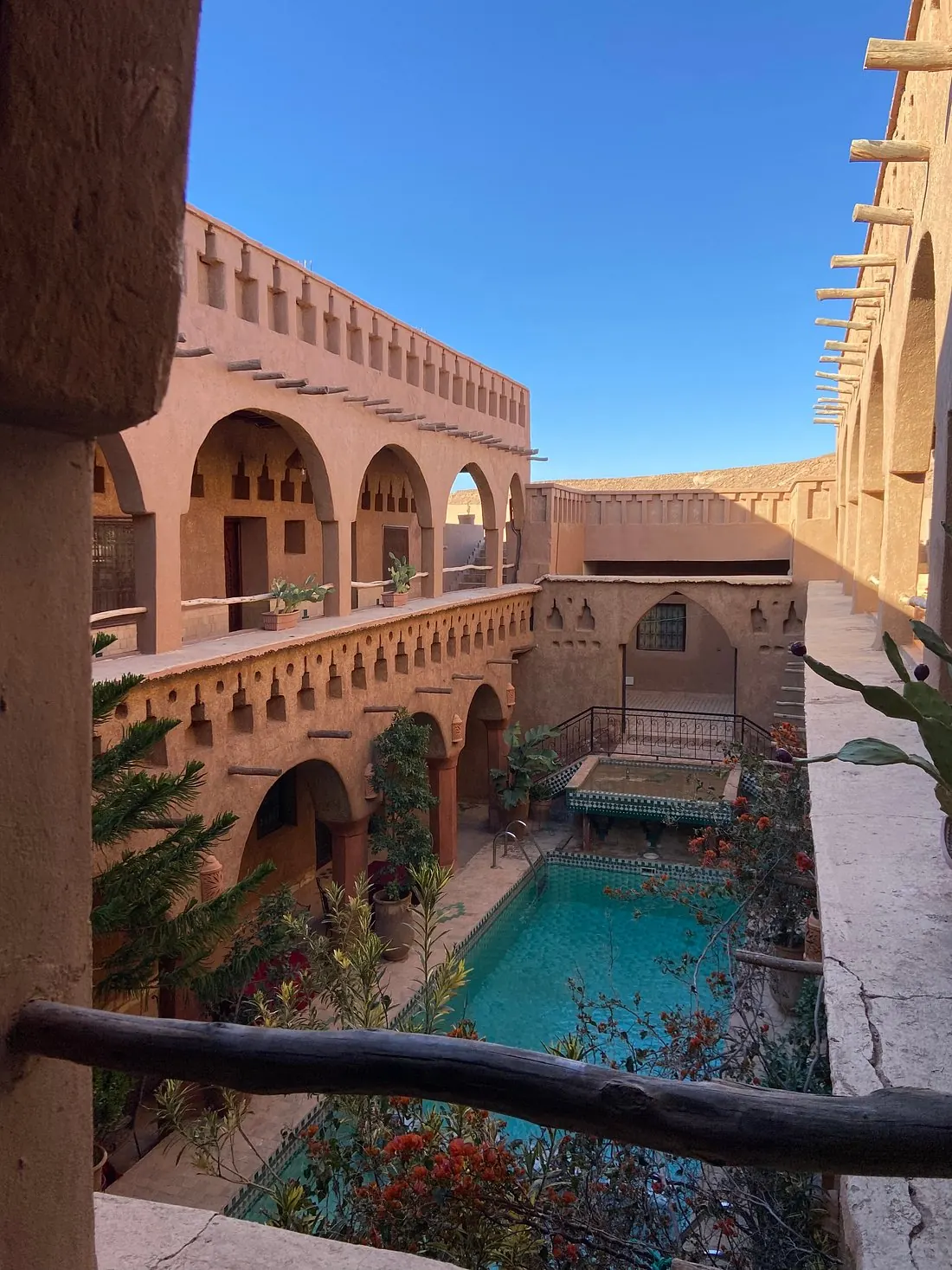
This is the biggest variable. Simple guesthouses and family-run riads are modest; boutique riads in the Marrakech medina and kasbah hotels in the south can cost as much as a good hotel in Europe. In the desert, a simple camp and a luxury camp are very different experiences and very different prices. Read what a desert camp is really like.
Transport
Trains link Marrakech, Casablanca, Rabat, Fes and Tangier cheaply. But they do not go to the Sahara, the gorges or the Atlas villages. To reach those, you need a bus, a rental car, a shared tour or a private driver, and the cost rises accordingly. Distances are long: Marrakech to Merzouga is about 560 km. See our Marrakech to Merzouga route guide.
Food
Eating where Moroccans eat is very affordable: bread, soups, grilled meat, tagines in small local restaurants. Restaurants in riads and tourist areas, especially rooftop terraces in Marrakech, charge prices closer to Europe.
Activities
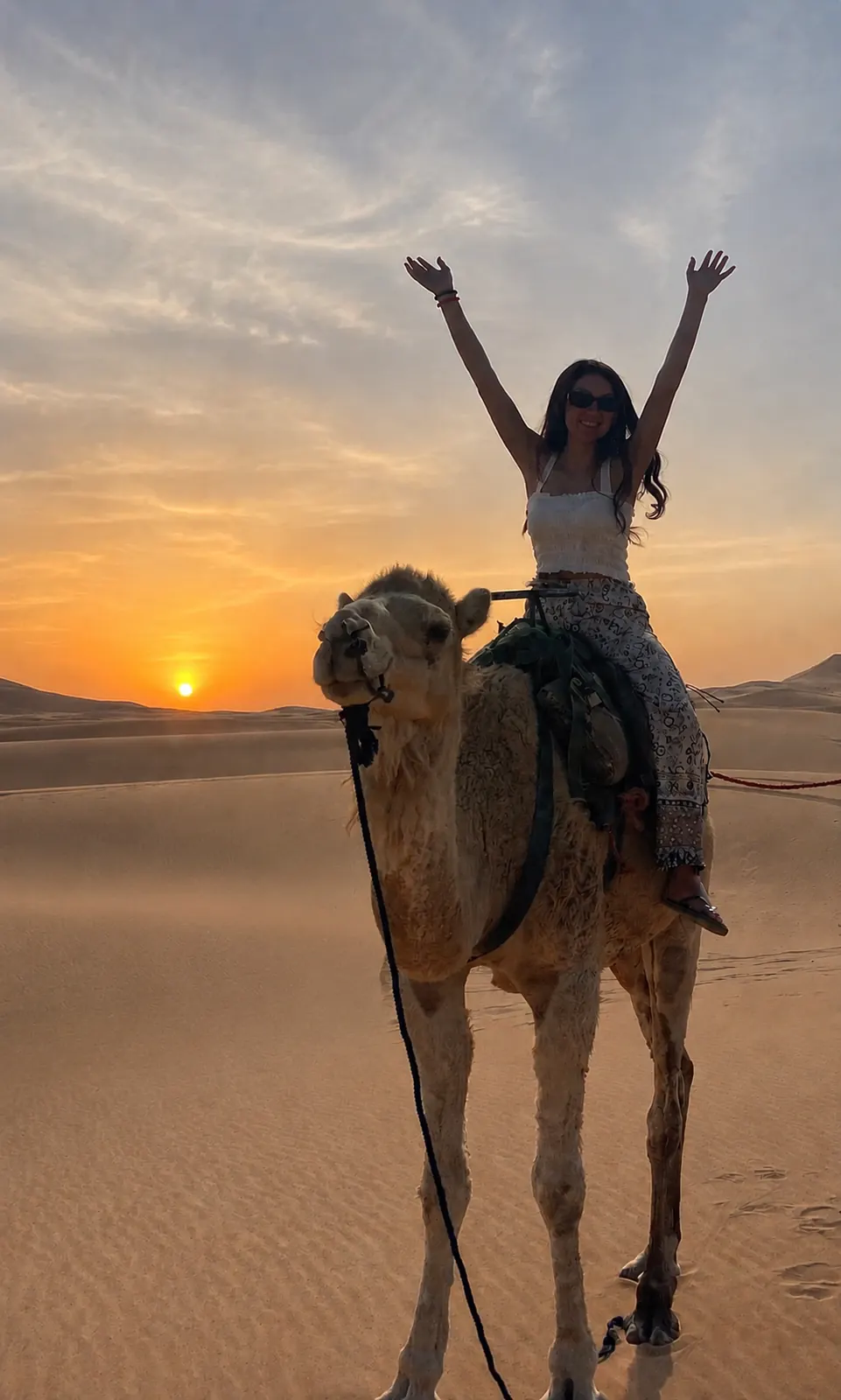
A medina walk with a local guide, a cooking class or a sunset camel ride are moderate. Hot air balloon flights and luxury experiences are at the top of the range. See our Marrakech activities.
Shopping
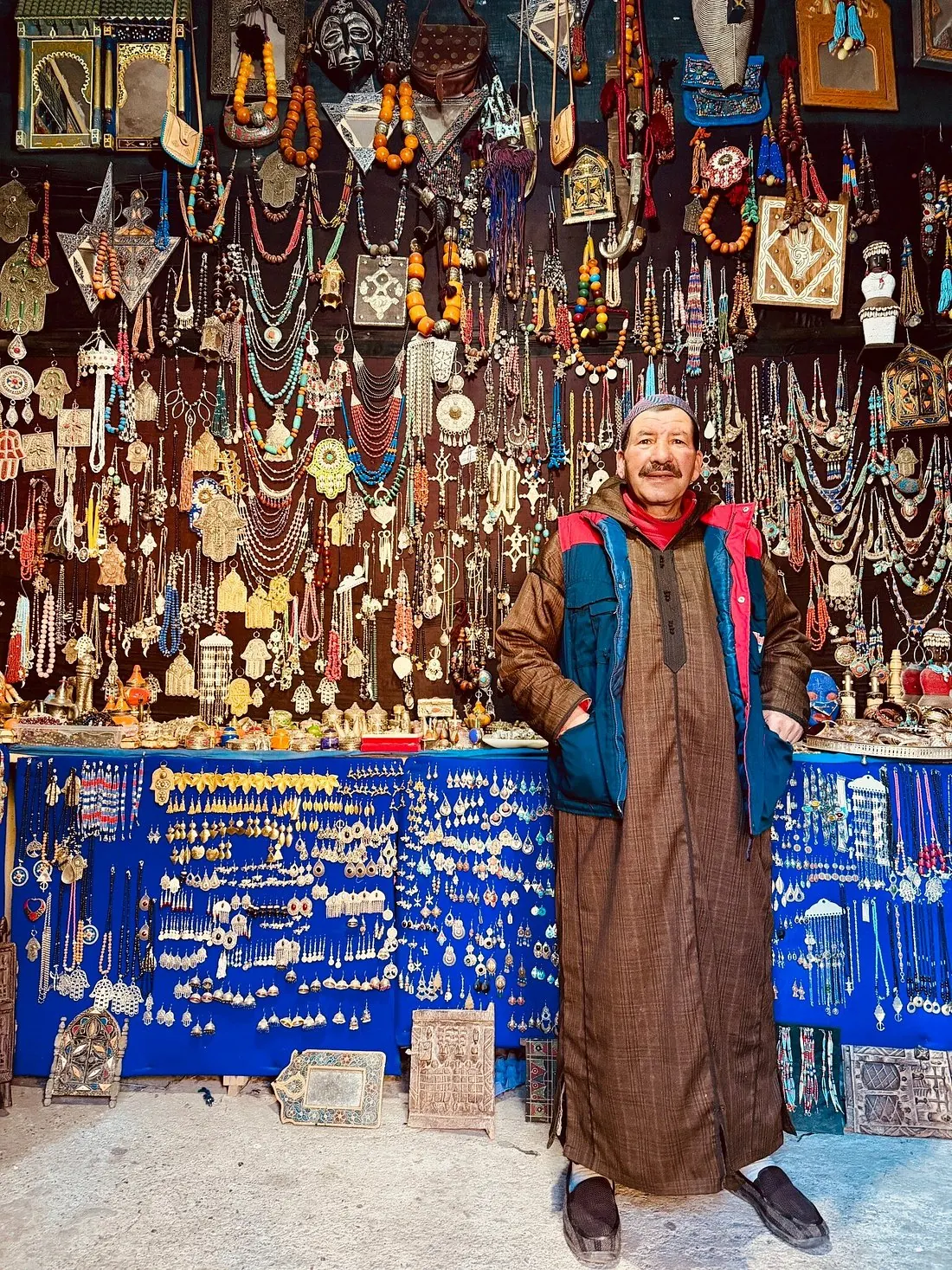
In the souks, prices are agreed by bargaining. The first price is an opening line. Decide what an item is worth to you before you start, and walk away politely if you do not agree.
When Morocco gets expensive
- Peak dates: spring, autumn and the Christmas and New Year period are the busiest, and riads and desert camps fill up. See the best time to visit Morocco.
- Booking late: train fares rise near departure, and the best-value riads go first.
- Unofficial guides and "helpers": someone who offers to show you the way in the medina will expect payment, often more than an official guide.
- Tourist restaurants near the main squares: convenient, but often more expensive and not better.
- Underestimating distances: trying to see the Sahara on a day trip from Marrakech is not possible, and rushing a route costs money and energy. Read how many days you need for the desert.
How to spend less without missing out
- Travel in the shoulder months such as late February, early June or November, when the weather is still good and demand is lower. See Morocco in February and Morocco in December.
- Use the trains between the big cities and book early.
- Carry small notes for taxis, tips and small purchases.
- Eat where locals eat at least once a day.
- Agree taxi prices before you get in, or insist on the meter in city petits taxis.
- Choose the right desert: the Agafay desert near Marrakech or the Zagora desert on a 2 day trip cost less time than Merzouga.
- Consider a small-group tour if you travel alone or as a couple: the vehicle and the guide are shared. Compare in private or group?
“The travellers who spend the most are not always the ones who see the most. The best moments in Morocco, mint tea with a family, a sunset in the dunes, are rarely the expensive ones.”
What about tours?
For the Sahara and the south, many travellers find a tour simpler than driving themselves, because the distances are long and the roads through the mountains are slow. What a tour costs depends on the number of days, the accommodation and camp, the season and your group size. We do not publish fixed prices, because every trip is quoted for your dates and group. Read Morocco tour prices to understand what shapes a quote, then ask us for the price.
Planning your budget? Start with our Morocco itinerary planner, then send us your dates or message us on WhatsApp for a free, no-obligation quote. We run private and small-group tours.