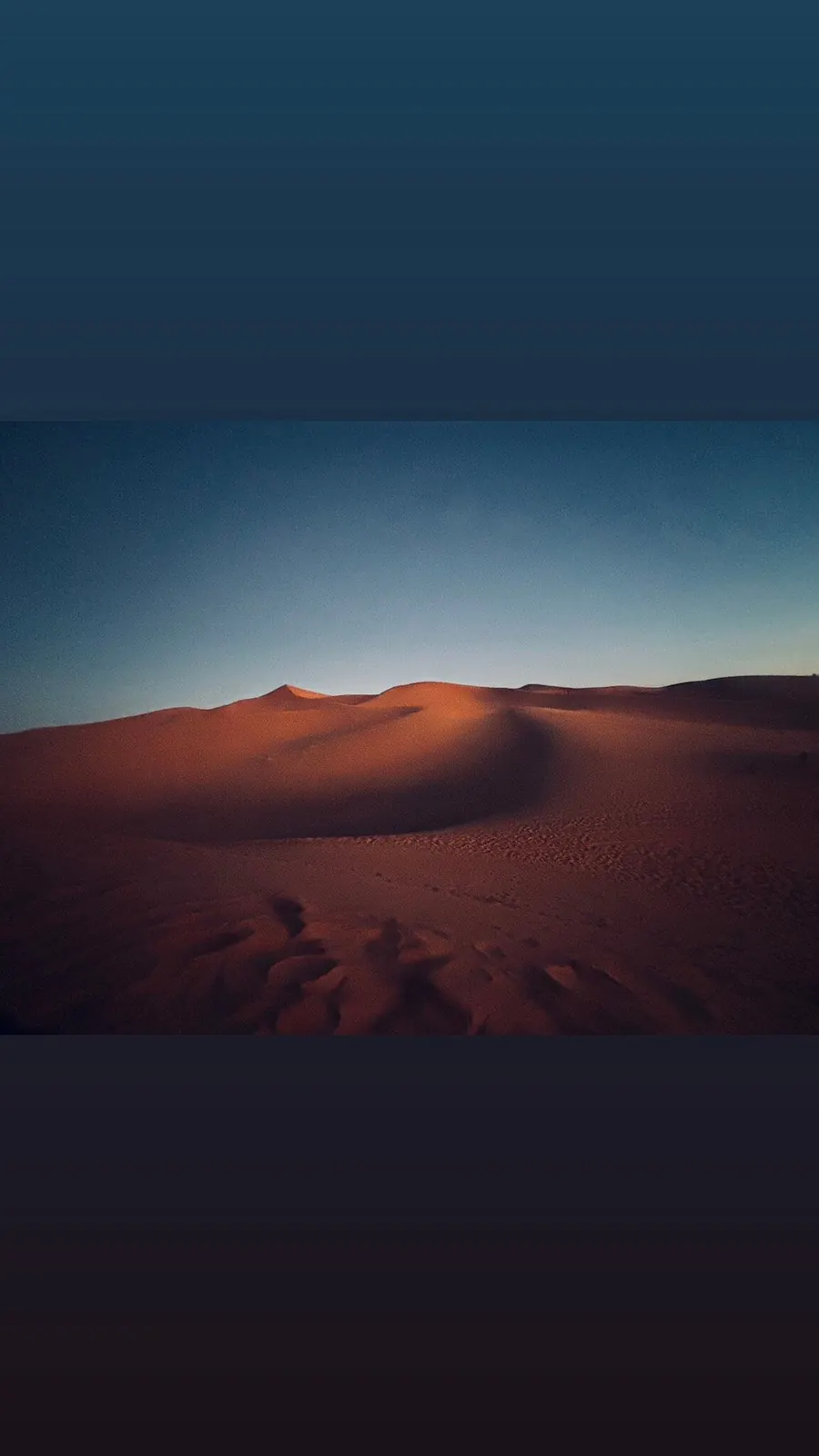
Merzouga sits on the edge of the Erg Chebbi dunes, in one of the driest corners of Morocco. Its weather is simple to describe and easy to underestimate: almost no rain, strong sun, very hot summers and, for much of the year, a dramatic difference between the warmth of the afternoon and the cold of the night. Knowing what to expect month by month helps you choose your dates, plan your camel trek and pack the right clothes.
The short answer: the best weather in Merzouga is from mid-September to mid-November and from March to April: warm, sunny days and cool, comfortable nights. December to February is pleasant by day but cold at night, sometimes close to freezing. June to August is extremely hot in the afternoon, so camel treks happen only at sunset and sunrise.
Merzouga's climate in a nutshell
Merzouga has a hot desert climate. The air is dry, the sky is clear on most days and the sun is strong all year. Because dry air and sand lose heat quickly after sunset, temperatures often fall by 15°C or more between the afternoon and the early morning. That is why a desert night can feel cold even after a hot day.
- Rain: rare. A few short showers or storms a year, most often in autumn, winter or spring.
- Wind: windy days, more frequent in spring, can lift sand and haze the horizon.
- Sunshine: abundant all year; sunscreen and sunglasses are essential even in winter.
Merzouga weather by month
The figures below are approximate, rounded averages to help you plan. Real conditions vary from year to year, so always check the forecast a few days before you travel.
| Month | Typical afternoon | Typical night | What it feels like |
|---|---|---|---|
| January | 17–19°C | 3–5°C | Mild days, cold nights, very clear skies |
| February | 19–22°C | 5–8°C | Pleasant days, cold nights |
| March | 23–26°C | 10–12°C | Warm and comfortable; some windy days |
| April | 27–29°C | 13–15°C | Warm days, mild nights; excellent |
| May | 31–34°C | 17–20°C | Getting hot in the afternoon |
| June | 37–40°C | 22–25°C | Very hot; activities at dawn and dusk |
| July | 40–43°C | 26–29°C | The hottest month |
| August | 39–42°C | 25–28°C | Extremely hot, warm nights |
| September | 34–37°C | 20–23°C | Hot at first, easing by the end of the month |
| October | 28–30°C | 14–16°C | Warm days, perfect evenings |
| November | 21–24°C | 8–10°C | Mild and clear; cool nights |
| December | 17–19°C | 3–6°C | Sunny days, cold nights |
Merzouga weather season by season
Spring (March to May)
Spring brings warm, bright days and comfortable nights, especially in March and April. It is one of the best times for the desert and for the road to it, with green fields in the oases and the Rose Valley in bloom in late April and May. The only drawback is wind: some days are hazy, and a sandstorm can occasionally shorten an evening outside. By late May, afternoons become hot. See our guide to Morocco in March.
Summer (June to August)
Summer in Merzouga is extreme. Afternoon temperatures often pass 40°C, the sand becomes too hot to walk on barefoot and the light is harsh. Desert tours still run, but the day is organised around the heat: the camel ride starts in the late afternoon, the sunrise walk is early, and the hottest hours are spent in the shade, in an air-conditioned vehicle or a guesthouse with a pool. Nights stay warm, and many camps offer fans or air conditioning. If summer is your only option, plan carefully and drink a lot of water.
Autumn (September to November)
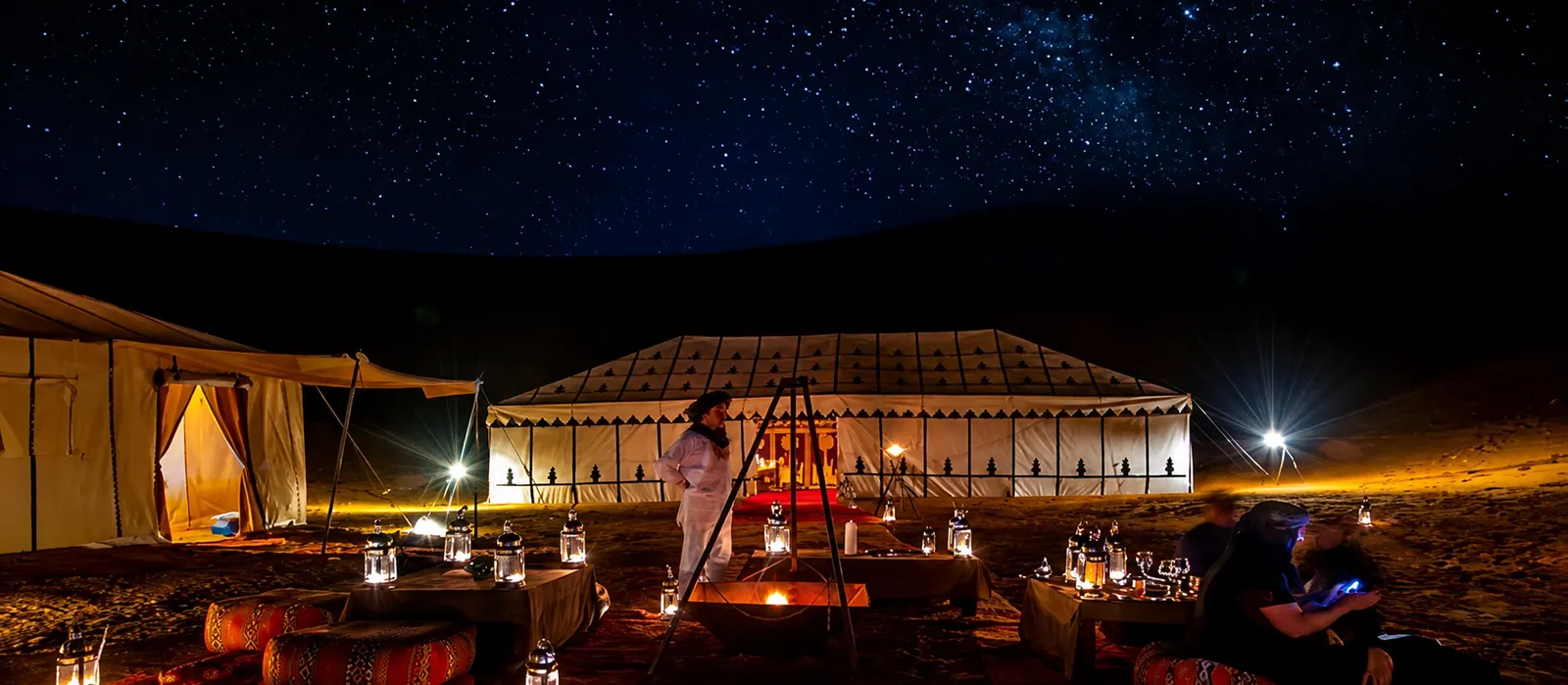
Our favourite season. September is still hot, but from late September the heat softens, and October and early November offer warm afternoons, beautiful evening light and nights that are cool rather than cold. The air is often very clear after summer, which makes the night sky spectacular.
Winter (December to February)
Winter days in Merzouga are often sunny and pleasant, warm enough for a T-shirt in the early afternoon. But once the sun goes down, the temperature falls quickly, and the hours around dawn can be close to freezing. Good camps provide heavy blankets, and the better ones have heated tents. The reward is a crystal-clear sky and fewer visitors. December is also when many travellers celebrate the New Year in the dunes; see our New Year's Eve Sahara tours and our guides to Morocco in December, January and February.
Weather on the road to Merzouga
The weather in Merzouga is only half the story: the roads that lead there cross mountains with a very different climate.
- From Marrakech: the Tizi n'Tichka pass over the High Atlas climbs above 2,000 metres. In winter, snow can occasionally slow traffic or close the pass for a few hours. The Dades and Todra valleys are cool in winter and pleasant in spring and autumn. Our Marrakech to Merzouga route guide describes the road.
- From Fes: the road crosses the Middle Atlas around Ifrane and Azrou, one of the coldest and snowiest areas of Morocco in winter, before dropping into the warmer Ziz Valley.
- In summer: the valleys of the south are hot, so long drives are best started early in the morning.
A local driver-guide follows the conditions every day and adapts the route or timing when needed.
The desert camp in each season
| Season | Evening at camp | The night | Tip |
|---|---|---|---|
| Spring | Pleasant around the fire | Cool; a blanket is enough | Bring a scarf in case of wind |
| Summer | Warm, often outside until late | Warm; fans or air conditioning help | Some guests choose to sleep under the stars |
| Autumn | Perfect, mild and still | Cool and comfortable | The best time for long evenings outside |
| Winter | Cold once the sun sets; the fire is welcome | Very cold before dawn | Ask whether tents are heated |
Our article on what a desert camp is really like compares standard, comfort and luxury camps.
Best time for a camel trek in Merzouga
| Season | Camel trek comfort | Our advice |
|---|---|---|
| March–April | Excellent | Ideal; bring a light jacket for the night |
| May, September | Good at sunset and sunrise | Avoid the middle of the day |
| June–August | Only early and late | Plan for heat, choose a comfortable camp |
| October–November | Excellent | Our favourite period |
| December–February | Good by day, cold at night | Pack warm layers, hat and gloves |
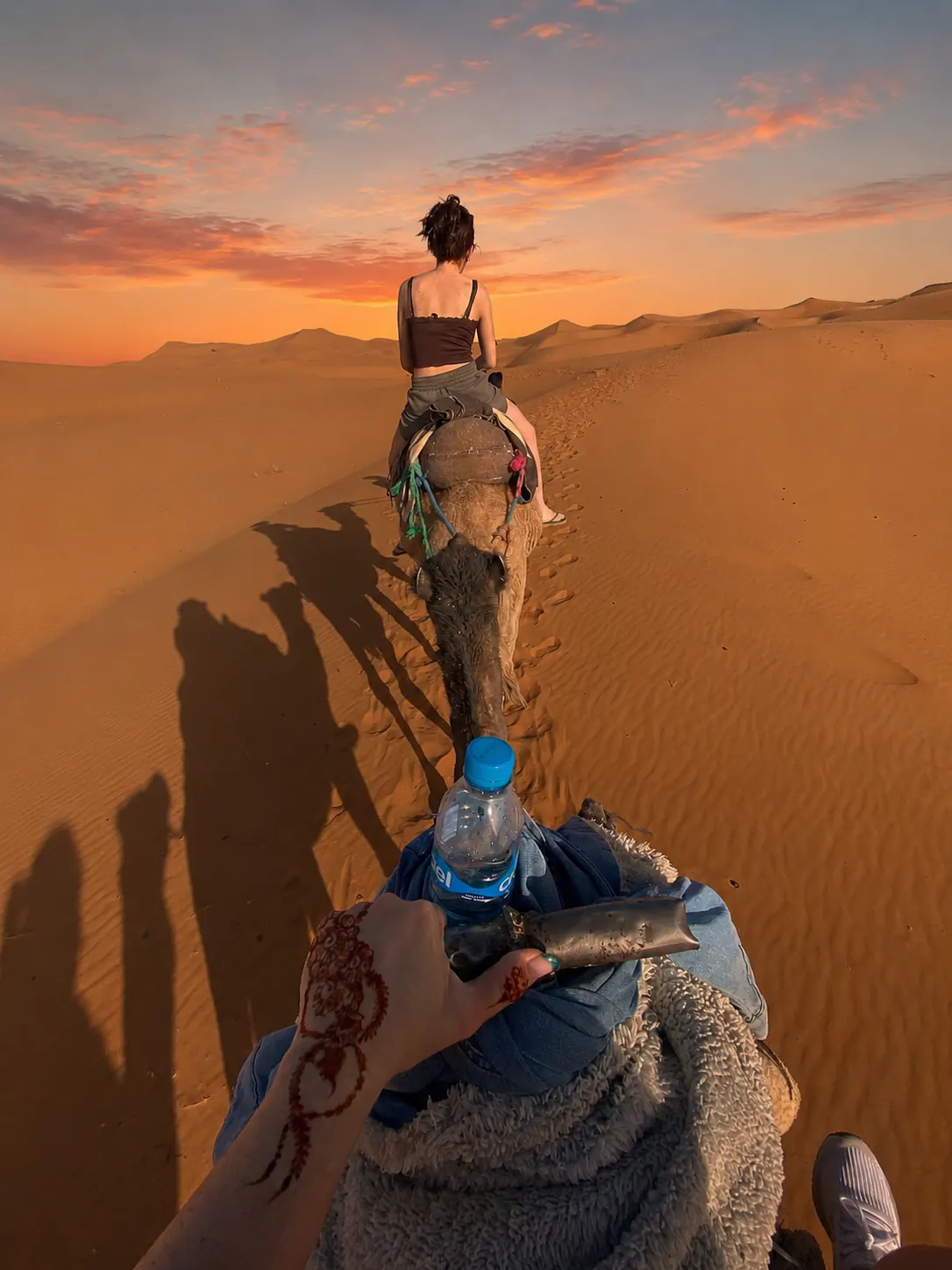
Wherever you travel from, the camel ride is timed for the soft light of late afternoon, and the sunrise walk for the cool of early morning. Read our Morocco camel trek guide to know what to expect.
Merzouga, Erg Chigaga and Zagora: is the weather different?
The three desert areas share the same broad pattern: hot summers, cold winter nights and very little rain. Erg Chigaga and Zagora, further south-west in the Draa Valley, can feel slightly warmer in winter and are just as hot in summer. The real differences are in access and dune size rather than climate. Compare them in Erg Chebbi vs Erg Chigaga and our Erg Chigaga guide.
What to pack for Merzouga's weather
- All year: sunglasses, high-factor sunscreen, lip balm, a hat and a scarf against sun and sand.
- Spring and autumn: light, loose clothes for the day and a fleece or light down jacket for the night.
- Winter: a warm jacket, a hat, gloves and warm socks for the night and the sunrise.
- Summer: loose, light-coloured, long-sleeved clothing, sandals with straps and plenty of water.
Everything else is in our Morocco desert packing list and our advice on what to wear in Morocco. For the rest of the country, see the best time to visit Morocco.
“In the desert, people prepare for the heat and forget the night. Pack for both, and the Sahara will be kind to you.”
Choose your season and your route: see our Sahara desert tours, the 3 day desert tour from Marrakech to Merzouga or the Merzouga camel trek and desert camp. Ask us for the price for your dates or chat with us on WhatsApp.