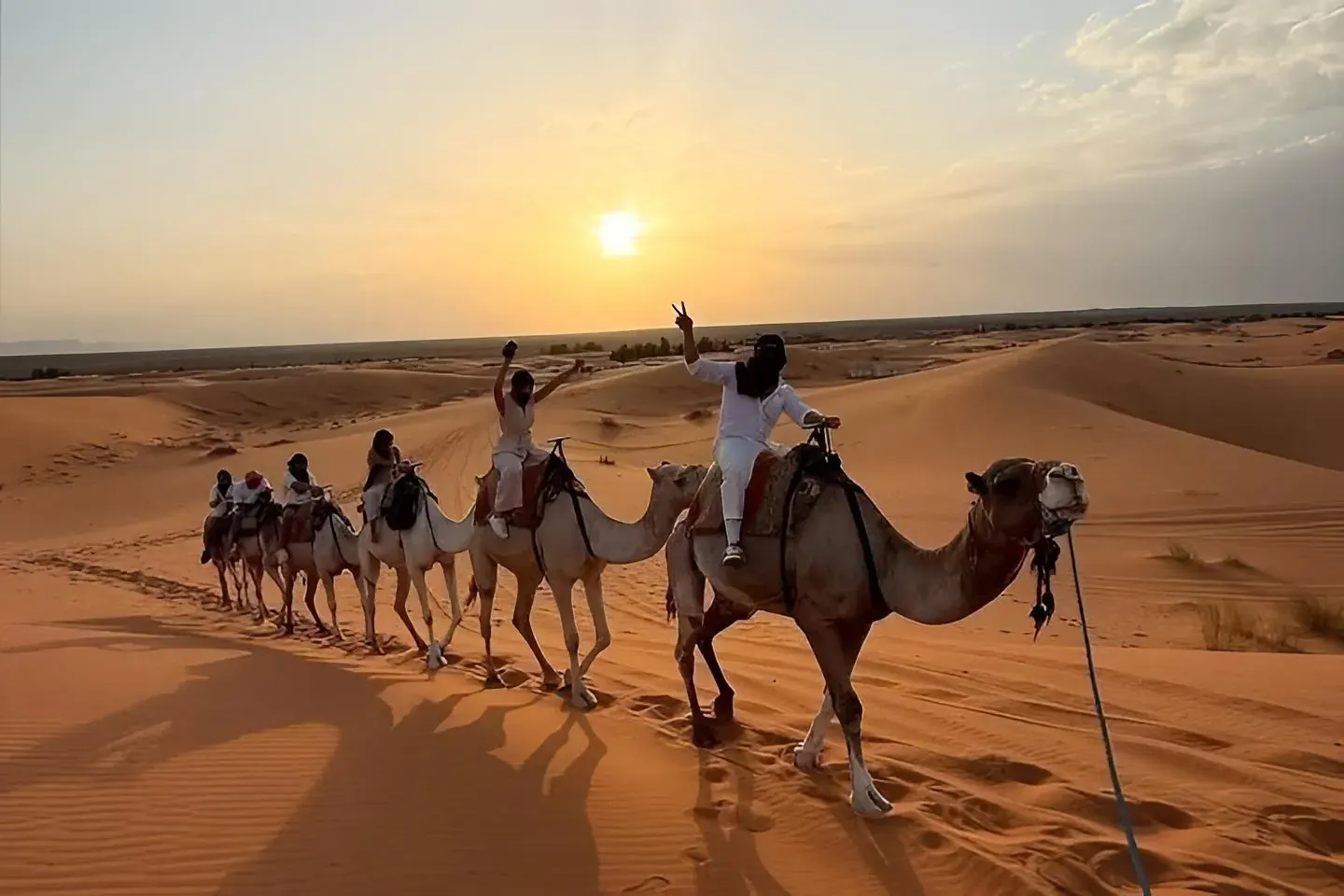
Riding a camel into the dunes as the sun goes down is the image most people have of Morocco before they arrive, and for good reason. A camel trek is slow, quiet and close to the landscape in a way no vehicle can be. But "camel trek" can mean a thirty-minute ride in a palm grove or several days of walking and riding through the Sahara, and the experience you get depends on where you go, how long you ride and who organises it.
This guide explains the main options, what a Morocco camel trek actually feels like, and how to choose one that is good for you and for the animals.
The short answer: for the classic experience, ride into the Erg Chebbi dunes at Merzouga at sunset, sleep in a desert camp and ride or walk back at sunrise. Each way usually takes about 45 minutes to an hour. For more solitude, choose Erg Chegaga. If you only have a day in Marrakech, a camel ride in the Palm Grove or the Agafay desert gives you a taste, but not the Sahara dunes.
Where to go on a camel trek in Morocco
| Place | Landscape | Distance from Marrakech | Best for |
|---|---|---|---|
| Erg Chebbi (Merzouga) | High orange dunes, up to around 150 m | About 560 km, usually 2 days by road | The classic Sahara camel trek and desert camp |
| Erg Chegaga (M'Hamid) | Wide, remote sand sea reached by 4x4 | Long day plus a desert track | Solitude and a wilder atmosphere |
| Zagora and the Draa Valley | Smaller dunes and palm groves | About 7 hours | A 2-day desert taste |
| Agafay desert | Stony hills, no high dunes | About 45 minutes | A sunset ride on a short stay |
| Marrakech Palm Grove | Palm trees on the edge of the city | About 20 minutes | Families, a first gentle ride |
Erg Chebbi: the classic Sahara camel trek
Near the village of Merzouga, Erg Chebbi is the most famous dune field in Morocco. Camel treks leave from the edge of the dunes in the late afternoon and reach the camps as the light turns orange. This is the trek included in most of our Sahara desert tours, such as the 3 day desert tour from Marrakech. If you are already in the south, the Merzouga camel trek and night in a desert camp focuses on the dunes alone.
Erg Chegaga: the wilder alternative
South-west of the town of M'Hamid, Erg Chegaga is larger, more remote and much less visited. You reach it by 4x4 on desert tracks, then explore on foot or by camel. Read our comparison Erg Chebbi or Erg Chegaga? and see the 4 day private Erg Chegaga tour from Marrakech.
Near Marrakech: Agafay and the Palm Grove
If you cannot travel to the Sahara, two short options give you the feeling of a camel ride. In the Marrakech Palm Grove, the ride is gentle and ideal for children. In the Agafay desert, about 45 minutes from the city, you ride among stony hills at sunset; see our Agafay desert experience and our honest comparison Agafay or Merzouga?
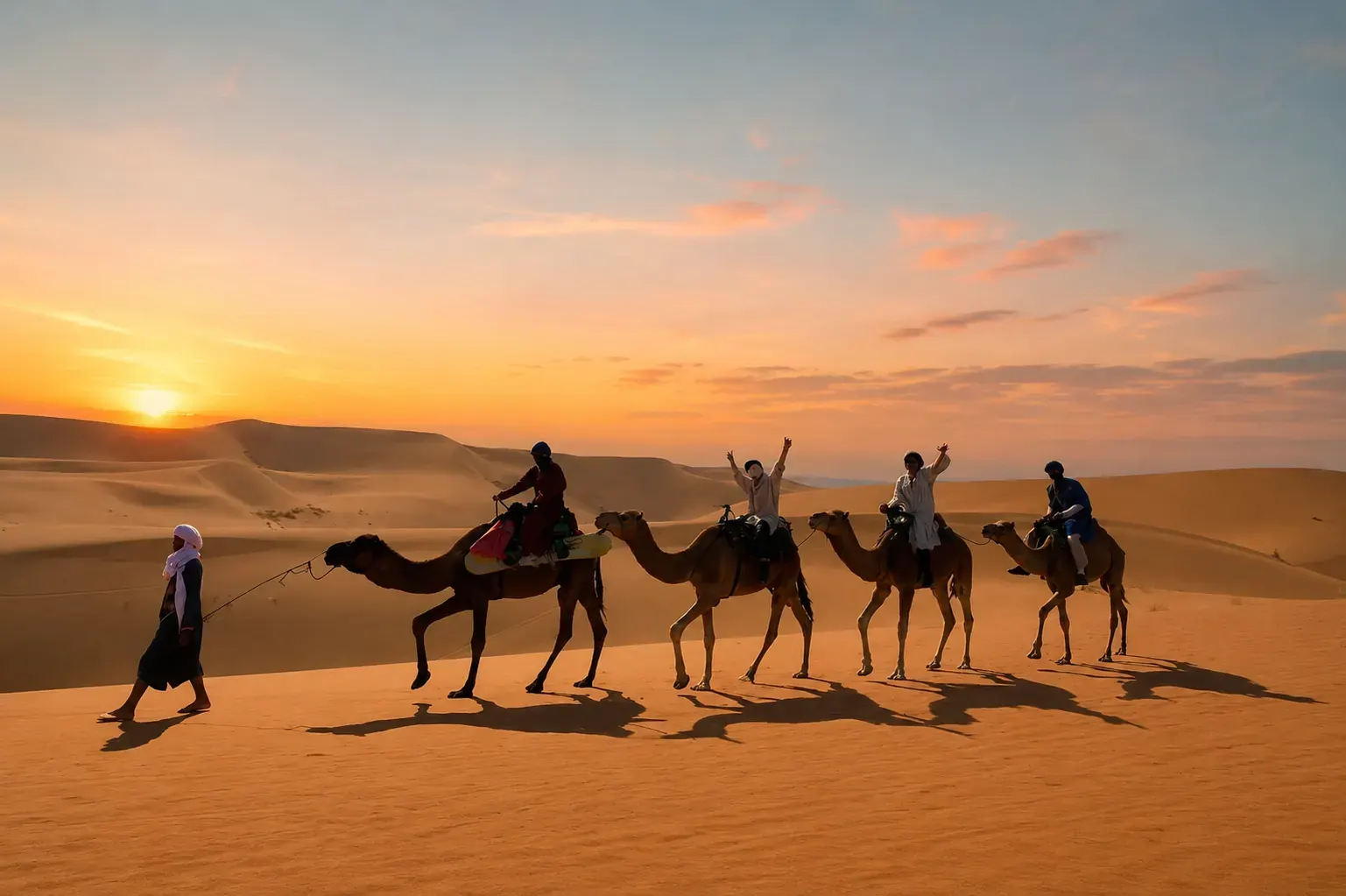
Sunset ride, overnight trek or multi-day trek?
The sunset ride (1–2 hours)
Short rides at sunset, in Agafay, the Palm Grove or at the edge of the Sahara dunes, are perfect for families and for travellers who simply want the experience and the photographs.
The overnight camel trek (the most popular)
You ride into the dunes in the late afternoon, usually for about 45 minutes to an hour, stop on a ridge to watch the sunset, then continue to the camp for dinner, music and a night under the stars. The next morning you climb a dune for sunrise and return to the edge of the desert. To know what to expect at camp, read what a desert camp is really like.
Multi-day camel treks
On longer treks, you walk for part of the day beside the camels, which carry the luggage, water and food, and camp in a different place each night. These journeys are slower, quieter and closer to the old caravan rhythm. They need good preparation and are usually organised as tailor-made trips, most often in the Erg Chegaga area.
What a camel trek feels like
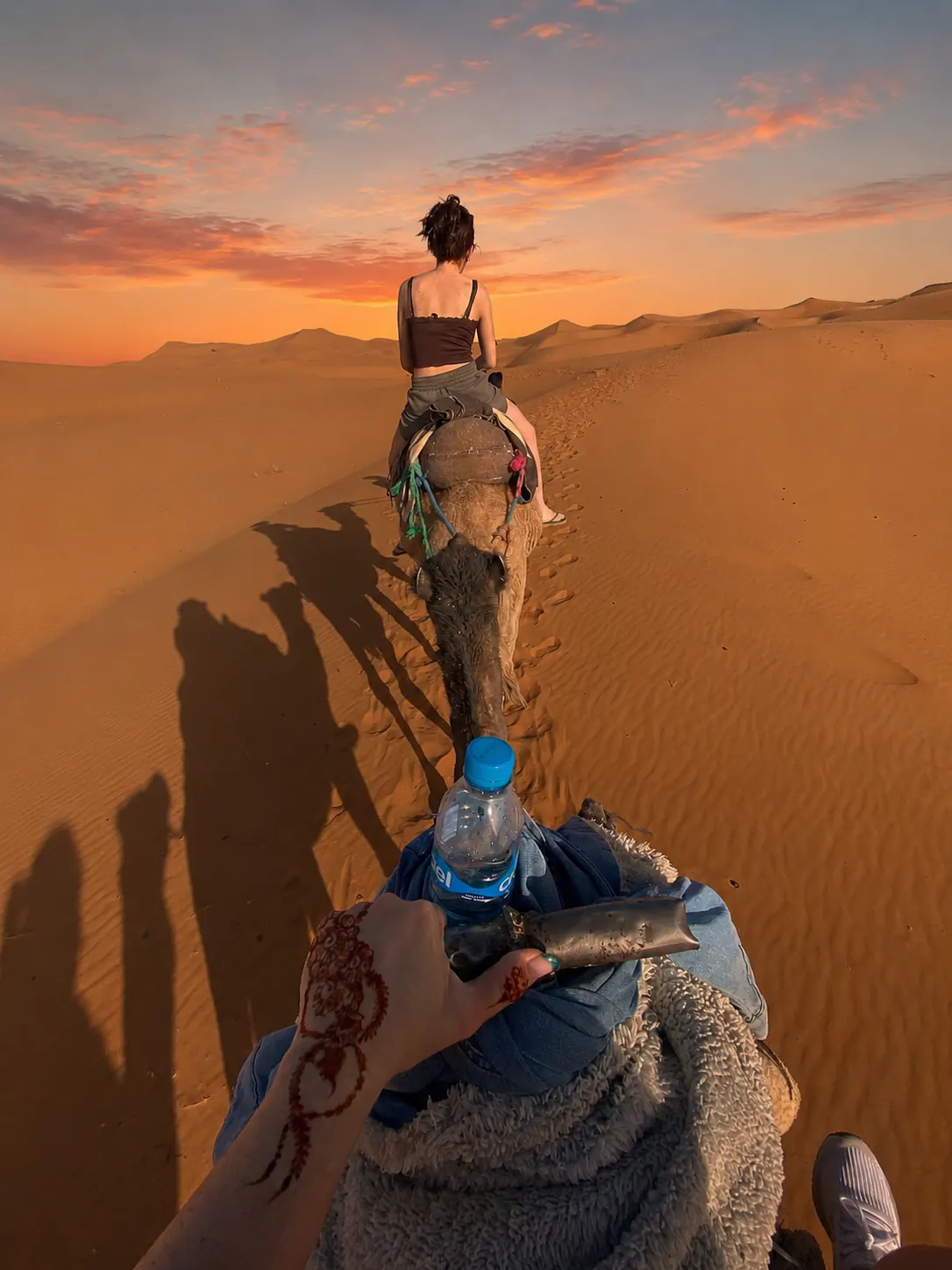
Moroccan camels are dromedaries, with one hump. Getting on is the strangest moment: the camel is lying down, you sit in the saddle, and it stands up back legs first, so you lean back, then forward, then back again. Hold the handle in front of you and the cameleer will tell you when.
Once moving, the pace is slow and swaying. It is comfortable for most people for an hour, but your legs and back will feel it on longer rides. Going down a steep dune, lean back slightly. A cameleer walks in front of the caravan and leads the animals on foot, so you do not need any experience.
Local tip: if you have back or hip problems, are pregnant, or simply prefer not to ride, you can walk beside the camels to the camp. In Erg Chebbi, many camps can also be reached by 4x4. Tell us before the trip and we will plan it.
Choosing a responsible camel trek
Camels have been part of desert life for centuries, and riding them can be done well or badly. A few simple signs help you choose:
- Healthy animals: look for camels that are alert, well fed and free of open wounds, with saddles padded correctly.
- Reasonable ride lengths: camels should rest during the hottest hours, and good operators schedule treks at sunset and sunrise.
- One rider per camel for adults, with heavy luggage left in the vehicle.
- Respect the operator's guidance if they suggest walking part of the way for a heavier rider or a steep section.
- Do not push for the cheapest price: very low prices often mean corners are cut on animal care.
Best time for a camel trek in Morocco
October to April is the most comfortable period for the Sahara: warm afternoons and clear evenings, with cold nights from December to February. In summer, treks still take place, but only in the early morning and at sunset because of the heat. For the dunes specifically, read our Merzouga weather guide and our best time to visit Morocco.
What to wear and bring on a camel trek
- Long, loose trousers: shorts rub against the saddle.
- Closed shoes or sandals with a strap; flip-flops fall off.
- A scarf or cheche to protect your face from sun and sand.
- Sunglasses, sunscreen and a hat.
- A warm layer for the evening and the sunrise, especially from November to March.
- A small backpack for the night; your main bag stays in the vehicle.
- A zip-lock bag to protect your phone from sand.
The full list is in our Morocco desert packing list.
“The camel sets the pace, and that is the gift. For an hour, nobody can hurry you, and the desert finally has time to reach you.”
Ready for the dunes? See all our Sahara desert tours, the Merzouga camel trek and desert camp or the sunset camel ride in Marrakech. Contact us or message us on WhatsApp to plan yours.