The Sahara is not difficult to pack for — but it does punish two classic mistakes: bringing only summer clothes, and bringing everything you own. Here is what actually works, from someone who has watched thousands of guests arrive at camp.
First: your big suitcase stays in the car
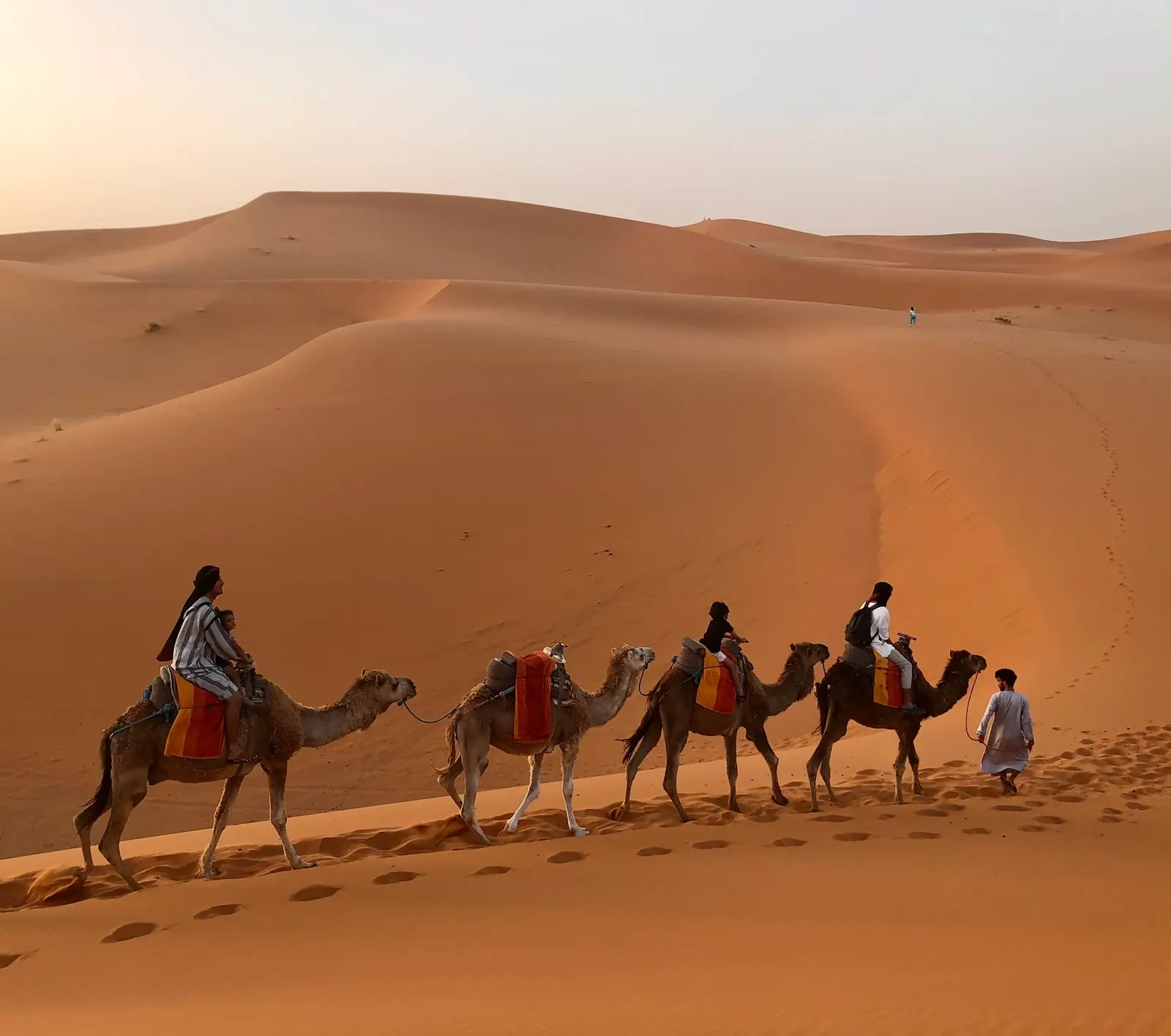
On almost every desert tour, including ours, you leave the vehicle at the edge of the dunes and ride a camel — or walk — to the camp. Your main luggage stays locked in the vehicle with the driver. So the most important item on this list is a small backpack or soft bag for one night: something you can carry on your shoulders while riding. Hard-shell suitcases on a camel are a bad idea for everyone, including the camel.
Clothing: think layers, not seasons
The desert has two climates every day. In spring and autumn it can be 28 degrees at four in the afternoon and 10 degrees at four in the morning. In winter, nights at Merzouga can fall close to freezing. Our month-by-month guide to the best time to visit Morocco gives you the temperatures for your dates.
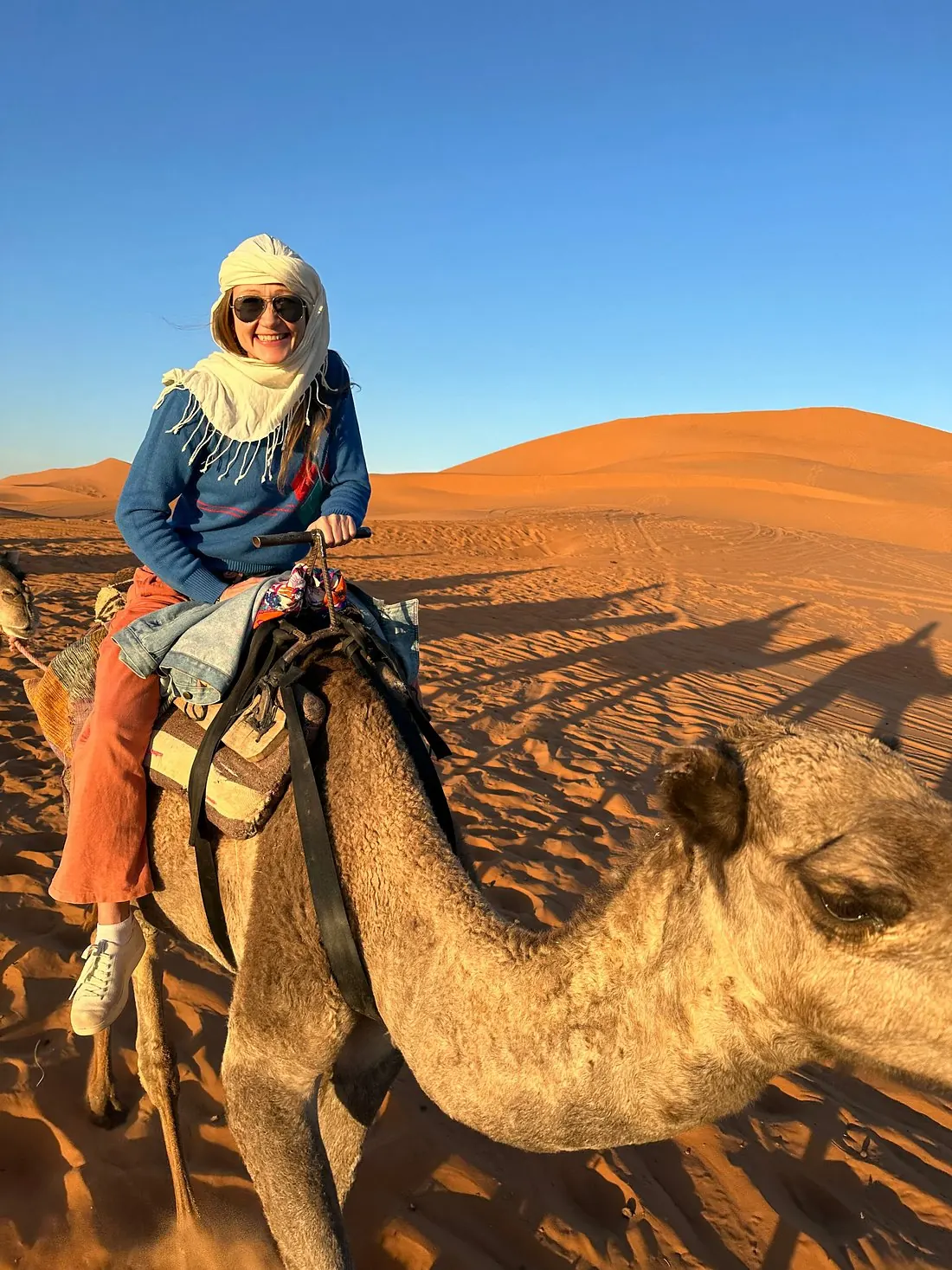
- Loose, breathable long trousers or a long skirt — they protect from sun and sand better than shorts.
- Two or three light long-sleeved tops, plus T-shirts.
- A warm fleece or down jacket, even in May and October. In December and January, add a hat and gloves.
- Something comfortable to sleep in — camps provide blankets, but warm layers help on winter nights.
- A light scarf or a Saharan cheche (turban). It protects against wind, sand and sun. You can also buy one in Merzouga, and your guide will happily show you how to tie it.
- Modest clothing for the towns and villages on the way: shoulders and knees covered is respectful and avoids unwanted attention.
Shoes: the most common mistake
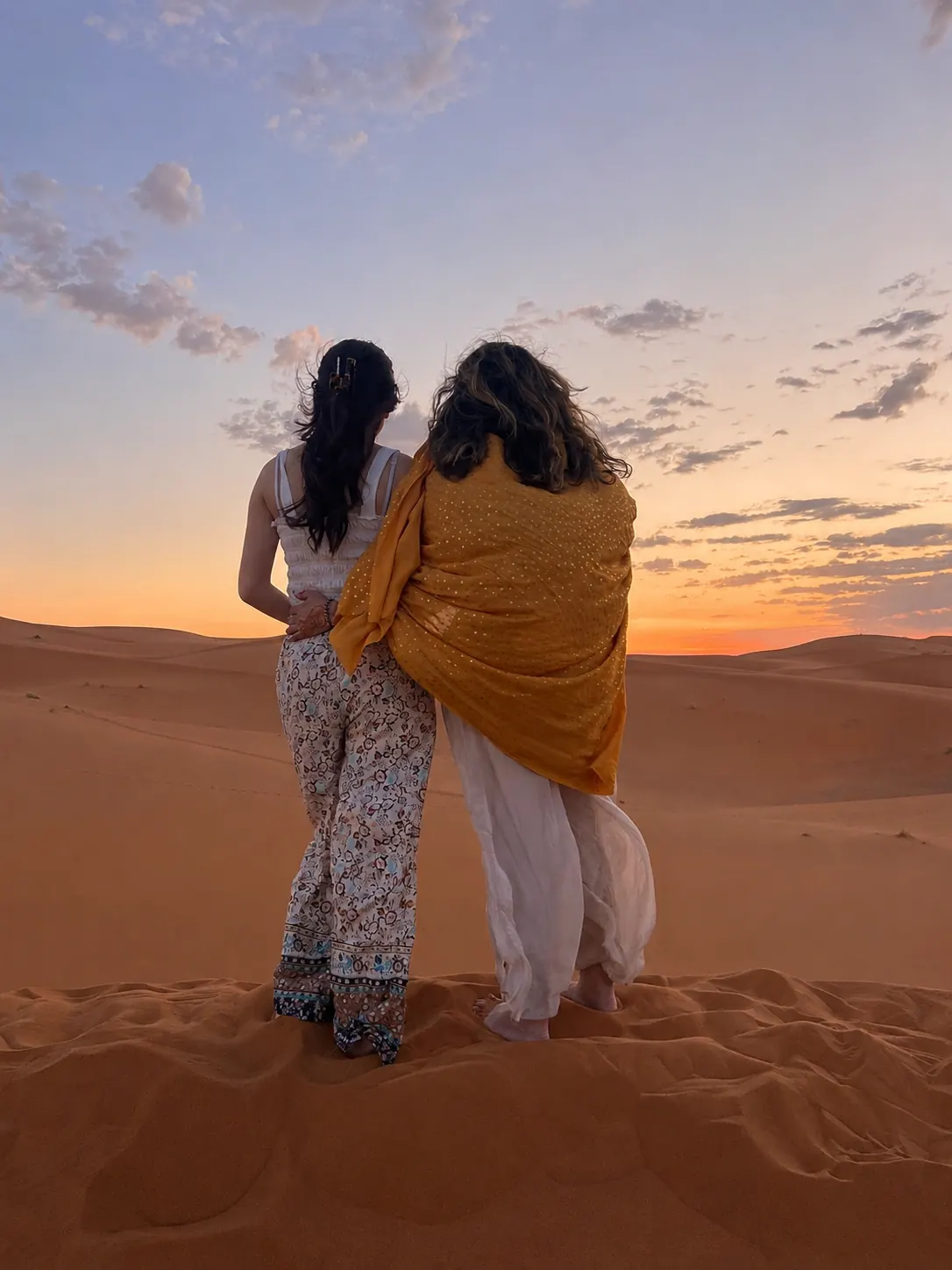
Sand is soft, deep and — in summer — extremely hot at midday. Walking up a dune in flip-flops is hard work; walking up it in heavy hiking boots fills them with sand. The best combination is a pair of comfortable trainers or closed walking shoes for the journey, and sandals for around the camp. Many guests end up climbing the dunes barefoot in the cool of sunrise, which is the nicest way to do it.
Desert essentials
- Sunglasses with good UV protection and high-factor sunscreen.
- Lip balm and a rich moisturiser — the air is extremely dry.
- A head torch or small flashlight for the walk from your tent at night.
- A refillable water bottle (water is provided on our tours, but it is good to have your own).
- A power bank: most camps have electricity, but sockets may be limited.
- Wet wipes and a small bag of personal medicines, including something for upset stomachs and motion sickness for the mountain roads.
- Some cash in small dirham notes for tips, drinks and souvenirs. There are no ATMs in the dunes.
Protecting your camera and phone
Fine sand finds its way into everything. Keep your phone in a zip-lock bag when you are not using it, avoid changing camera lenses in the wind, and bring a small brush or microfibre cloth. The sunrise photos are worth the care.
Before you fly, also check the official health advice for travellers to Morocco for vaccinations, sun protection and travel insurance.
What not to bring
- A large hard suitcase for the camel ride (it stays in the car anyway).
- Expensive jewellery.
- Drones without checking the rules first — Morocco restricts their import and use, and they can be confiscated at the airport.
- Too many clothes. You will wear the same comfortable layers every day, and most riads can arrange laundry.
“Pack for the night, not the day. The day takes care of itself; the night under the stars is where people get cold.”
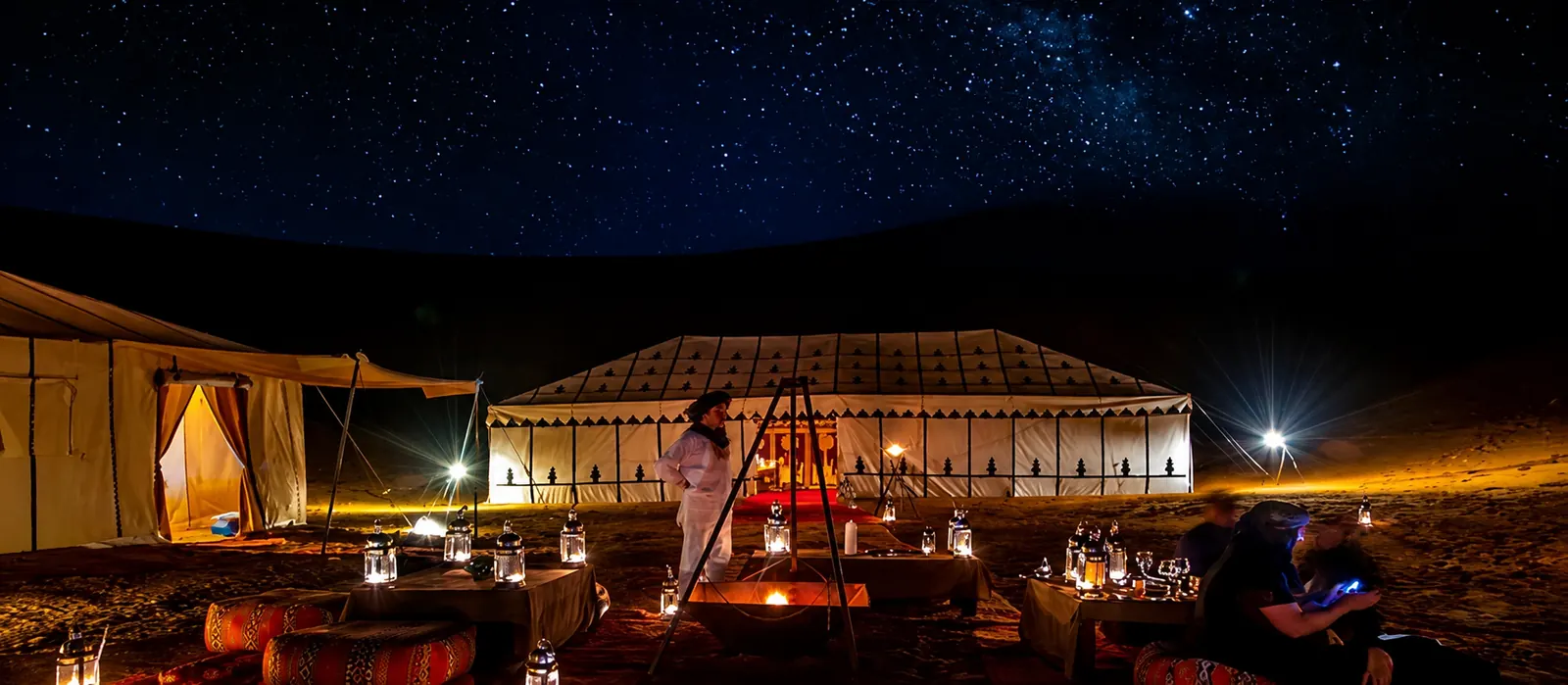
Curious about what you will find at camp? Read what a luxury desert camp actually looks like — it will tell you whether you need a towel, toiletries or a hair dryer (spoiler: usually not).
Frequently asked questions
What should I wear on a camel ride in Morocco?
Long, loose trousers, a light long-sleeved top, closed shoes or sandals with a strap, sunglasses and a scarf to protect your face from sun and sand.
How cold does the Sahara get at night?
In spring and autumn nights are around 10–15°C. In December and January they can fall close to freezing, so bring a warm jacket, hat and gloves.
Can I bring my suitcase to the desert camp?
Usually not on the camel. Bring a small overnight bag; your main luggage stays in the vehicle with your driver.
Do I need to bring a towel to the desert camp?
Most good camps provide towels and basic toiletries. Check with your tour operator before you leave.