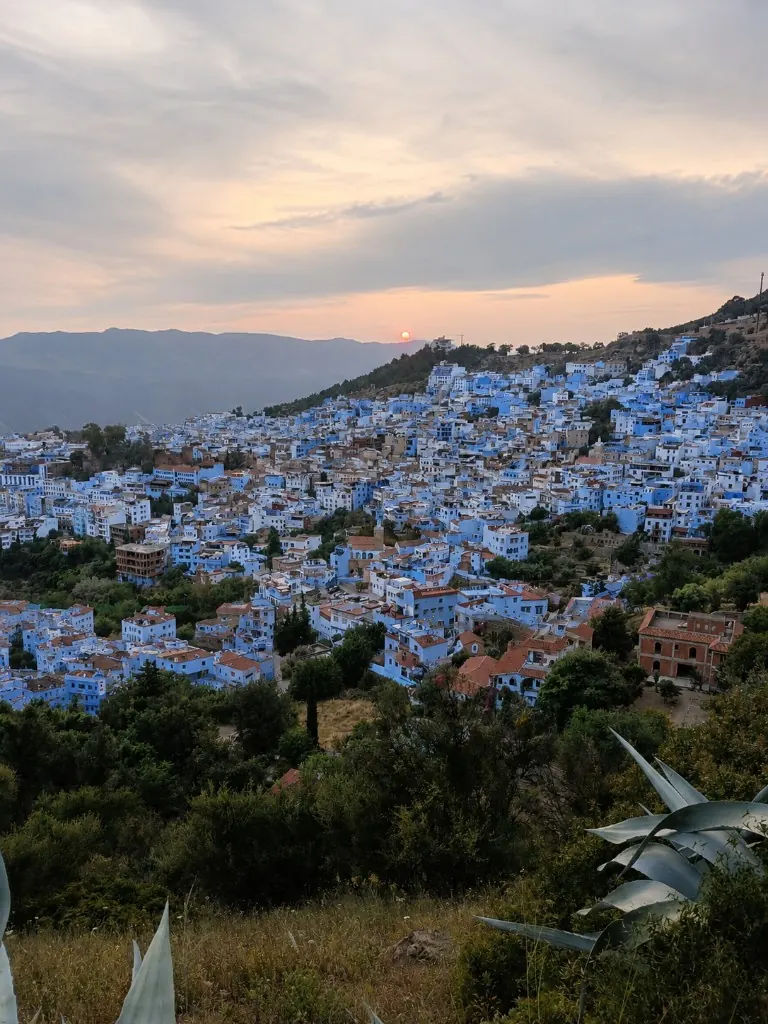
Chefchaouen is small, but it rewards slow travellers more than almost anywhere in Morocco. Its medina is a maze of lanes painted in every shade of blue, set against the green slopes of the Rif mountains. Most visitors arrive for the photographs and leave wishing they had stayed longer, because the best things to do in Chefchaouen are found in the quiet hours, early in the morning and at sunset, and in the mountains just beyond the town.
In short: give Chefchaouen at least one full day and two nights. Walk the blue medina early, visit the kasbah and its garden on Outa el-Hammam square, cool off at the Ras el-Maa spring, and climb to the Spanish Mosque for sunset. With a second day, drive about 45 minutes to Akchour for the waterfalls and God's Bridge in Talassemtane National Park.
In the blue medina
1. Walk the blue lanes early in the morning
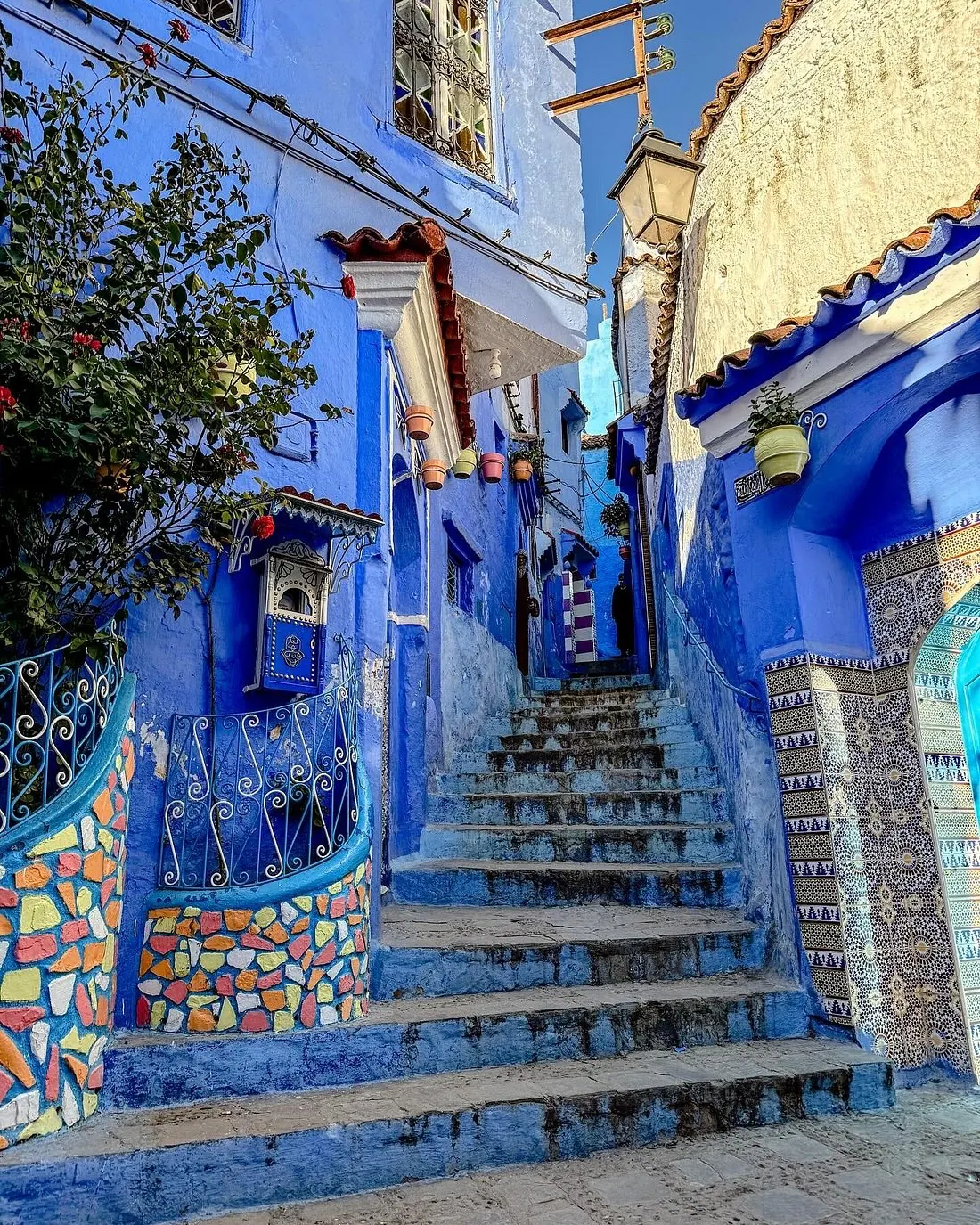
The first and best thing to do in Chefchaouen is simply to walk. Before nine in the morning, the lanes are almost empty, the light is soft and residents are sweeping their doorsteps and carrying bread from the neighbourhood ovens. Wander uphill without a plan: the medina is compact, and every downhill lane eventually brings you back to the main square.
Nobody agrees on exactly why the town is blue. Some say the colour came with Jewish families who settled here, others that it keeps the houses cool or the mosquitoes away. What is certain is that residents keep repainting it, and that the blue changes with the light from pale sky in the morning to deep indigo in the evening.
2. Sit on Outa el-Hammam square
The heart of the medina is a cobbled square shaded by trees, framed by café terraces, the Grand Mosque with its octagonal minaret and the walls of the kasbah. Rough Guides recommends it as a place to watch daily life over a mint tea, and that is exactly how locals use it in the evening.
3. Visit the kasbah, its garden and museum
The red-walled kasbah on the square is the town's old fortress. Inside you find a shaded Andalusian garden and a small ethnographic museum with local crafts, pottery, musical instruments and costumes. Climb the tower for one of the best views over the rooftops and the mountains, a good alternative if you do not want to walk up to the Spanish Mosque. There is a small entry fee for the kasbah.
4. Look into the Grand Mosque from the square
Like most active mosques in Morocco, the Grand Mosque is closed to non-Muslim visitors, but its minaret, unusual for its eight sides, is one of the landmarks of the town and best admired from the terraces around the square.
5. Find the quieter quarters
Most visitors stay between the square and the main shopping lanes. Climb instead into the upper quarters towards Bab Onsar and the old Souika district, where lanes are narrower, doors are older and you are more likely to see children playing than other travellers.
Viewpoints and walks around Chefchaouen
6. Cool off at Ras el-Maa
At the eastern edge of the medina, a spring tumbles out of the mountain into a small river. This is Ras el-Maa, literally the head of the water. Women still wash carpets in the communal basins, families picnic on the rocks and cafés set chairs by the stream. On a warm afternoon it is the coolest spot in town.
7. Climb to the Spanish Mosque for sunset
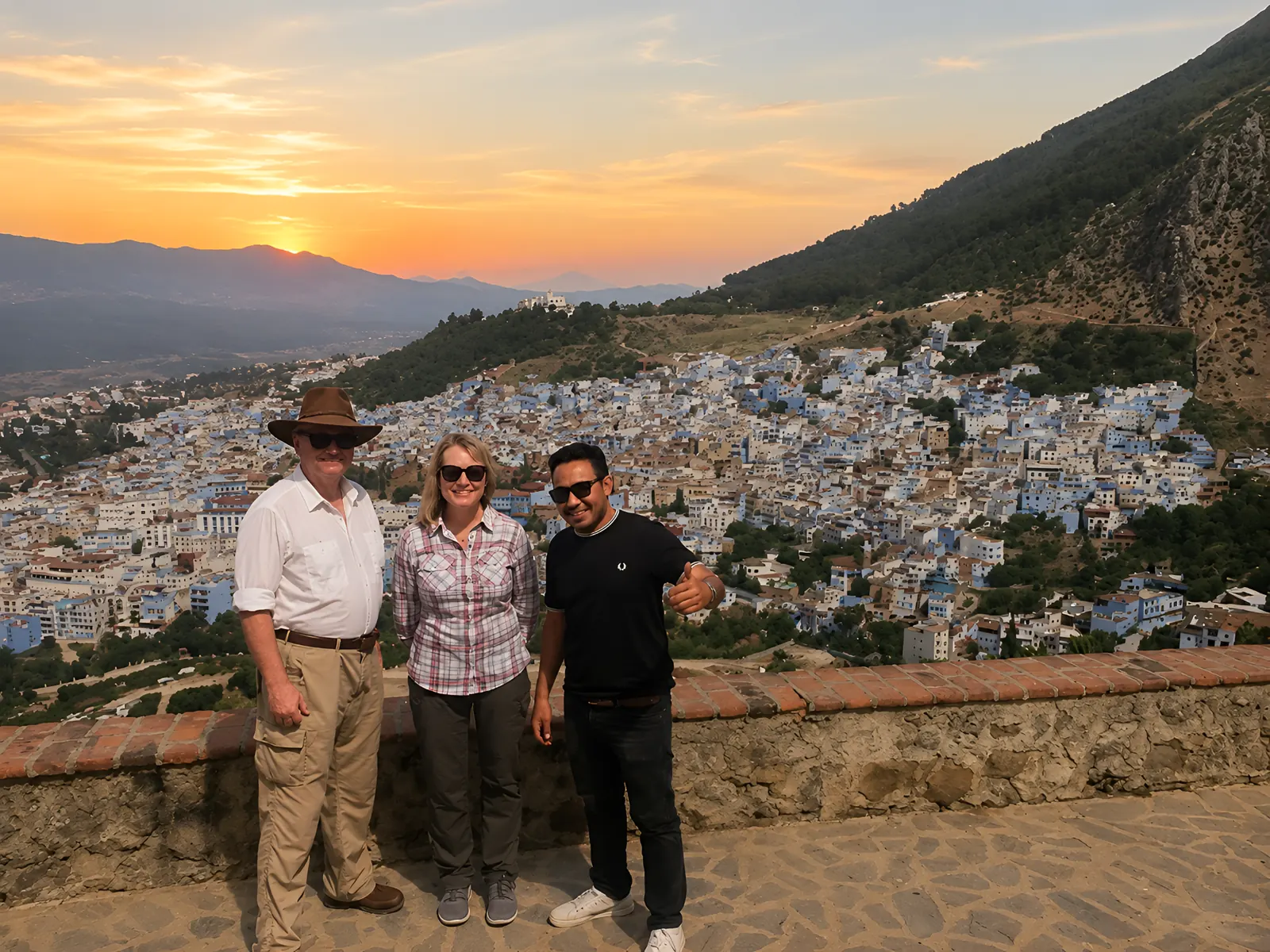
From Ras el-Maa, a path crosses the bridge and climbs about a kilometre up the hillside to a small white mosque built by the Spanish in the 1920s and no longer used for prayer. The walk takes around 20 to 30 minutes. At sunset, the whole medina lies below you and turns gold, then blue, as the lights come on. It is the most popular viewpoint in Chefchaouen, so go a little early to find a good rock to sit on.
8. Walk above the town at sunrise
If the sunset viewpoint feels busy, go at dawn instead. The same path is almost empty, the air is fresh and you see the sun hit the mountains across the valley before it reaches the town. Continue a little higher along the hillside tracks for wider views of the valley.
9. Take a short hike towards Jebel el-Kelaa
The mountain rising behind the town, Jebel el-Kelaa, offers a longer walk for keen hikers, with views over Chefchaouen and the surrounding valleys. It is a steep climb on rough paths, so start early, take water and go with a local guide if you are unsure of the route.
Food, crafts and local life
10. Shop for weaving, wool and local crafts
Chefchaouen is known for its woollen blankets and garments, woven on hand looms in small workshops, and for goat's cheese from the surrounding villages. Prices are reasonable and bargaining is expected but relaxed. Look for workshops where you can see the weavers at work rather than shops that only resell.
11. Eat Rif mountain food
Try the local goat's cheese, bissara (a thick fava bean soup, perfect on a cool morning), and tagines made with mountain herbs. Restaurant terraces around the square have the best views; small family places in the lanes often have the best food. End the day with a mint tea on a rooftop as the call to prayer echoes across the valley.
12. Relax in a hammam
After a day of stairs, a traditional hammam with black soap and a scrub is the best way to recover. Several guesthouses in the medina offer private hammam sessions for travellers who prefer not to visit a public one.
13. Stay in a riad inside the medina
Sleeping inside the old town changes the experience. You wake up to quiet lanes, can walk to the viewpoint before breakfast and return for a rest in the middle of the day. Many guesthouses have roof terraces with views of the mountains; some have small pools.
Beyond the town: the Rif mountains
14. Hike to the Akchour waterfalls and God's Bridge
About 45 minutes by road from Chefchaouen, the village of Akchour is the gateway to Talassemtane National Park, a landscape of limestone gorges, emerald pools and forests. From the small dam, one trail follows the river upstream to the waterfalls, a walk of around two hours each way with small cafés along the path. The other climbs to God's Bridge, a natural stone arch high above the river, a shorter but steeper walk. Wear proper shoes, take water and plan the whole day.
The water level depends on the season: the falls are fullest after the winter and spring rains, and lower in late summer. In the hot months, the pools are a favourite swimming spot for local families.
15. Explore Talassemtane on a longer trek
For experienced walkers, Talassemtane offers multi-day treks through cedar and fir forests and remote Rif villages. These routes need a local mountain guide and some planning. Spring and autumn are the most comfortable seasons, when the mountains are green and the paths are not too hot.
How many days in Chefchaouen, and a simple plan
One day is enough to see the medina, the kasbah and the sunset; two days let you add Akchour; three days give you time to hike and simply rest. Because Chefchaouen is a long drive from most other places, two nights is the minimum we recommend.
Day 1: the blue townMedina, kasbah, Ras el-Maa, Spanish MosqueEarly walk in the lanes, mid-morning at the kasbah, lunch on the square, a slow afternoon at Ras el-Maa, then the climb to the Spanish Mosque for sunset.
Day 2: the mountainsAkchour waterfalls or God's BridgeLeave after breakfast for Akchour, walk to the falls or the arch, lunch by the river, and return in the late afternoon for a hammam and dinner in the medina.
Day 3: at your own paceSunrise walk, crafts and the upper quartersA dawn walk above the town, a visit to the weaving workshops, the quieter upper lanes, then the road on to Fes or Tangier.
Getting to Chefchaouen
Chefchaouen has no airport or railway station. It is about 200 km from Fes, roughly four hours by road, and about two and a half to three hours from Tangier. From Marrakech it is a much longer journey; read Marrakech to Chefchaouen for every option. If you are based in the north, a long day trip is possible: see the Chefchaouen day trip from Fes or the day trip from Tangier. To stay longer, the 2 day Chefchaouen tour from Casablanca and the 3 day tour from Tangier to Fes via Chefchaouen include a night in the blue city.
Practical tips for visiting Chefchaouen
- Respect residents' privacy. The blue lanes are people's homes. Ask before photographing people, keep doorways clear and keep your voice down in the residential lanes.
- Politely decline offers you do not want. Some people approach travellers to sell cannabis, which is illegal for tourists to buy. A simple “no, thank you” is enough.
- Wear shoes with grip. Lanes are steep and stepped, and polished stone can be slippery after rain.
- Pack a warm layer. The town sits in the mountains, so evenings are cooler than in Fes or Marrakech, and winter can be cold and wet. See what to wear in Morocco.
- Choose your season. Spring and autumn are ideal; summer is cooler here than in the south; winter is the rainy season. Our best time to visit Morocco guide has the details.
- Carry small change for cafés, tips and the kasbah entrance.
“Do not rush Chefchaouen. The blue lanes are beautiful at noon, but they are magical at seven in the morning, when the town belongs to the people who live there.”
For more on the history of the town and the places beyond the blue walls, read our Chefchaouen travel guide.
Want Chefchaouen on your route? Browse our tours from Tangier, tours from Fes and private Morocco tours, then send us your dates or message us on WhatsApp for a free quote.