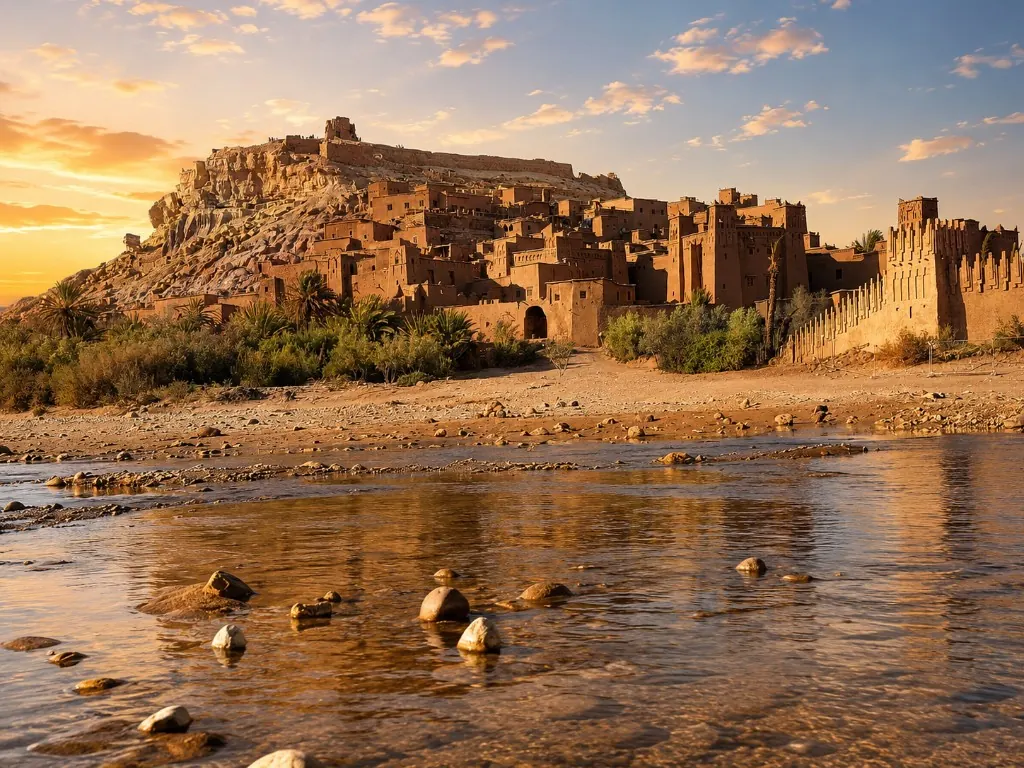
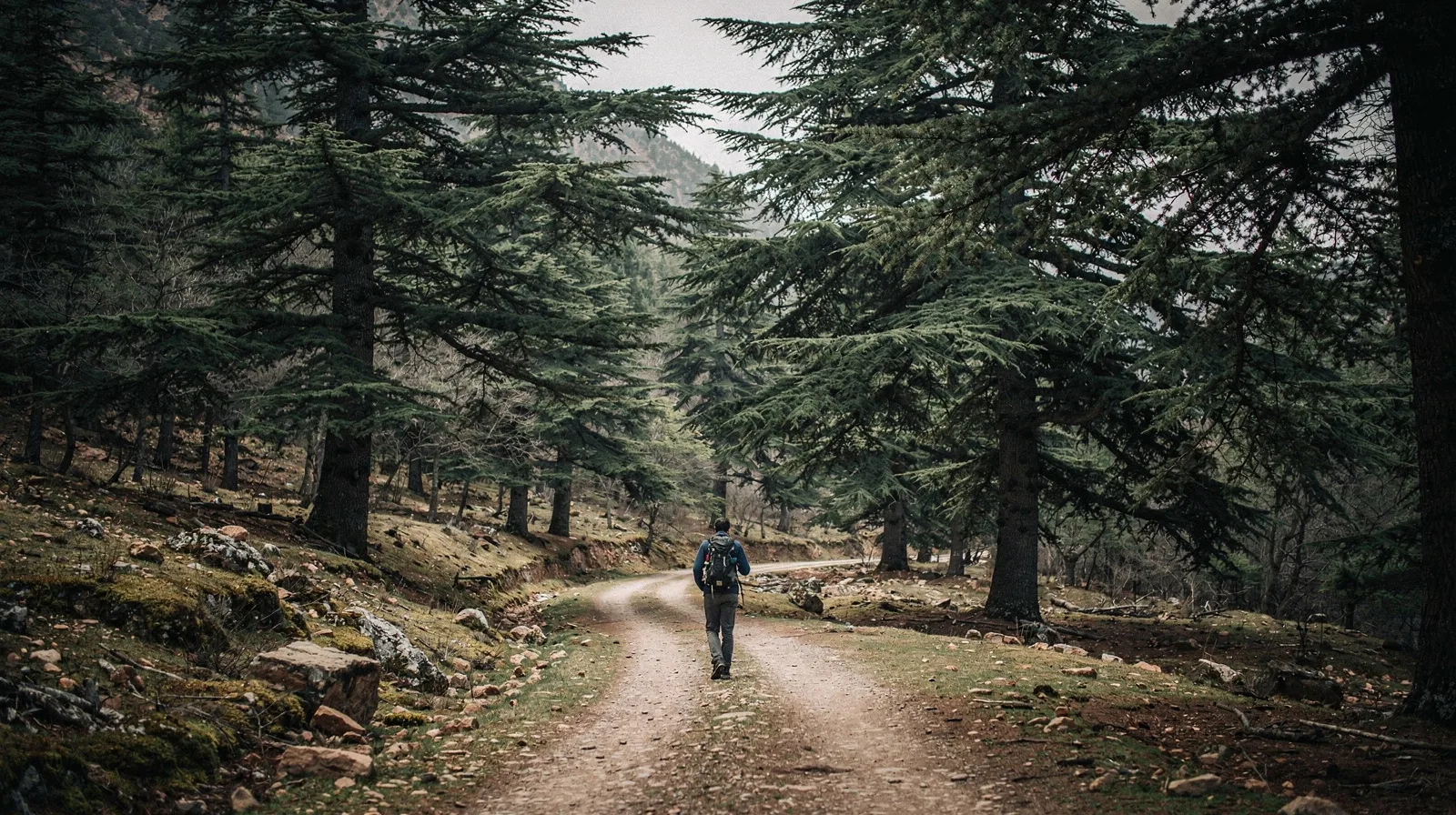
Most travellers cross the Middle Atlas without knowing its name. They leave Fes in the morning on the way to the Sahara, and an hour later they are driving through cedar forests, past red-roofed chalets and grassy meadows that look more like the Alps than Africa. By lunchtime the forest has given way to high plateaus and, by evening, to the dunes. This guide is for those who would like to know what they are looking at, and perhaps to slow down: Ifrane, Azrou, the cedar forest and its Barbary macaques, the lakes, and the road that links Fes to the desert.
In short: the Middle Atlas is the green mountain range south of Fes and Meknes. Its highlights are the alpine-style town of Ifrane, about an hour from Fes; the market town of Azrou; and the great cedar forest between them, part of Ifrane National Park and home to wild Barbary macaques. You can see the main sights in half a day on the way from Fes to the Sahara, or spend a full day with walks around the lakes and forests.
What is the Middle Atlas?
Morocco has three Atlas ranges. The High Atlas, with Toubkal, rises south of Marrakech; the Anti-Atlas runs towards the Sahara in the south-west; and the Middle Atlas, the most northerly of the three, stretches south and east of Fes and Meknes. It is a land of limestone plateaus, volcanic cones, crater lakes and, above all, forests of Atlas cedar and holm oak.
Because it is high and catches the rain coming in from the Atlantic, the Middle Atlas is far greener than most visitors expect. Rivers start here, including the Oum Er-Rbia, one of Morocco's longest. In winter, snow covers the plateaus; in summer, families from Fes, Meknes and Rabat come up to escape the heat. The region is home to Amazigh communities, many of whom traditionally moved their flocks between summer and winter pastures.
Ifrane: the “Switzerland of Morocco”
About 65 km south of Fes, roughly an hour's drive, Ifrane appears suddenly among the trees: neat streets, pitched roofs, gardens and lawns. The town was laid out in the first half of the 20th century as a mountain resort, and its chalet-style houses earned it the nickname “the Switzerland of Morocco”. At around 1,650 m, it is one of the highest towns in the country, and one of the coldest: the weather station here recorded −23.9°C in February 1935, still cited as the lowest temperature ever measured in Africa.
Today Ifrane is a calm, clean town, popular with Moroccan families on weekends and holidays. Things to do in a short stop:
- See the stone lion. A large lion carved from rock sits in a garden near the town centre, a reminder of the Atlas lions that once lived in these forests. It is the town's best-known photo stop.
- Walk in the parks. Tree-lined avenues, small lakes and gardens make Ifrane pleasant for an unhurried walk and a coffee.
- Look at the architecture. The pitched roofs and wooden balconies are a surprise after the flat earthen roofs of the rest of Morocco.
- Pass by Al Akhawayn University. The English-language university, on the edge of town, follows the same alpine style.
In winter, the nearby slopes of Michlifen draw visitors for skiing and snow play when conditions allow. In summer, the town is cool and green when Fes is hot.
The cedar forest and the Barbary macaques
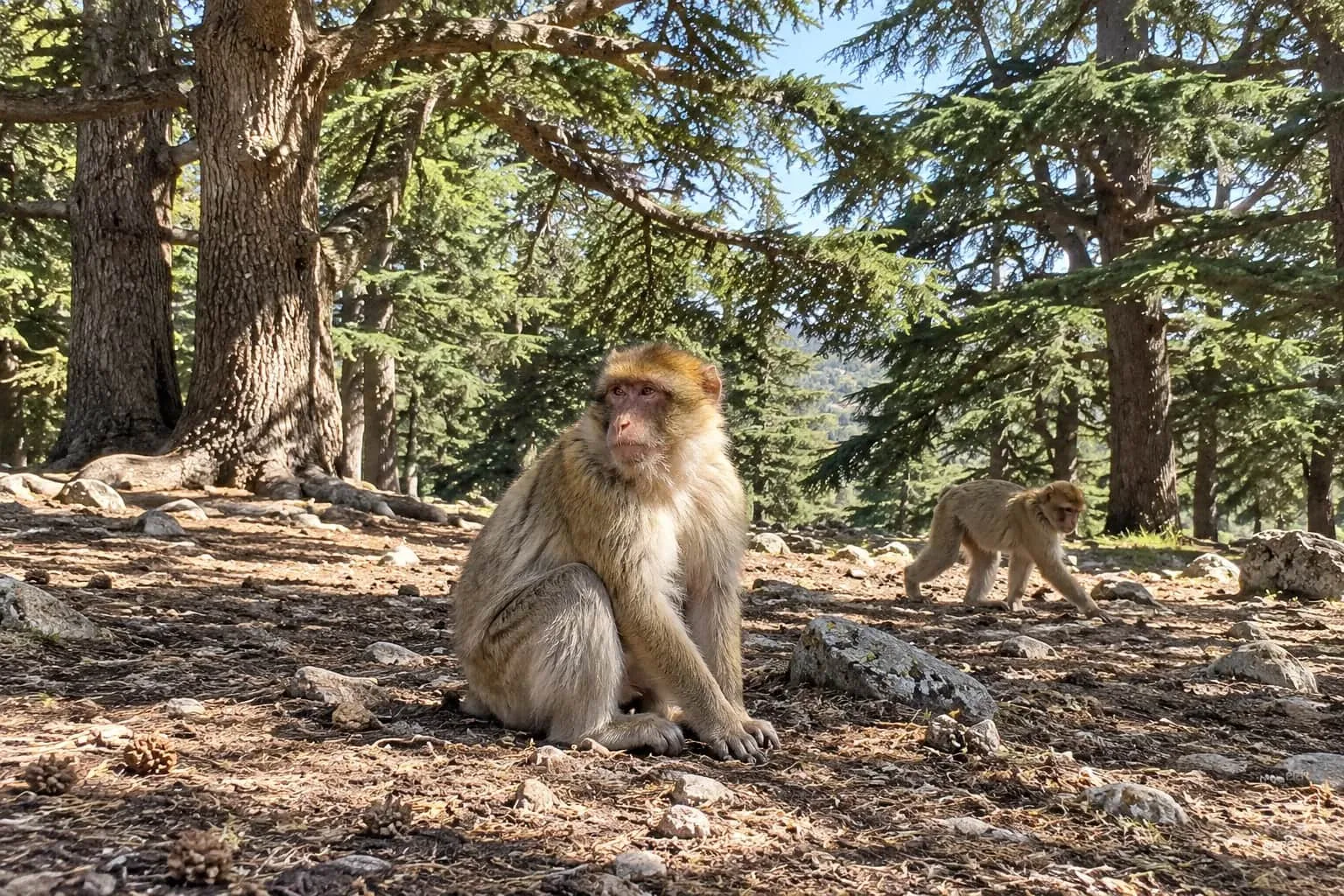
Between Ifrane and Azrou, the road runs through one of the finest cedar forests in North Africa. It lies within Ifrane National Park, created in 2004, which covers around 125,000 hectares. The park is said to hold a large share of the world's Atlas cedars and the most important population of Barbary macaques, the only macaque species living in Africa.
The Atlas cedar is a majestic tree, with layered, flat branches and blue-green needles. Some trees in the forest are several centuries old. The best-known spot is the Cèdre Gouraud forest, on the N8 road between Azrou and Ifrane, named after a giant cedar that became a landmark for travellers. The great tree itself has died, but the area around it is still a favourite stop because of the macaques that live in the forest.
Meeting the macaques responsibly
Barbary macaques are an endangered species, native to the forests of Morocco and Algeria. Around the popular stops, some groups have become used to people, and you can watch them in the trees and on the ground at close range. To protect them:
- Do not feed them. Food from visitors makes them sick, aggressive and dependent. This is the most important rule.
- Keep your distance and do not try to touch them, especially mothers with young.
- Keep food and bags closed and out of reach.
- Do not pay for photos with captive monkeys elsewhere in Morocco: the trade in young macaques is a major threat to the species.
For the best experience, walk a little way into the forest away from the car park. The quiet, the smell of the cedars and the light through the branches are worth as much as the monkeys.
Azrou: a Middle Atlas market town
A short drive south-west of Ifrane, Azrou sits lower, at around 1,250 m, surrounded by hills covered in cedar and holm oak. Its name means “rock” in Tamazight, after the large rock outcrop that overlooks the town. Azrou is less polished than Ifrane and more of a working town, a crossroads for the farming and herding communities of the surrounding mountains.
It is a good place to stop for lunch, to see a Middle Atlas town at its everyday pace and, on market day, to visit its weekly souk, where farmers sell vegetables, livestock and household goods. The region is known for its woollen carpets, woven by Amazigh families with patterns that differ from those of the High Atlas or the south.
Azrou is also the gateway to quieter corners. South of the town, small roads lead through the forest towards the village of Ain Leuh and the springs of the Oum Er-Rbia river, where water bursts from the rock in dozens of springs. These detours need extra time, but reward travellers who want to see the Middle Atlas away from the main road.
Lakes and walks in the Middle Atlas
The limestone plateaus around Ifrane are dotted with lakes, rare in Morocco's landscape. The best known is Dayet Aoua, about 15 km north of Ifrane, a quiet lake surrounded by trees, with paths along the shore and birdlife in the reeds. Further south, Aguelmane Afennourir, at around 1,800 m, is a protected wetland important for birds.
Water levels vary from year to year and can drop sharply in dry years, so a lake that is full one spring may be small the next. Walks around Dayet Aoua and through the cedar forest are easy, with little climbing, which makes them ideal for families and for anyone who wants a break from the car on a long driving day.
The road from Fes to the Sahara
For most visitors, the Middle Atlas is the first chapter of a longer journey: the classic drive from Fes to Merzouga, about 460 km and a full day on the road. It is one of the most varied drives in Morocco, and knowing the stages helps you enjoy it.
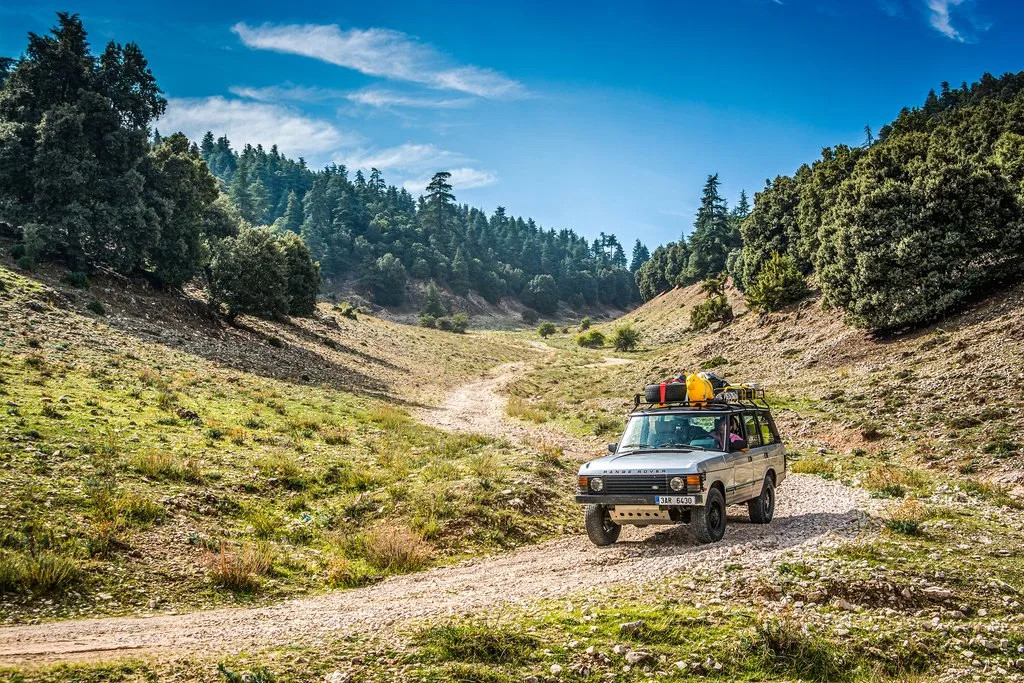
Fes to IfraneAbout 65 km, around an hourThe road leaves the plain of Saïs and climbs through olive groves and farmland to the first forests and the town of Ifrane.
Ifrane to AzrouA short drive through the cedar forestThe most beautiful stretch: cedars on both sides, the Cèdre Gouraud stop and, often, macaques by the road.
Azrou to MideltHigh plateaus and mountain passesThe forest thins into open steppe grazed by sheep, the road crosses high passes and reaches Midelt, a town of apple orchards below the long ridge of Jbel Ayachi. The natural lunch stop.
Midelt to MerzougaInto the Ziz valley and the desertOver the eastern High Atlas, down the Ziz gorges lined with palm groves and earthen villages, past Errachidia and Erfoud to the dunes of Erg Chebbi in time for sunset.
In a single day you go from cedar forest to palm grove to sand sea. It is a long day, so the Middle Atlas stops are usually kept to about an hour: the lion in Ifrane, a walk in the cedar forest and coffee in Azrou. Our Marrakech to Fes desert route guide describes the same road in the other direction, and the Merzouga and Erg Chebbi guide covers the dunes at the end of it.
When to visit the Middle Atlas
The Middle Atlas has real seasons, and each one changes the experience.
- Spring (March to May): green meadows, wild flowers and full lakes. One of the best times for walks.
- Summer (June to August): pleasantly cool compared with Fes and Marrakech, and busy with Moroccan families on holiday. Forest walks are at their most comfortable.
- Autumn (September to November): crisp mornings, golden light and quieter roads. Very good for photography.
- Winter (December to February): snow on the plateaus and sometimes in Ifrane itself, cold days and occasional road closures on the high passes after heavy snowfall. Beautiful, but plan some flexibility and warm clothes.
For the rest of the country month by month, see the best time to visit Morocco.
How to visit the Middle Atlas
There are three easy ways to include the region in your trip.
On a desert tour from FesThe most common wayIfrane, the cedar forest and Azrou are on the first morning of every desert tour from Fes. See the 3 day Fes to Marrakech tour via Merzouga, the 4 day Sahara tour from Fes to Marrakech and our tours from Fes.
On the way back from the desertArriving in Fes from the southTravelling from Marrakech through the Sahara to Fes, you reach the Middle Atlas on the last afternoon, as in the 3 day Marrakech to Fes desert tour.
As a slower day from FesFor walkers and nature loversWith a private driver, a full day from Fes can include Ifrane, a forest walk, Dayet Aoua and lunch in Azrou. Ask us to include it in a private itinerary.
Practical tips
- Bring a warm layer in every season: Ifrane is much cooler than Fes, and winter days can be freezing. See what to wear in Morocco.
- Do not feed the macaques, even if others do.
- Avoid weekends and public holidays if you want quiet forests: the area is popular with Moroccan families.
- Carry small change for coffee, parking attendants and small purchases in Azrou.
- Check the weather in winter. Snow can briefly close the high passes between Azrou and Midelt; a good driver adapts the timing.
“Travellers often ask me to stop the car in the cedar forest just to breathe. After the medina of Fes, the smell of the cedars and the silence of the trees are a surprise nobody expects.”
Before or after the mountains, plan your days in the city with our guides to things to do in Fes and the Fes medina.
Want to include the Middle Atlas in your trip? Browse our tours from Fes and private Morocco tours, then send us your dates or message us on WhatsApp for a free, no-obligation quote.