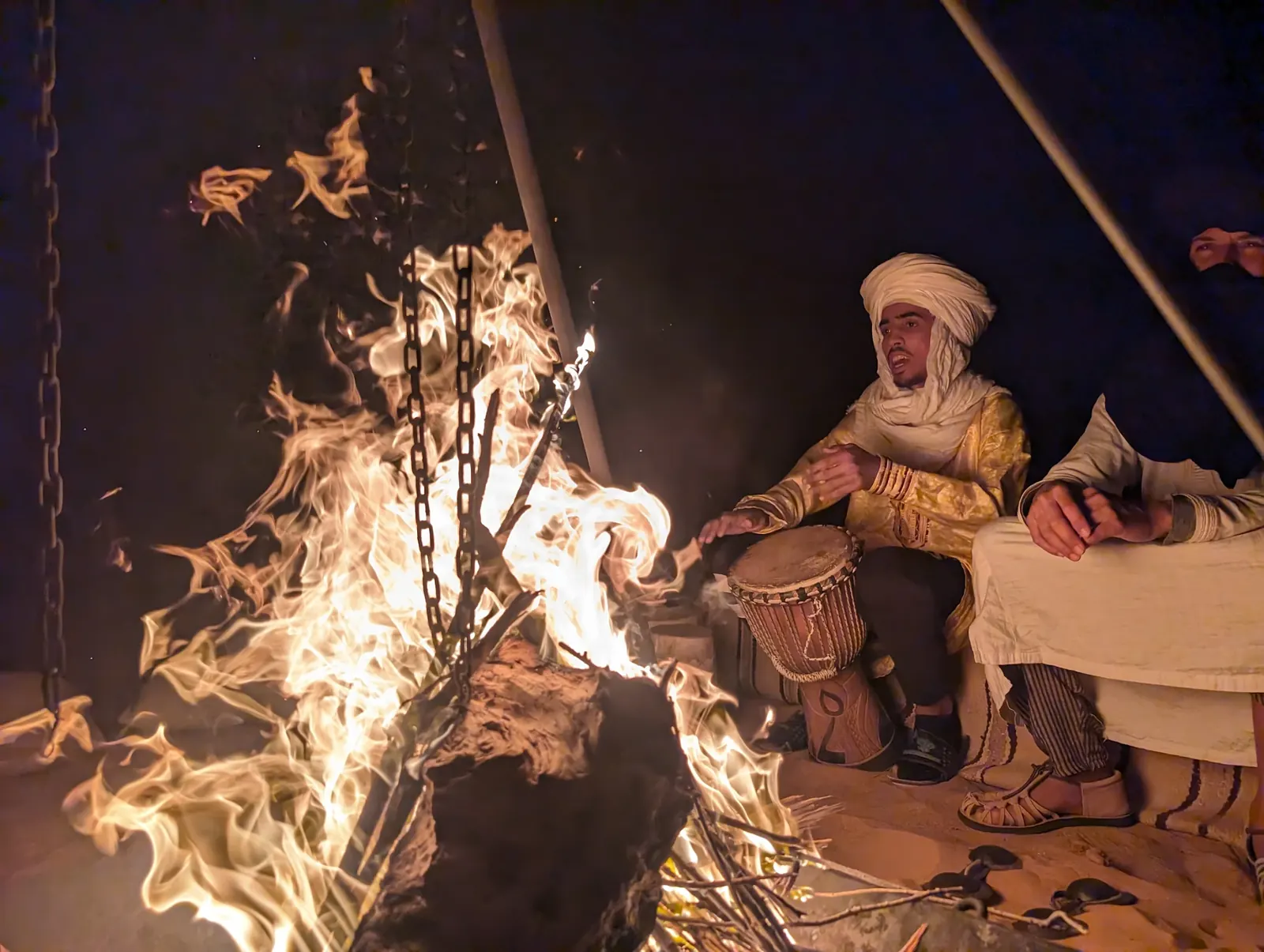
I have been asked this question more times than I can count. Usually by someone sitting across from me on a terrace in Marrakech, having just arrived — safe, a little bewildered, and already a little in love with the city.
The honest answer to 'is Morocco safe?' is: yes, for the vast majority of travellers, in the vast majority of situations. But that is not the whole answer — and the short version, without context, is less useful than you might think. What follows is what I actually say when I sit down with guests before we begin: not a list of warnings, not false reassurance, but the kind of nuanced picture that helps people travel well.
What kind of country Morocco is
Morocco is a constitutional monarchy with a long tradition of stability in a region where stability is not guaranteed. It has maintained strong diplomatic relationships with both Europe and North Africa for decades. It borders the Atlantic and Mediterranean, which means it has been a crossroads of cultures for centuries — Arab, Berber, Saharan, Andalusian, French colonial, and now profoundly global. That complexity makes it fascinating. It also means that the experience of Morocco can vary widely depending on where you are and how you engage.
Violent crime against tourists is rare. Not unknown — no country can make that claim — but rare enough that it is not a primary concern for the kind of careful, aware traveller who reads articles like this one. Petty crime, particularly in the medinas of Marrakech and Fes, is more common and more worth understanding.
The medinas: what to expect and what to watch for
The old city of Marrakech — the medina — is genuinely disorienting at first. The streets are narrow and unlabelled, the crowd is dense, the sensory volume is high. It is one of the most captivating places I know. It is also the environment where opportunistic petty theft is most likely.
The practical advice: keep phones and cameras in an inside pocket or bag when not in use. Be aware of who is immediately around you in crowded spaces like the main square, Djemaa el Fna, particularly at night when the market crowds peak. A crossbody bag worn in front is the right call — not because theft is constant, but because it removes the anxiety that comes with being obviously unaware.
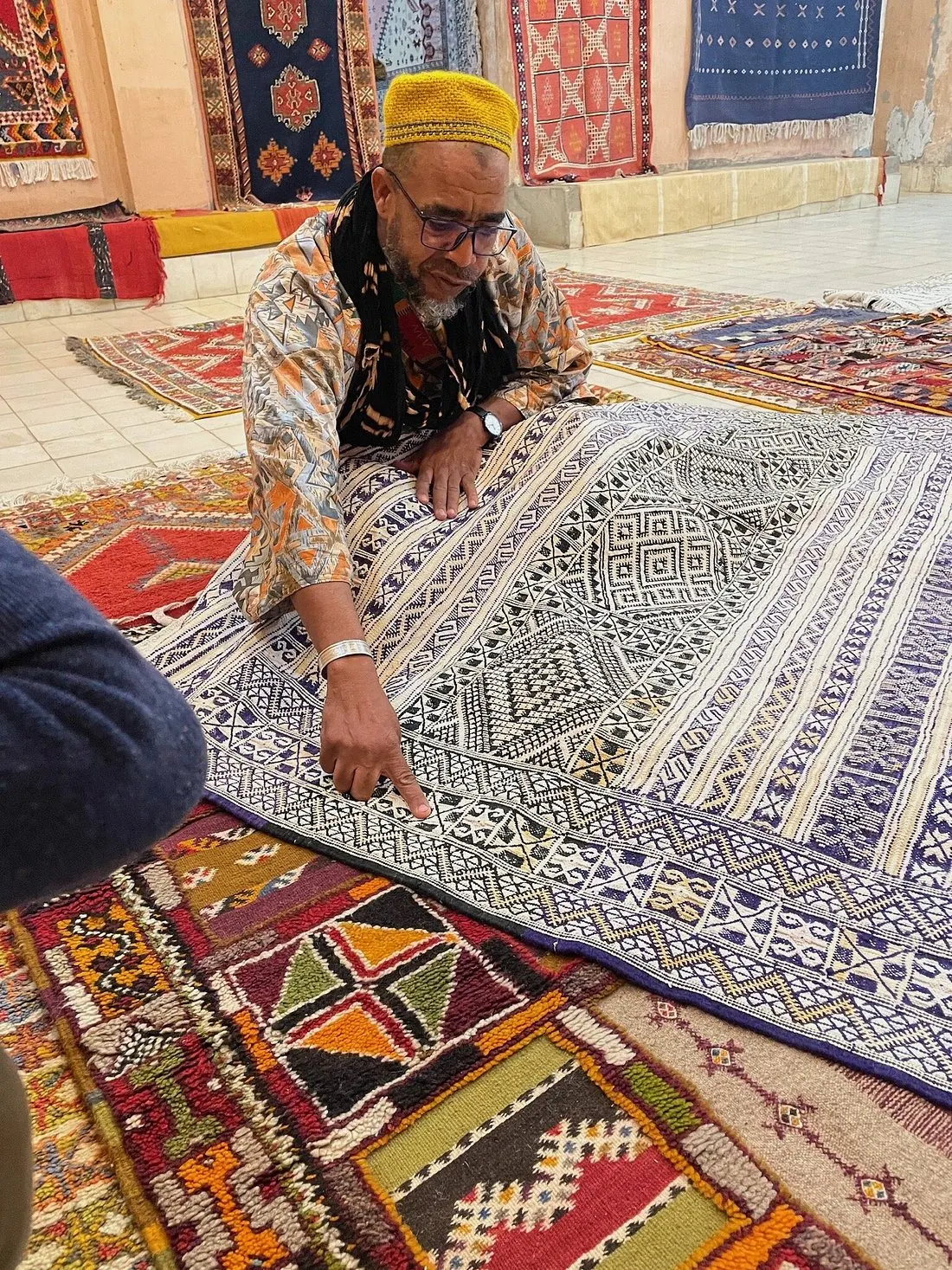
The other thing worth knowing about the medinas: unsolicited guides. In Marrakech particularly, you may be approached by people offering to show you the way or take you to a specific shop. Some are simply entrepreneurs. Some are working on commission with specific merchants. The standard approach: a polite, firm 'no thank you' and a direct line. Uncertainty and hesitation invite persistence. Clarity closes the conversation.
For women travelling alone
I want to answer this question carefully, because the experience of solo women travellers in Morocco is genuinely more complex than the experience of men or mixed groups. It is not dangerous — many thousands of women travel Morocco alone every year and have extraordinary experiences. But it is not uniform, and pretending otherwise would be a disservice.
“Morocco is not a country that is hostile to women travellers. It is a country that requires women travellers to be more deliberate — about where they go, when, and how they present themselves. This is not unique to Morocco. But it is true of Morocco.”
In the major tourist areas — central Marrakech, Chefchaouen, the Fes medina — solo women travellers are a common presence and are generally treated with respect. In smaller towns, rural areas, and working-class neighbourhoods of major cities, attention from local men is more likely. It is rarely threatening; it can be persistent and uncomfortable.
Dress code matters. This is not a moral judgement — it is a practical observation. Shoulders and knees covered in the medinas and traditional areas significantly reduces unsolicited attention. The beach at Essaouira operates by different norms. The desert camp is a private environment. Reading each context and dressing accordingly is the most effective tool available.
A private guide makes a practical difference that is hard to overstate. This is not a sales pitch — it is why women travelling alone often tell us, specifically, that the presence of our guide transformed their experience of the medinas from anxious to joyful. A local who is clearly accompanying you changes the social dynamic entirely. You go from a solo traveller who might be approached to a guest of someone who is respected in their community.
For families with children
Morocco is an excellent choice for families. Moroccan culture is deeply oriented around children — they are welcomed in restaurants, riads, and even traditional homes in a way that many Western cities simply are not. Our private tours are designed with families in mind: the pacing is adjusted, the accommodation always has private facilities, and the activities — camel rides, cooking classes, desert camps — are calibrated for mixed ages.
The main consideration for families is not safety but logistics: the desert drives are long, and children need activities and rest stops built into the schedule. We have designed our desert routes specifically for this. The payoff — a child's first morning on the dunes — is considerable.
For LGBTQ+ travellers
This question deserves a direct answer. Same-sex relationships are illegal in Morocco under the Penal Code, and I will not pretend otherwise. In practice, enforcement is almost always limited to situations involving public complaints or conspicuous displays of affection — not to the fact of being gay. Many LGBTQ+ visitors travel Morocco without incident, and our tours have welcomed guests from across the spectrum of identities for years.
Discretion is not just advisable — it is important. Holding hands or other public displays of affection between same-sex couples is likely to attract unwanted attention and carries a legal risk that we feel obligated to name. In the privacy of a riad, a desert camp, or a hotel room, you are among guests and staff who are professional, respectful, and accustomed to international visitors.
If you are considering Morocco and have concerns about this specifically, write to us before booking. We will give you an honest picture of what to expect on the routes you are considering, and we will not waste your time with reassurances that are not warranted.
On the roads: our transportation approach
Moroccan road culture is something to understand before you arrive. Urban driving — particularly in Casablanca and Marrakech — is assertive, and the rules of priority are interpreted loosely. In rural areas, roads can be narrow and winding through the mountains. Donkeys, mopeds, and pedestrians share the route.
We use private air-conditioned Mercedes 4x4 vehicles for all our tours. Our drivers have years of experience on these specific routes — they know the mountain passes, the timing of truck traffic on the main roads, and where to stop. We do not rush. Long drives are broken with stops worth stopping for.
Cultural respect that keeps you comfortable
Most of the situations that create discomfort for travellers in Morocco are not criminal — they are cultural mismatches. A few simple orientations make a significant difference.
- Greet people. A 'salam alaikum' — or simply a nod and a smile — is not just politeness. It is an acknowledgement of presence that changes how interactions begin.
- Ask before photographing people. In the medinas and souks, pointing a camera at someone without permission is considered rude. A gesture, a smile, a question — most people will say yes, and the portrait will be better for it.
- Bargaining is expected in the souks but not in restaurants or pharmacies. Learn the difference and you will feel more confident in both contexts.
- Public displays of affection between couples are generally acceptable in tourist areas and riads but less so in traditional neighbourhoods and rural areas.
- At mosques and religious sites, remove shoes, cover your head if requested, and speak quietly. Non-Muslims cannot enter most active mosques in Morocco, but the courtyards and environs deserve the same respect.
Our honest assessment
I have been guiding international visitors through Morocco for more than a decade. In that time, I have not had a serious safety incident with any guest. I say this not to offer a guarantee — no guide can guarantee anything in any country — but to offer the weight of accumulated experience.
The travellers who have the best experiences in Morocco are not the ones who arrive most cautiously. They are the ones who arrive most openly — willing to be surprised, willing to engage, willing to follow the guidance of someone who knows the country well. Curiosity is the most effective safety tool available.
“Morocco will test your assumptions about the world. That is not a warning. That is the whole point.”
If you have specific questions about a route, a destination, or a type of travel — solo, family, accessible travel, LGBTQ+ considerations — write to us before you book. We answer these questions honestly, and we would rather help you plan the right trip than the wrong one.
Before you travel, check the latest official advice — for example the UK Foreign Office travel advice for Morocco — and read our practical Morocco travel tips for first-time visitors and our comparison of private and group tours.