Fes is the most fascinating city in Morocco, and the most confusing. Its old medina, Fes el-Bali, is one of the largest car-free urban areas in the world, a maze of lanes where donkeys still carry goods and craftsmen work exactly where their trade has worked for centuries. The best things to do in Fes are not only the famous monuments, but the moments in between: the smell of cedar in a woodworkers' lane, a glass of tea on a rooftop, the call to prayer rolling across the city at dusk.
This guide brings together what we recommend to our own guests, how to organise your days and how to explore without stress. For the history and the rhythm of the old city, read it together with our guide to the Fes medina.
The short answer: spend at least two full days in Fes. On day one, explore Fes el-Bali with a local guide: the Bou Inania and Attarine madrasas, the Qarawiyyin area, the souks and the Chouara tanneries. On day two, see Fes el-Jdid, the Mellah and the Royal Palace gates, then watch the sunset from the Merenid Tombs. With a third day, add Volubilis and Meknes or Chefchaouen.
Fes el-Bali: the old medina
The medina of Fes has been a UNESCO World Heritage Site since 1981. Founded at the end of the 8th century and capital of Morocco for long periods, it is still a living city, not a museum.
1. Enter through Bab Bou Jeloud
The blue-tiled Bab Bou Jeloud gate, built in the early 20th century, is the classic entrance to the medina. Through its arches you see the minarets of the old city. From here, the two main streets, Talaa Kebira and Talaa Seghira, run downhill towards the heart of Fes el-Bali.
2. Visit the Bou Inania Madrasa
Built in the 14th century under the Marinid dynasty, the Bou Inania is one of the few religious buildings in Fes open to non-Muslim visitors, and one of the most beautiful rooms in Morocco: zellige tilework, carved stucco and cedar around a marble courtyard. Come early, before the groups.
3. See the Attarine Madrasa
Smaller and just as refined, the Attarine Madrasa, also from the 14th century, stands next to the spice and perfume souk that gave it its name. The upper floor, where students lived, gives you an idea of daily life in a medieval college.
4. Discover the Qarawiyyin area
The Qarawiyyin, founded in the 9th century, is considered one of the oldest continuously operating places of learning in the world. As an active mosque it is closed to non-Muslims, but you can glimpse its courtyard through the open doors and feel the importance of the area around it, with its surrounding madrasas, fountains and squares.
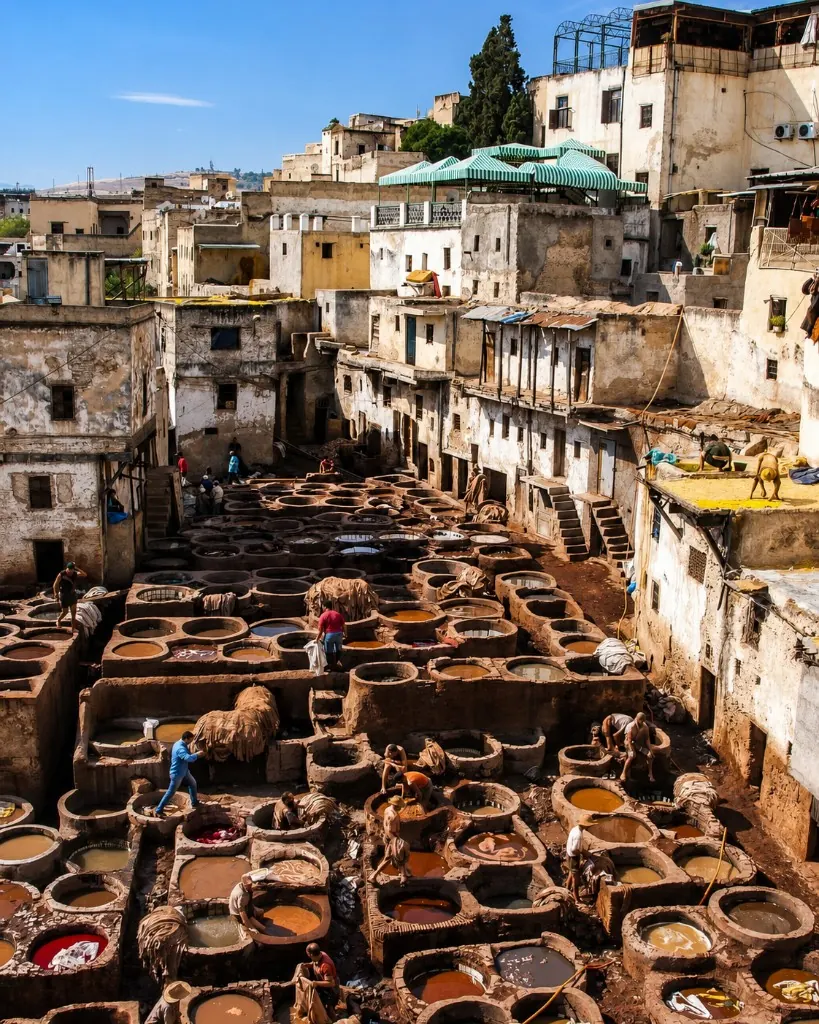
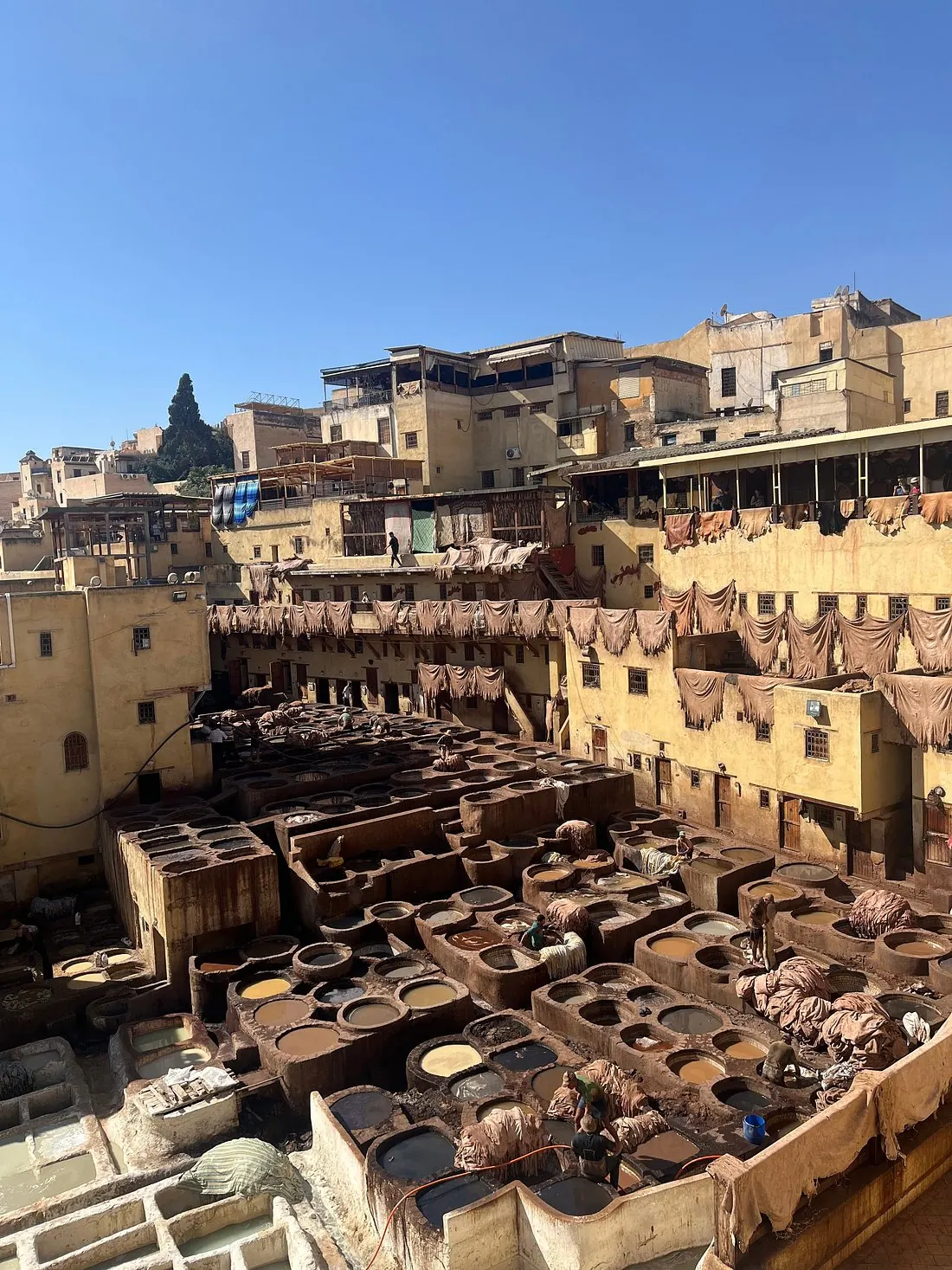
5. Watch the Chouara tanneries
From the terraces of the surrounding leather shops, you look down on the circular stone vats where hides are dyed and treated by hand. Shopkeepers usually offer a sprig of mint for the smell. Go in the morning, when the vats are full of colour and the light is best. You are not obliged to buy anything, but a small purchase or tip for the terrace is appreciated.
6. Get lost in the souks
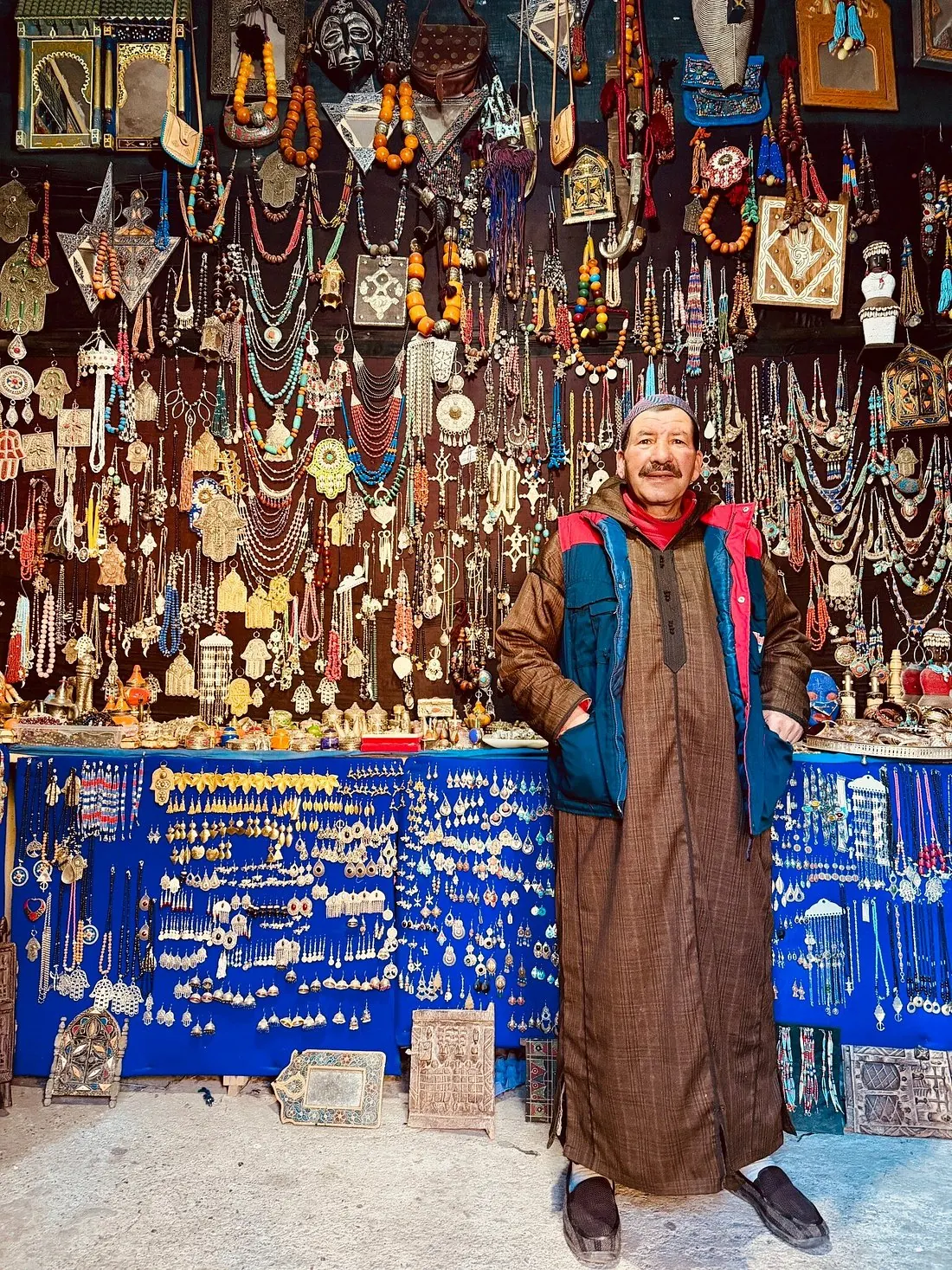
The souks of Fes are organised by trade: coppersmiths hammering trays at Seffarine Square, dyers, weavers, leatherworkers, woodworkers and sellers of slippers, spices and dates. Watching the artisans is as rewarding as shopping. For a stress-free first visit, explore with a licensed local guide.
7. Visit the Nejjarine fountain and museum
On a small square in the woodworkers' quarter, the Nejjarine fountain is decorated with tiles and carved cedar. Next to it, a former caravanserai (fondouk) houses a museum of wooden arts and crafts, with a rooftop terrace overlooking the medina.
8. Step into Dar Batha
Dar Batha, a former palace near Bab Bou Jeloud, has an Andalusian garden and collections of traditional Moroccan art. It is a good place to slow down after the intensity of the souks.
Fes el-Jdid and the Mellah
9. Admire the Royal Palace gates
In Fes el-Jdid, the "new" city founded in the 13th century, the gates of the Royal Palace (Dar el-Makhzen) are among the most photographed in Morocco: brass doors framed by zellige and carved cedar. The palace itself is not open to the public.
10. Walk through the Mellah
Next to the palace, the Mellah is the historic Jewish quarter, with houses whose balconies open onto the street, unlike the inward-looking homes of the medina. The Ibn Danan synagogue and the Jewish cemetery recall a community that played a central role in the city for centuries.
Viewpoints and gardens
11. Watch the sunset from the Merenid Tombs
On the hill north of the medina, the ruined Marinid tombs overlook the whole of Fes el-Bali. At sunset, the city turns golden, then the calls to prayer rise from hundreds of minarets. Go with a guide or by taxi and keep an eye on your belongings.
12. Climb to Borj Nord
The old fortress of Borj Nord, also on the northern hill, offers similar views and a quieter atmosphere, especially in the late afternoon.
13. Rest in the Jnan Sbil gardens
Between Fes el-Bali and Fes el-Jdid, the Jnan Sbil gardens offer shade, palm trees and fountains, and a glimpse of local family life away from the souks.
Food and local experiences
14. Eat like a local
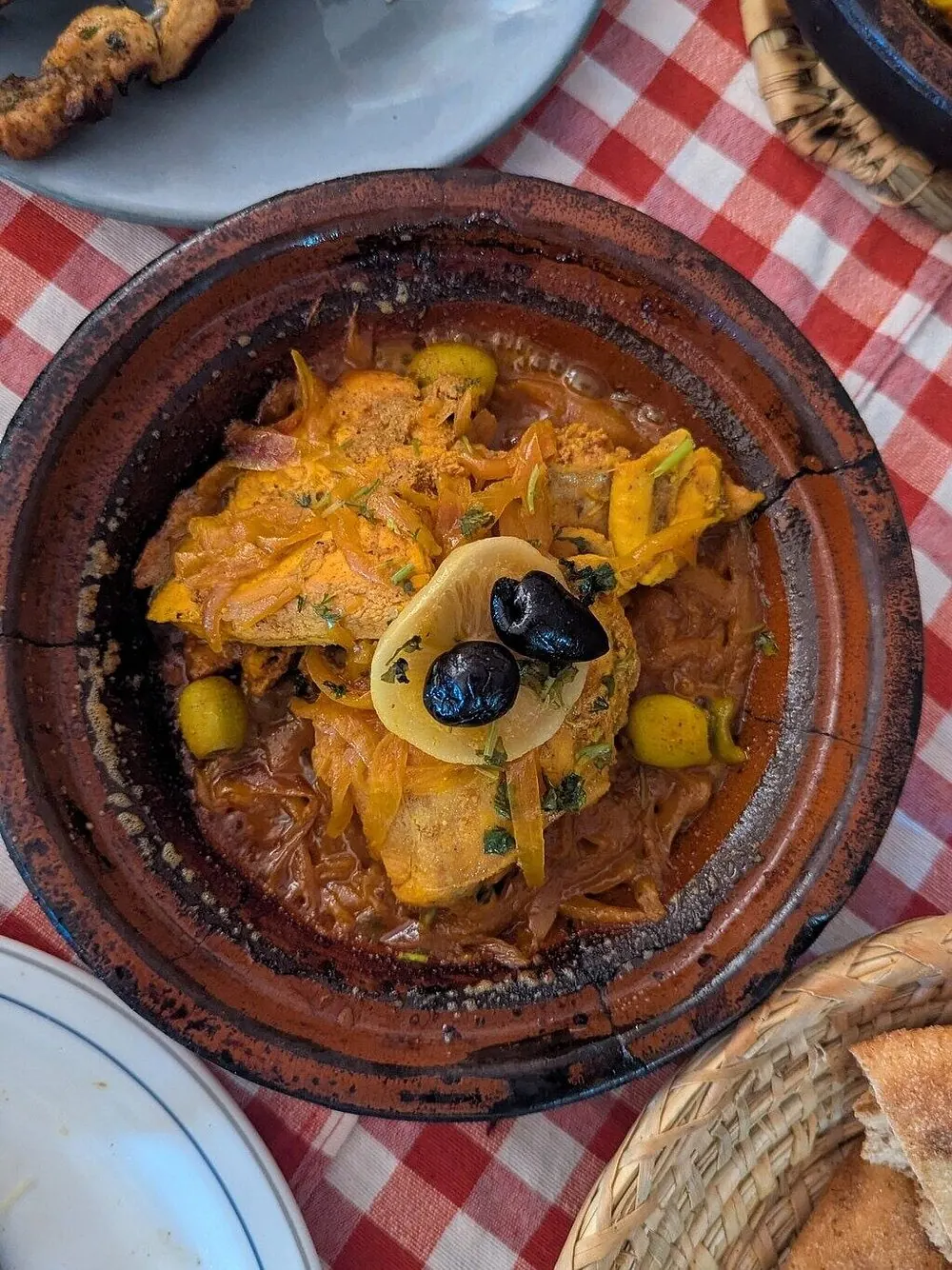
Fes is known for one of the most refined cuisines in Morocco. Try bastilla, a sweet and savoury pie with almonds and cinnamon, b'ssara (fava bean soup) for breakfast, and fresh bread from a neighbourhood bakery. In the medina, many of the best restaurants are hidden in riads, behind unmarked doors.
15. Relax in a hammam and stay in a riad
After a day on your feet, a traditional hammam with black soap and a scrub is the perfect end. And for your nights, choose a riad inside the medina: waking up to the call to prayer in a centuries-old courtyard house is one of the great experiences of Fes. A glass of mint tea on its rooftop at sunset is the best way to end the day.
Day trips from Fes
- Chefchaouen: the blue town of the Rif Mountains, about four hours away. See our Chefchaouen day trip from Fes and our Chefchaouen guide.
- Volubilis and Meknes: the best-preserved Roman site in Morocco, with mosaics still in place, and the imperial city of Meknes, both within about an hour and a half.
- Ifrane and the cedar forests: the alpine-style town of Ifrane and the cedar forests around Azrou, where Barbary macaques live.
- The Sahara: Fes is a natural starting point for the dunes of Merzouga. Read our Marrakech to Fes via Merzouga route guide and see the 4 day Sahara tour from Fes to Marrakech.
How many days in Fes, and a simple plan
| Time | What you can do |
|---|---|
| 1 day | A guided tour of Fes el-Bali: madrasas, souks, tanneries |
| 2 days | Add Fes el-Jdid, the Mellah, the Royal Palace and the sunset viewpoints |
| 3 days | Add a day trip to Volubilis and Meknes or Chefchaouen |
Day 1: Bab Bou Jeloud, Bou Inania Madrasa, the souks, Attarine Madrasa, the Qarawiyyin area, lunch in the medina, the tanneries, and sunset on a riad rooftop.
Day 2: the Royal Palace gates, the Mellah, Jnan Sbil gardens, Dar Batha, a hammam in the afternoon and sunset at the Merenid Tombs.
Practical tips for visiting Fes
- Hire a licensed guide for your first morning. The medina is hard to read alone, and a guide saves time and keeps away unofficial "helpers".
- Politely decline people who say a street is closed or offer to show you the tanneries; this is a common way to lead visitors to a commission shop.
- Wear comfortable, closed shoes: the lanes are steep, uneven and sometimes wet. See what to wear in Morocco.
- Step aside for mules and handcarts when you hear "balak", which means "watch out".
- Many shops close on Friday around midday prayer; plan museums or a walk outside the medina instead.
- Spring and autumn are the most comfortable seasons; summers are hot and winters are cool and sometimes rainy. See the best time to visit Morocco.
“Do not try to see Fes. Let it show itself to you: slowly, through a doorway, a smell, a sound from a workshop.”
Fes is part of many of our journeys: browse our tours from Fes, the 7 day Fes to Marrakech tour or the 10 day Morocco journey from Fes. Tell us your dates or write to us on WhatsApp to plan your days in the city.