There is a moment, usually on the second evening, when the Sahara stops feeling like a destination and starts feeling like a mirror.
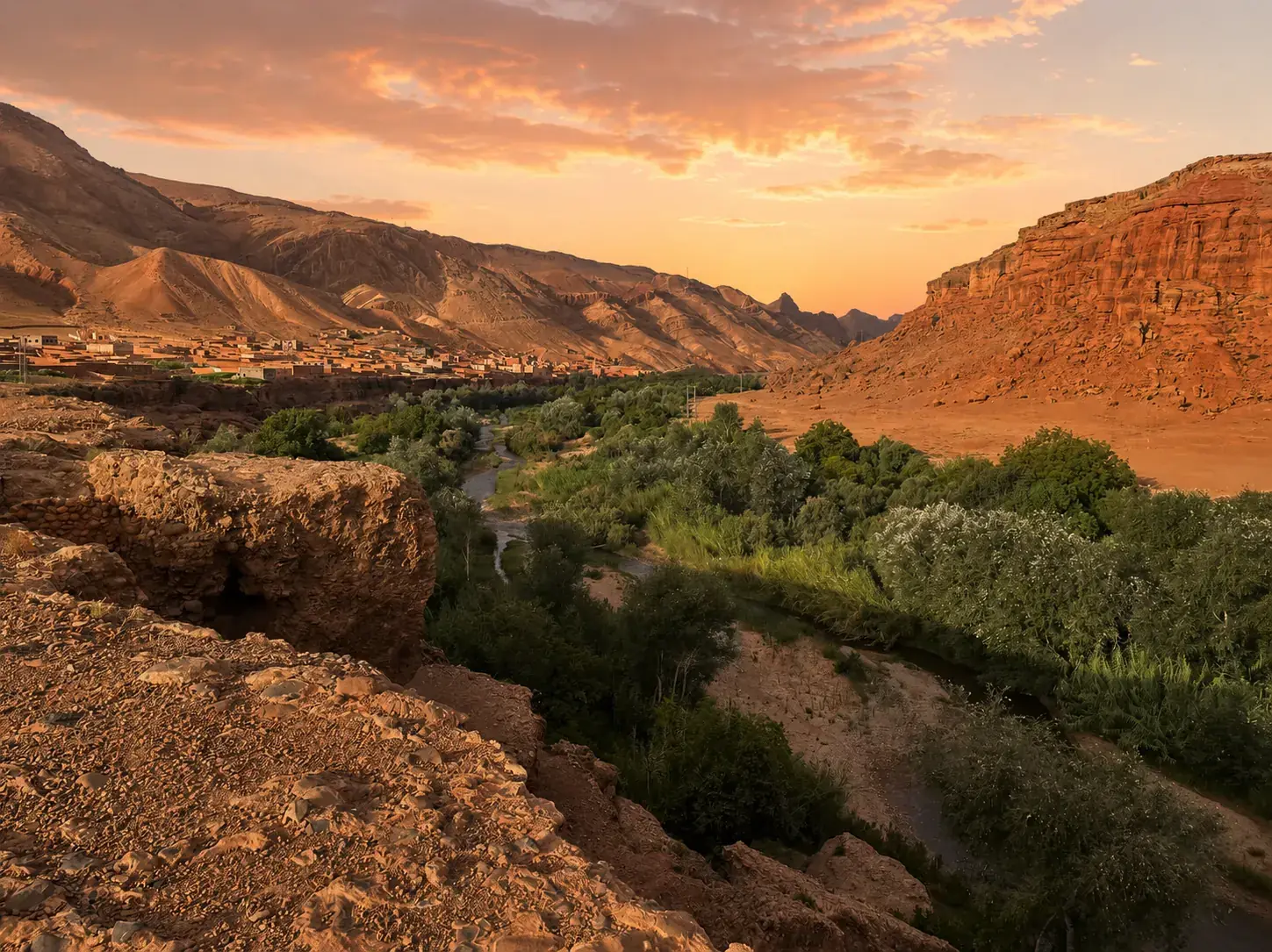
You have crossed the Atlas. You have driven through valleys of rose and rock. You have watched the light change on kasbah walls and palm oases. And then the road opens, and the dunes rise — not gradually, but all at once, as if the earth has decided to become something else entirely.
Most travellers expect grandeur. They get it — the scale is genuinely overwhelming. But what surprises people is not the size of the desert. It is the silence.
“In the Sahara, you cannot perform. There is nowhere to hide behind noise, schedules, or the small urgencies that fill a normal day.”
The rhythm of arrival
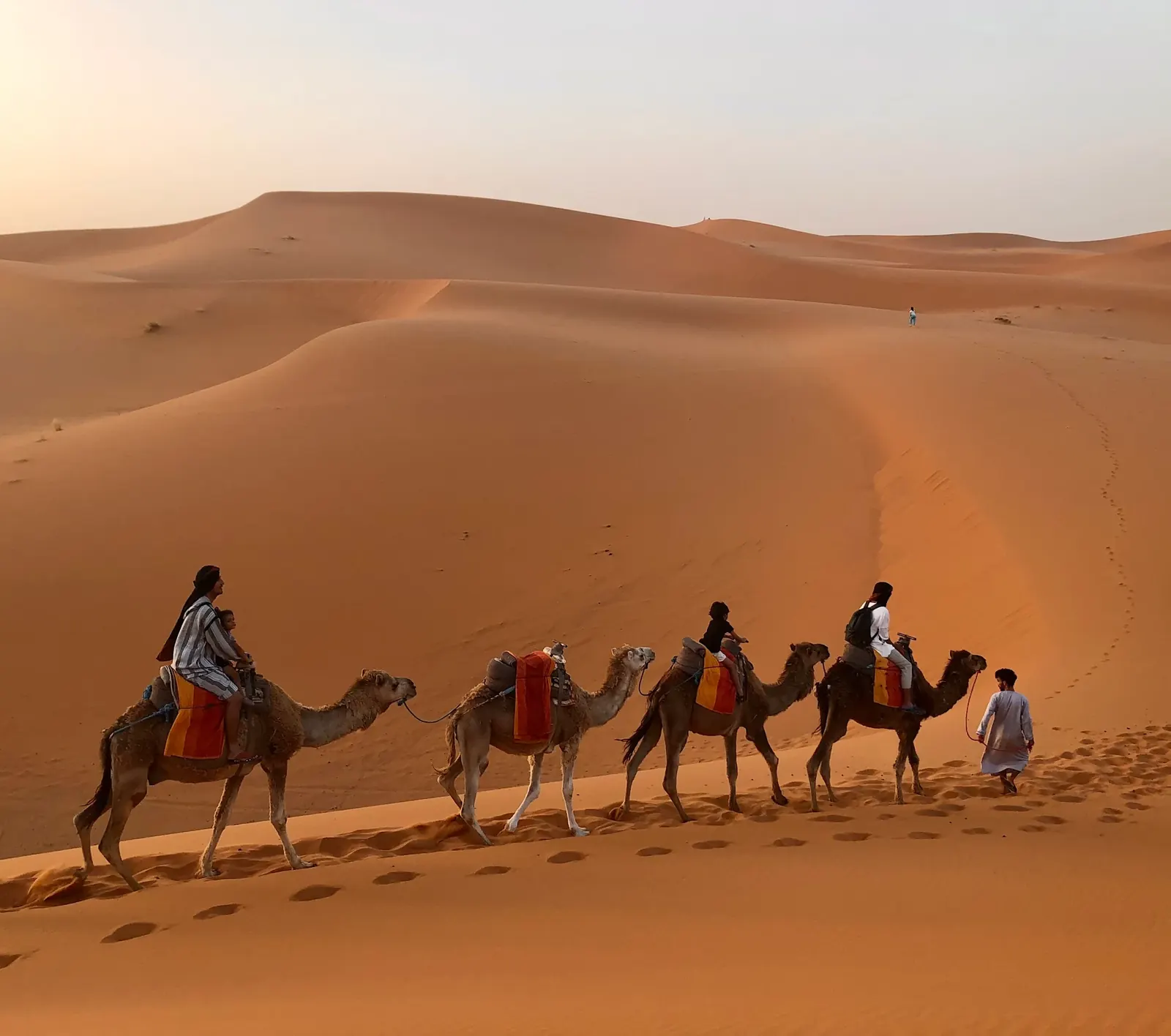
We time the camel trek for late afternoon deliberately. The heat has softened. The dunes turn from pale gold to deep amber. You mount at the edge of Erg Chebbi and ride slowly inward — no rush, no spectacle. Just the soft crunch of sand and the long shadow of your camel stretching ahead.
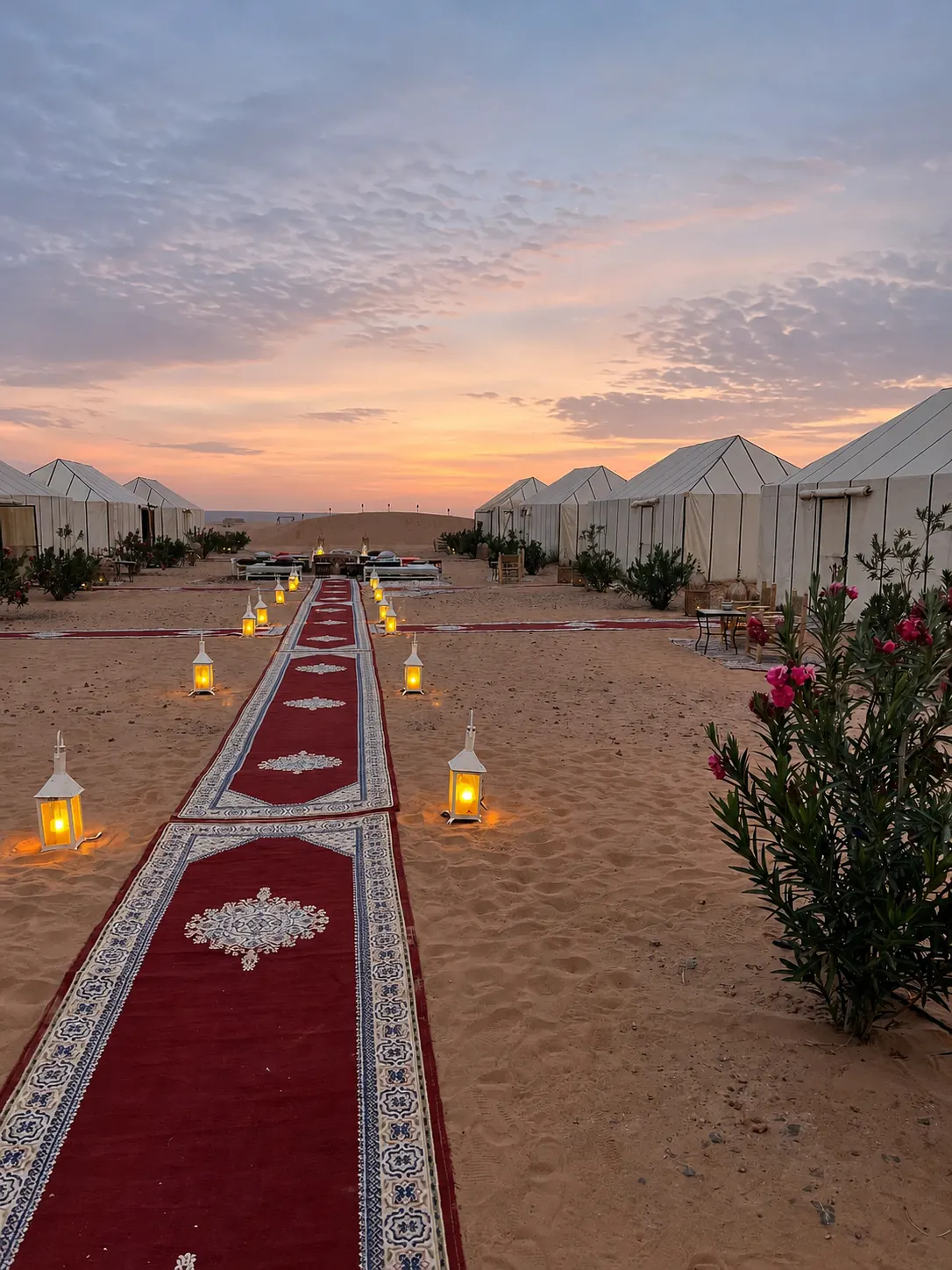
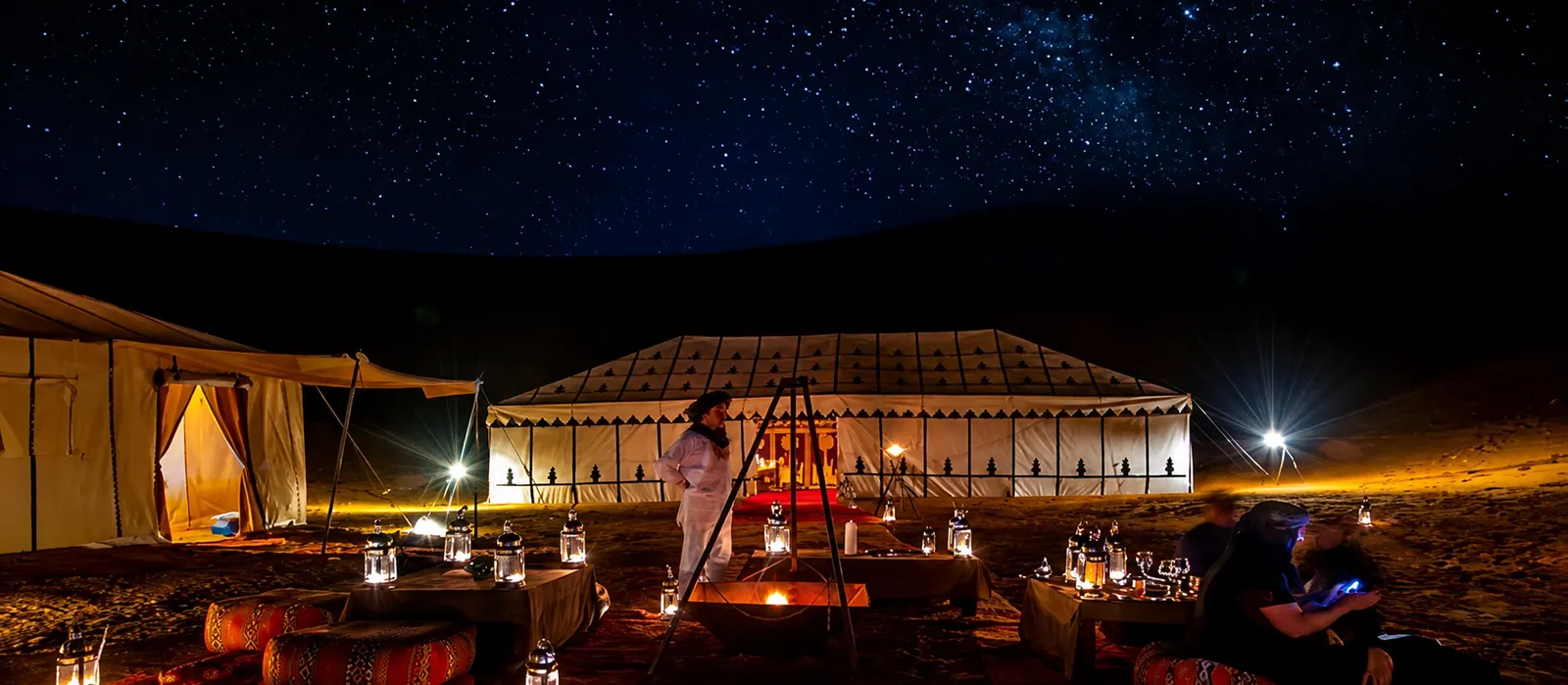
By the time you reach camp, the sky has shifted through a dozen colours you did not know existed. Dinner is tagine and bread baked in the sand. Musicians play around a fire. And then — if the sky is clear — you walk back out to the highest dune and lie down.
That is usually when people tell me something has changed. Not dramatically. Quietly. A rearrangement of priorities. The email that felt urgent this morning suddenly does not matter. The person you are travelling with feels closer. The stars feel close enough to touch.
What the desert asks of you
The Sahara does not demand anything. That is part of its power. It simply offers space — physical, temporal, emotional — and waits to see what you do with it.
- Leave your phone in the tent. The photos will never capture what you felt on that dune.
- Stay up later than you planned. The Milky Way over Erg Chebbi is worth losing sleep for.
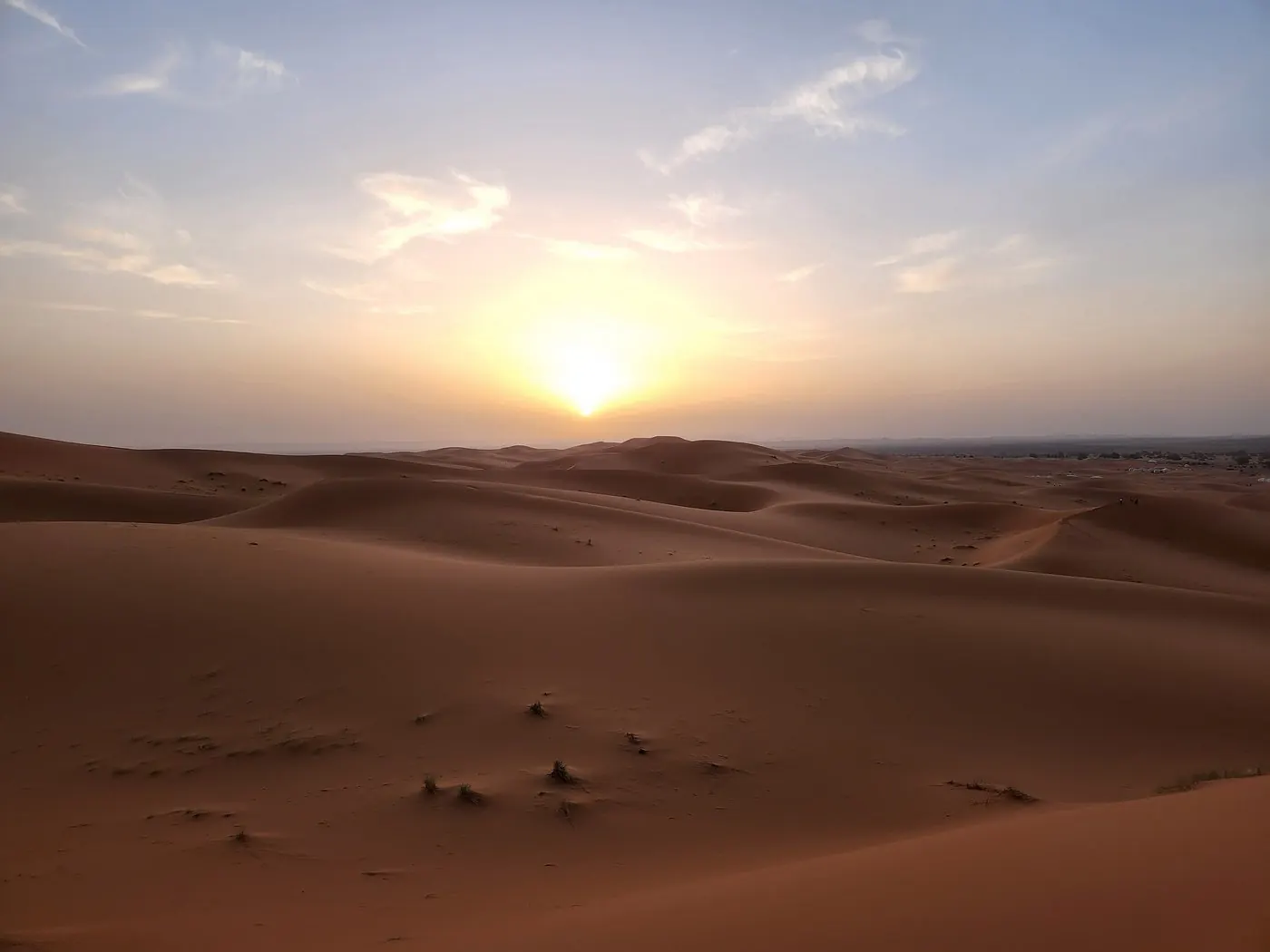
- Wake before sunrise at least once. The cold sand under your feet and the first pink light on the ridges — that is the moment people remember for years.
- Talk to your guide. The stories of this landscape are not in any guidebook.
We have guided hundreds of travellers into the desert. The ones who come back — and many do — rarely talk about the camels or the camp or even the dunes. They talk about how they felt. How something shifted. How they understood, for the first time in a long time, what actually matters to them.
“The desert does not change you. It shows you who you already are — without the distractions.”
That is why we keep coming back. Not because the Sahara is beautiful, though it is. Because it is honest. And in a world full of noise, honesty is the rarest luxury of all.
Ready to see it for yourself? Start with our Marrakech to Merzouga route guide, choose the right length with 2, 3 or 4 days in the desert, and pack with our desert packing list.